Can AI Weather Models Protect Shipping From Extreme Weather?
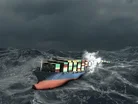
Extreme weather now threatens the predictability that global trade depends on.
Efficient and safe trade requires steady planning, yet rising climate disruption brings more unpredictable conditions that throw supply chains into chaos.
With sea routes handling around 80% of the world’s goods by volume, the impact of this shift is direct, costly and dangerous.
As climate change intensifies storms, heatwaves and wild weather, large businesses are responding with new tools.
Machine-learning weather models, powered by AI, are being deployed to anticipate hazardous conditions and help shipping firms make safer, more sustainable decisions.

Shipping industry feels climate pressure
Shipping is central to global trade. But it’s also highly exposed to environmental extremes.
From navigation and route planning to cargo handling and crew welfare, every part of maritime logistics depends on weather stability.
When weather turns violent or erratic, it brings the entire chain under threat.
The consequences are plain. In 2015, the El Faro cargo ship sank when it failed to reroute in time to avoid a tropical storm, killing all 33 people on board.
In 2021, a different kind of weather disruption, sandstorm and strong winds, caused the Ever Given container ship to run aground in the Suez Canal.
More than 300 vessels were held up, stopping nearly 16.9 million tonnes of cargo from reaching ports.
Ports themselves are vulnerable.
Extreme events such as earthquakes destroy infrastructure and delay trade, adding financial and environmental costs.
According to the National Oceanic and Atmospheric Administration (NOAA), 2024 saw severe weather in the US alone cause around US$182bn in damages and result in 568 deaths.
Heatwaves have other consequences. In the UK, extreme heat contributed to 1,311 excess deaths, highlighting the wider public health risks of unstable weather patterns.
With this in mind, companies across the shipping industry and beyond are looking for accurate, fast and localised forecasts to safeguard people and goods.
That’s where machine-learning weather tools come in.
AI weather models offer precise forecasting
For over a century, the Shipping Forecast from the UK’s Met Office has been essential for those at sea.
Now, this long-trusted forecast is being enhanced by AI and next-generation data tools.
James Shapland, Head of Regulated Transport Services at the Met Office, confirms this: "We are investing in next-generation capabilities such as advanced satellite data, innovative AI models, and better ways to share vital safety information with people at sea."
These new tools are designed to deliver forecasts not just through text, but in graphical, visual formats that can be used on ships in real time.
According to Shapland, the Met Office has already started "the journey towards producing visualisable, graphical weather warnings and forecasts to accompany the current textual suite of forecasts and warnings, such as the Shipping Forecast."
AI platforms such as GraphCast (developed by Google), AIFS (from the European Centre for Medium Range Weather Forecasting) and Aurora (by Microsoft) are proving more accurate than the traditional forecasting standards.
Professor Kirstine Dale, Chief AI Officer at the Met Office, outlines how AI and traditional tools will work together: "I think we'll have traditional models running alongside AI models so that we are drawing on their combined strengths to enable hyper-localised accurate forecasts, delivered fast, when you need them."
Improving sustainability through accurate forecasting
As trade faces mounting challenges from climate change, AI forecasting tools help safeguard both people and planet.
By offering clearer, more precise data, these systems support smarter decisions, enabling shippers to reroute, reschedule or adjust loads in line with weather changes.
This supports the environmental goals of a more sustainable global supply chain.
Delays, damage, and detours all carry a carbon cost.
By reducing these, AI tools not only prevent loss but help cut emissions linked to wasteful logistics.
James sees this connection clearly: “Marine services are a cornerstone of the UK’s blue economy and with smarter navigation, more efficient logistics, and better environmental stewardship, we are helping to unlock new opportunities for innovation, trade, and sustainability.”
Extreme weather is also expected to affect farming, energy and construction.
That makes the value of fast, AI-driven forecasts even greater.
By using these models, companies across sectors can better manage climate risk, protecting their operations and reducing wider environmental damage.
They can also act early.
Accurate forecasts allow firms to delay or redirect shipments, sparing ports and cities from being overwhelmed during extreme events.
When action can be taken in advance, supply chain disruptions are limited and safety improves.
While the climate challenges facing trade are not going away, smarter weather technology can reduce the damage.
These tools support both economic continuity and environmental resilience.