Eneco & Tennet: Can Renewable Energy Overload Power Grids?
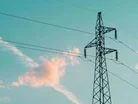
When it comes to sustainability, the Netherlands has always been one of the countries leading the pack.
The Environmental Performance Index ranks the nation as the world's 11th most sustainable, and renewable energy contributes a great deal to that ranking.
According to Chamber & Partners, more than 55% of the Netherlands' electricity came from low-carbon sources, with that figure growing substantially year on year.
That rapid growth has come with some teething issues, however, and the Dutch Government is now grappling with a infrastructural problems caused by the surge in renewable energy usage.
As a result, economic growth and housing development projects are now seen as under threat. More than one-third of Dutch homes have solar panels fitted and the country leads Europe in solar panel installation per capita.
But this green transformation has exposed a fundamental mismatch between the country's electricity generation model and its power grid infrastructure.
"Grid congestion is like a traffic jam on the power grid. It's caused by either too much power demand in a certain area, or too much power supply put onto the grid, more than the grid can handle," says Kees-Jan Rameau, CEO of Eneco, which now generates 70% of its electricity from solar and wind.
The core problem lies in how the grid was originally conceived.
"The grid was designed in the days when we had just a few very large, mainly gas-fired power plants," Kees-Jan adds.
"So we built a grid with very big power lines close to those power plants, and increasingly smaller power lines as you got more towards the households."
Distributed generation overwhelms infrastructure
The shift to renewables has fundamentally reversed the direction of power flow.
"Nowadays we're switching to renewables, and that means there's a lot of power being injected into the grid in the outskirts of the network where there are only relatively small power lines," says Kees-Jan.
These smaller distribution lines are struggling to handle electricity flowing in from thousands of wind turbines and solar panels scattered across the country.
Damien Ernst, Professor of Electrical Engineering at Belgium's Liège University, describes the situation bluntly.
"They have a grid crisis because they haven't invested enough in their distribution networks, in their transmission networks, so they are facing bottlenecks everywhere," he says, "and it will take years and billions of dollars to solve this."
Economic consequences mount
The infrastructure bottleneck is now creating significant economic drag.
Grid congestion is costing the Dutch economy up to US$38bn annually, according to a 2024 report from Boston Consulting Group.
TenneT, the government-owned grid operator, reports that 8,000 companies are waiting to feed electricity into the network, whilst 12,000 others are waiting for permission to use more power.
"Often consumers want to install a heat pump, or charge their electric vehicle at home, but that requires a much bigger power connection, and increasingly they just cannot get it," Kees-Jan says.
The situation is even more severe for businesses. "Often they want to expand their operations, and they just cannot get extra capacity from the grid operators," he adds.
Housing construction is also being hampered as a result of disruptions to the flow of electricity.
"It has got to the point where even new housing construction in the Netherlands is becoming increasingly difficult, because there's just no capacity to connect those new neighbourhoods to the grid," explains Kees-Jan.

A costly and lengthy solution
TenneT is planning to spend US$235bn on grid reinforcement, including laying 100,000km of new cables by 2050.
But the timeline for relief is sobering.
Eugène Baijings, Head of Utilise Smarter at TenneT, oversees the firm's work on grid congestion. "To strengthen and reinforce the grid, we need to double, triple, sometimes increase tenfold the capacity of the existing grid," he explains.
"And it's taking on average about 10 years to do a project like that before it goes live, of which the first eight are legislation and getting the rights to put cables in the ground with all property owners. And only the last two years are the construction period."
The Dutch energy ministry has acknowledged the miscalculation in a statement, saying: "In hindsight, the speed at which our electricity consumption has grown might have been collectively underestimated in the past by all parties involved."
Meanwhile, the government has launched a campaign asking citizens to reduce electricity use between 4pm and 9pm to avoid grid overload.
Eneco has implemented a "virtual power plant" system that can remotely turn wind turbines out of the wind and switch off solar panels when generation exceeds grid capacity.


Executives
Eugène Baijings
Head Utilise Smarter - Decentral Flex
Kees-Jan Rameau
COO Integrated Energy