
EY: What Lessons Should the Finance Sector Learn from COP30?

COP30 marked what executives from EY describe as a pivot from goal-setting to tangible action, with financial institutions positioned at the centre of efforts to mobilise capital for the transition.
In a report published this month, the global consultancy looked into the implications of the summit for the financial services sector at large.
The conference, which took place in the coastal Brazilian city of Belém, brought together more than 56,000 people from 193 countries amid a moment of economic uncertainty, geopolitical tension and rising climate anxiety.
Despite more than 120 national transition plans being submitted in Belém, EY notes that the world remains on track for 2.3–2.5°C of warming by 2100.
Gillian Lofts, who is EY's Global Financial Services Sustainable Finance Leader, believes that jury is out regarding the progress that was made during the summit.
"What changed, and what didn't, at COP30 for financial services?" she asks. "Delegates in Belém left with mixed views.
"Progress on adaptation finance and the creation of a just transition mechanism was welcomed, but the absence of a roadmap to phase out fossil fuels drew criticism and keeps the policy signal uneven."
A roadmap for climate finance
Central to COP30 negotiations was the question of how capital can be effectively funnelled from developed to developing countries for the purposes of climate action.
The Baku-to-Belém roadmap, released in the lull between the two most recent conferences, introduced a voluntary approach to achieving the US$300bn annual public finance ambition agreed at COP29.
Adaptation finance also gained particular visibility at the summit. On this subject, the UNEP estimates that developing nations are will have to address a huge shortfall in funding of somewhere in the region of US$284bn to US$339bn.
In response, the Global Goal on Adaptation set an ambition to triple adaptation financing by 2035, supported by 59 global adaptation indicators adopted to track progress.
Leading firms are already structuring layered capital stacks and portfolio guarantees to de-risk climate projects in emerging markets, according to the report, though EY believes more can still be done to seize the opportunity presented by the demand for climate finance.
- Adaptation finance is funding that helps communities, governments and businesses build resilience to the impacts of climate change. This includes investing in projects like flood-resistant infrastructure, drought-resilient agriculture, early warning systems, and insurance to recover from disasters. It can come from public and private sources and is used to prevent harm, reduce risk and help with recovery from climate-related events.
The solidifying of carbon markets
Another takeaway from COP30 was the emphasis that was placed on developing carbon markets. This was a conversation that continued over from COP29.
All in all, 16 countries submitted plans for cross-border carbon credit transfers, with many discussions focused on improving transparency and consistency in these spaces.
The first emissions reduction methodology for landfill gas projects was approved, alongside standards for project approvals and safeguards such as insurance or buffer systems to address reversal risk.
According to EY's analysis, carbon markets represent a trillion-dollar opportunity, with countries potentially saving up to US$250bn on their own transitions by 2030 through the use of credits.
The consultancy's report notes that some of the world's leading financial institutions are already exploring ways to structure carbon credits and nature-based solutions including loans, funds and derivatives.
EY also says that insurers are starting to develop solutions that could address delivery and permanence risks in the carbon trade, particularly for nature-based credits.
The social takeaways from COP30
For the first time, a COP outcome included just transition in the UN framework through the Belém Action Mechanism.
This voluntary platform supports communities and workers affected by fossil fuel phase-down, mobilises retraining finance and encourages inclusive decision-making.
Currently only about US$16bn (around 3% of global climate finance) targets these needs.
Leading institutions are beginning to develop policies and metrics to assess the social impact of their financing activities, piloting products such as sustainability-linked loans with social clauses tied to outcomes like job creation or retraining.
This notion formed the crux of Bill Gates' controversial pre-COP30 argument in which he called for a rethinking of climate action.
The expansion of nature finance
The summit also reinforced the role of nature in climate action.
At the conference, Brazil launched the Tropical Forests Forever Facility, a platform which will mobilise US$125bn for forest protection endorsed by 53 countries.
The International Sustainability Standards Board will develop a global nature-related disclosure standard by 2026, building on the Taskforce for Nature-related Financial Disclosures framework.
EY's Global Nature Action Barometer 2025 found that while 93% of companies talk about nature in their external reporting, only 23% align with TNFD recommendations in the financial sector.
The report also notes that more than 85% of companies globally report against TNFD in some form, signalling accelerating progress despite current gaps.
What challenges lie ahead for climate finance?
In its report, EY acknowledges that a lot of very tough challenges lie in wait for the future of climate finance, whether it be the pace of fossil fuel phase-out or the extant need for stronger national commitments.
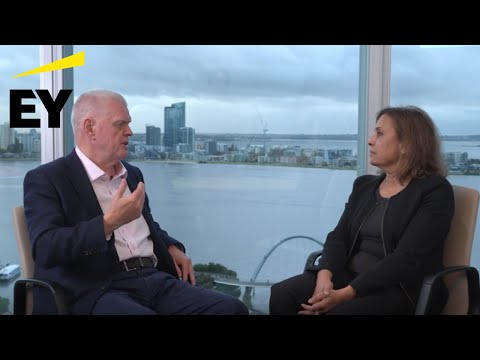
Gillian believes that her firm's report lays out a pragmatic set of recommendations for the finance sector.
"It highlights where financial services can credibly support delivery now – such as the mobilisation of capital for resilience, strengthening high-integrity market infrastructure under Article 6, and preparing for nature-related disclosures – and where a disciplined approach is needed while policy signals remain uncertain," she says.
"If you're shaping near‑term decisions in capital allocation, underwriting, product design or disclosures, I hope this guide helps focus on what's actionable."
Company portals

Executives

Gillian Lofts
Partner