Google, Amazon & Microsoft: What is Green Technology?
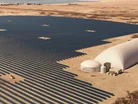
Up to 35% of the emissions reductions needed for net zero by 2050 depend on technologies not yet commercially available according to the IEA’s Net Zero Roadmap.
Green technologies aim to minimise negative impacts on the environment and society, for example through conserving natural resources or reducing greenhouse gas emissions.
These could include renewable energy technologies, carbon capture and storage technologies or solutions for circular economy principles.
IEA Executive Director Fatih Birol says in its Energy Technology Perspectives report: “Achieving international climate goals hinges on dramatically scaling up clean energy technologies to reduce greenhouse gas emissions. And having those technologies ready in time hinges on a rapid acceleration in innovation.”
What types of green technology are there?
Broadly, green technologies can fall into one of three categories: mitigation technologies, adaptation technologies and enabling technologies.
Mitigation technologies can include tech for energy generation, energy efficiency, clean transport, carbon capture and waste management.
Adaptation technologies can focus on things like agriculture and livestock, water management, forestry and land use, disaster risk reduction and health.
Enabling or supporting technologies can facilitate both mitigation and adaptation or have convergence benefits, such as energy storage, smart grids, climate monitoring and forecasting, ICT and cross-sector collaboration.
Green technology at Google
Google’s 2025 Environmental Report shows how the company is both using and developing a range of green technologies.

In 2024, it procured more than 8 GW of clean energy including solar, wind, nuclear and geothermal.
The company creates a range of AI powered solutions, like Nest thermostats and Google maps, that enabled an estimated 26 million tonnes of emissions reductions throughout the year.
Google is also investing in advanced energy technologies such as SMRs, geothermal projects and nuclear fusion.
It is also collaborating with utility businesses Tennessee Valley Authority, Indiana Michigan Power and Omaha Public Power District to expand and implement demand response technologies.
Kate Brandt, Chief Sustainability Officer at Google, said on LinkedIn: “Innovation isn’t just about developing brand new shiny things.
“In fact, some of the most important innovations come from collaborations to make existing systems more intelligent, and in this case, more flexible!”
Amazon’s green technologies
Amazon is the largest corporate purchaser of renewable energy and has held this title for five years in a row.
It has invested in more than 600 renewable energy projects across 29 countries.
In Spain alone, Amazon has developed more than 94 solar and wind power projects with more than 3.7 GW of installed clean energy capacity.
Amazon has deployed more than 24,000 electric delivery vehicles around the world and redesigned its fulfilment network to reduce delivery distances, cutting logistics emissions.
Through Amazon Web Services (AWS), the company is advancing energy efficiency AI solutions and cloud infrastructure, such as purpose-built AI chips like Trainium and Inferentia.
“At Amazon, we know that innovation and sustainability aren't opposing forces – they're essential partners in building a better future,” said Kara Hurst, Chief Sustainability Officer at Amazon, on LinkedIn.
Microsoft’s role in green technology
Microsoft has contracted 34 GW of carbon free electricity across 24 countries and signed power purchase agreements totalling 19 GW in 2024 alone.
It has launched data centres using mass timber construction that reduces embodied carbon by up to 65% compared to concrete alongside transitioning to chip-level liquid cooling to reduce operations energy use and water consumption.

Microsoft also invests in AI technologies such as LineVision, a company deploying dynamic line rating technology that can increase transmission capacity by up to 60%.
Through its Climate Innovation Fund, Microsoft invests in startups and technologies across a wide range of topics including ecosystem conservation and carbon removal solutions.