Inside Google & Brookfield's 3,000 MW Hydropower Partnership
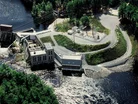
Hydroelectricity does not deplete water or burn fuels, making it a clean energy source compared to traditional alternatives.
Brookfield Asset Management (BAM), Brookfield Renewable (BR) and Google have announced they’re collaborating for a first-of-its-kind Hydro Framework Agreement (HFA).
The HFA is set to deliver up to 3,000 MW of carbon-free hydroelectric capacity across the US.

Collaborating for hydroelectric power
The first contracts under the HFA are set for Brookfield’s Holtwood and Safe Harbor hydroelectric facilities in Pennsylvania, and are estimated to represent more than US$3bn of power and 670 MW of capacity.
The HFA represents a major step in Brookfield’s plan to deliver flexible clean energy solutions to the tech sector, supporting Google's strategy to power its operations with 24/7 carbon-free energy.
“Our partnership with Google demonstrates the critical role that hydropower can play in helping hyperscale customers meet their energy goals,” comments Connor Teskey, President of Brookfield Asset Management.
“Delivering power at scale and from a range of sources will be required to meet the growing electricity demands from digitalization and artificial intelligence.”
Google’s carbon-free energy
Under the HFA, Google has the ability to produce carbon-free electricity up to 3,000 MW of hydroelectric assets that will be relicensed, overhauled or upgraded – extending the assets life and continuing to add power to the grid.
The first contracted assets involve hydroelectric facilities in Pennsylvania, that Brookfield are relicensing.
Both Google and Brookfield will focus on the mid-Atlantic (PJM) and mid-continent (MISO) electricity markets – planning to expand to other US regions in the future.
“At Google, we’re dedicated to responsibly growing the digital infrastructure that powers daily life for people, communities and businesses,” says Amanda Peterson Corio, Head of Data Center Energy at Google.
“This collaboration with Brookfield is a significant step forward, ensuring clean energy supply in the PJM region where we operate.
“Hydropower is a proven, low-cost technology, offering dependable, homegrown, carbon-free electricity that creates jobs and builds a stronger grid for all.”
The 20-year Power Purchase Agreements for Brookfield’s Holtwood and Safe Habor hydroelectric facilities aim to support Google’s operations across PJM.
The transaction will allow Brookfield to maintain existing commitments to power consumers.
Why choose hydroelectricity?
Hydropower is widely considered a sustainable energy source due to its reliance on the natural water cycle, which is driven by the sun.
“Hydropower currently generates more electricity than all other renewable technologies combined and is expected to remain the world’s largest source of renewable electricity generation into the 2030s,” writes the International Energy Agency (IEA).
As long as precipitation continues, water used for hydropower generation can be naturally replenished, allowing for repeated use without depletion.
According to the US Department of Energy, hydroelectric plants offer a consistent and reliable supply of electricity, as water flow can be managed to match energy demand.
This flexibility enhances grid stability and provides a dependable backup during energy outages, unlike solar or wind energy, which are weather-dependent.
Economically, hydropower is sustainable too, once constructed, hydroelectric plants produce low-cost electricity thanks to their durability and low operational and maintenance costs, often lasting for decades.
Beyond power generation, hydroelectric facilities deliver additional societal benefits such as flood control, irrigation support, water supply and recreational opportunities.
These multifaceted advantages underscore hydropower’s role as a cornerstone of sustainable energy infrastructure.
"Clean firm hydroelectricity will continue to strengthen U.S. grids and support local communities," writes Amanda on LinkedIn.
"Our agreement with Brookfield will deliver up to 3,000 MW of carbon-free hydroelectric capacity across the United States.
"This is a monumental step in Google’s efforts to secure dependable, homegrown, carbon-free electricity that creates jobs and builds a stronger grid for all."