How Can Carbon Tracking Help Corporations to Decarbonise?
As global climate targets grow more urgent and regulatory frameworks become more demanding, companies face mounting pressure to not just on report emissions, but actively manage them.
A pioneering approach is emerging, reframing how organisations treat carbon by embedding it into the same systems used to manage financial transactions.
An article released by Dominik Asam, Jurgen Ernstberger and Gunther Friedl titled: 'How Carbon Accounting Supports Corporate Decarbonisation', delves further into corporate emission reporting.
Known as the green ledger approach, the new method enables carbon to be accounted for with the same auditability and strategy as money.

The foundation of corporate decarbonisation
Traditional financial management systems, implemented within Enterprise Resource Planning (ERP) platforms like SAP S/4HANA, have long been relied on for their precision and robustness in managing monetary data.
SAP's Chief Financial Officer Dominik Asam, Co-Author of the article, writes on LinkedIn: "We propose leveraging traditional financial management systems not only to track emissions across Scopes 1, 2 and 3 but to allocate them precisely to products and services via product carbon footprints (PCFs)."
This allocation enables companies to see emissions not just at the organisational level, but embedded within individual transactions, product lines and cost centres.
Such granularity supports both compliance with sustainability regulations and strategic decision-making across the value chain.
What is a green ledger?
A green ledger mirrors a financial general ledger but captures carbon emissions instead of cash flows.
Integrated into ERP systems, it allows for:
- Granular data collection from energy use, supply chains, logistics and employee commuting
- Carbon tracking by Scope (Scope 1: direct emissions, Scope 2: purchased electricity, Scope 3: upstream/downstream value chains)
- Product-level carbon accounting via PCFs
- Internal alignment between environmental and financial KPIs
- Regulatory compliance with standards such as the EU CSRD, the US SEC’s climate disclosure rule and ISO 21930 for Environmental Product Declarations.
“The key to real progress in corporate decarbonisation lies in a familiar place: the company’s financial systems,” writes Gunther Friedl, Managing Director Dieter Schwarz Stiftung, Professor and Former Dean at TUM School of Management and Co-Author of the article on LinkedIn.
Global emission reporting
SAP S/4HANA enables businesses to create carbon accounts parallel to financial accounts.
“By integrating PCFs into ERP systems like SAP S/4HANA, companies can assess and manage emissions at the transaction and product level, linking environmental data with financial metrics,” writes Dominik on LinkedIn.
“This enables the path to a green ledger, where carbon is treated with the same rigour as money in corporate decision-making.
“At SAP, this approach reflects our commitment to embed PCFs into core enterprise systems and elevate them as a strategic lever for both compliance and transformation.”
For example, carbon emissions from direct activities (Scope 1), energy consumption (Scope 2) and supplier inputs (Scope 3 upstream) can be recorded and reported in detail.
The current state of corporate information systems poses considerable challenges for supporting both reporting and compliance, as well as strategic decision-making.
A growing number of regulators and standard setters have introduced new rules around GHG emissions reporting, all of which align with the Greenhouse Gas Protocol.

In the US, the Securities and Exchange Commission (SEC) has issued a rule titled 'The Enhancement and Standardisation of Climate-Related Disclosures for Investors'.
This mandates that large accelerated filers disclose Scope 1 and 2 emissions from fiscal year 2026, with accelerated filers following in 2028, provided the emissions are deemed material.
In the EU, the Corporate Sustainability Reporting Directive (CSRD) has introduced new ESG reporting requirements.
These apply to listed and large unlisted companies from fiscal year 2024, with phased timelines for smaller firms.
The European Financial Reporting Advisory Group (EFRAG) has adopted corresponding standards requiring disclosure of Scope 1, 2 and 3 emissions.
Meanwhile, countries including Japan, Singapore and Canada are currently consulting on plans to adopt or align with the International Sustainability Standards Board (ISSB) framework, which also requires disclosure across all three emission scopes.
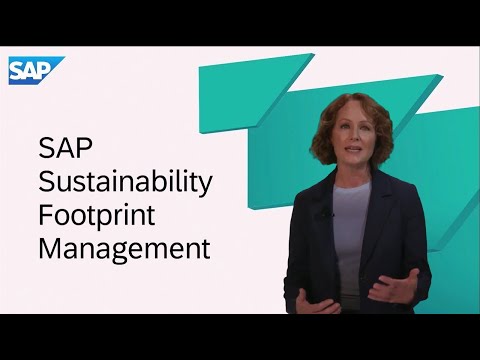
Technology like smart meters, supplier databases (like SAP Ariba and Sustainability Footprint Manager) and transport logs feed real-time data into the system to allow for emission monitoring.
An emissions hierarchy similar to IFRS 13’s fair value hierarchy helps categorise the data quality, ranging from direct measurements to estimates.
The data is stored in structured green ledger accounts and linked with traditional cost and revenue flows, enabling carbon to be viewed through the same analytical lens as financial performance.
Case study: carbon footprint of a bicycle
Using, the example of producing a bicycle, the article finds highlights that each product component (materials, labour, licensing, overhead and shipping) has both a financial cost and a corresponding emission value:
- Direct materials: 1.5 tonnes CO₂e
- Direct labour (commuting emissions): 0.5 tonnes CO₂e
- Licensing (IP): 0.5 tonnes CO₂e
- Overhead emissions (factory and admin): 1.3 tonnes CO₂e
- Shipping: 2.5 tonnes CO₂e.
In total, the emissions per unit come to approximately 0.6 tonnes of Scope 1 and 2 and 5.5 tonnes of Scope 3 CO₂e.
These figures align emissions directly with production processes and products, offering an unprecedented level of precision for emission management and reduction planning.
Supporting strategy and compliance
Beyond internal steering, a green ledger supports external reporting and compliance.
It allows companies to generate audit-ready reports for:
- EU CSRD
- US SEC climate disclosures
- Carbon Border Adjustment Mechanism (CBAM)
- Environmental Product Declarations (EPDs)
- Carbon taxation and emissions trading schemes.
Moreover, such systems facilitate future regulatory changes. For example, CBAM will require emissions data on imported goods starting 2026.
With a green ledger, companies can trace embedded emissions and apply appropriate carbon pricing mechanisms across their supply chain.
“A robust green ledger, treating environmental impact like money, could be the game-changer for aligning strategy, compliance (CSRD, SEC) and sustainability,” Gunther writes on LinkedIn.
A lever for transformation
By embedding carbon tracking into core business systems, companies can move beyond compliance to proactive decarbonisation.
The green ledger represents a philosophical and operational shift: it treats carbon like currency.
Decisions about procurement, investment, pricing and operations can now weigh both financial and environmental costs.
Carbon accounting is no longer just a reporting obligation, it is becoming a cornerstone of sustainable business strategy.
Integrating it into ERP systems through a Green Ledger enables transparency, traceability and transformation.
As global pressure to decarbonise accelerates, those who treat carbon with the same discipline as financial capital will be better positioned to lead.
Explore the latest edition of Sustainability Magazine and be part of the conversation at our global conference series, Sustainability LIVE.
Discover all our upcoming events and secure your tickets today.
Sustainability Magazine is a BizClik brand