
How Hertha's Critical Minerals Fuel EVs and Renewable Energy

The US defence sector faces a January 2027 deadline that could reshape the supply chain for clean energy technologies.
A regulation banning Chinese-origin rare earth magnets and their raw materials from covered defence systems has created pressure to establish domestic production of a lesser-known but essential component.
High-purity iron forms a necessary input for neodymium-iron-boron permanent magnets.
These magnets power electric vehicle motors and renewable energy infrastructure in addition to defence applications.
China currently supplies most of the high-purity iron used in American magnet manufacturing.

Domestic production fills materials gap
The Defense Federal Acquisition Regulation Supplement will prohibit Chinese-origin constituent materials from covered defence systems from January 2027.
This forms part of broader efforts to reduce dependence on China for materials deemed critical to national interests.
Massachusetts Institute of Technology (MIT)-trained engineer Laureen Meroueh founded Hertha Metals to address this supply gap.
The startup has developed what it calls Flex-HERS technology to produce high-purity iron domestically before the regulatory deadline arrives.
According to the company website, Hertha operates the largest demonstration-scale single-step steelmaking facility in the United States.
The firm describes itself as the only domestic producer of high-purity iron for neodymium-iron-boron magnets.
Producing neodymium-iron-boron permanent magnets requires multiple manufacturing stages beyond rare earth mining.
Alloy production represents one stage where high-purity iron becomes necessary.
Policy efforts to reduce Chinese supply chain dependence have concentrated on securing domestic rare earth supplies such as neodymium.
The high-purity iron required for alloy production has received less focus.
"Today, that high-purity iron is being made 90% in China," says Hertha founder, Laureen.
Electric arc furnace technology
According to a company press release, Hertha's Flex-HERS process uses electric arc furnace technology combined with natural gas or hydrogen.
This approach can process lower-grade domestic ores that conventional blast furnaces cannot handle economically.
Lower-grade ore from Minnesota can be sourced and processed at Hertha's pilot plant in Conroe, Texas.
This removes Chinese supply chain dependence at one stage of magnet manufacture.
The company was founded in 2022 by Laureen Meroueh. She previously led a hydrogen production startup.
Hertha raised US$17m in a seed round from Khosla Ventures, Breakthrough Energy Fellows, Pear VC and Clean Energy Ventures.
The funding supported construction of a one-tonne-per-day pilot plant in Conroe, which began operations in 2024.
Scaling up production capacity
"When we opened up our headquarters in Conroe in 2023, we set out to demonstrate our technology at an appreciable scale for the steel industry," Laureen says.
"In just 12 months, we went from laboratory testing to tonnage per day of continuous production. We are now committed to applying our novel process to quickly filling a gap in domestic production."
Rajesh Swaminathan, Partner at Khosla Ventures, adds: "Since our seed investment two years ago, we have been impressed with Hertha's pace and execution, including their successful demonstration of a 1-tonne-per-day plant using natural gas or hydrogen."
The company plans to scale to a commercial facility producing more than 9,000 tonnes per year.
A longer-term target of 500,000 tonnes annually would match the scale of existing US steel micro mills.
Remaining supply chain vulnerabilities
Hertha's technology could provide a domestic solution to the high-purity iron problem.
However, this represents only one challenge the US needs to address before the deadline.
Analysts warn that magnet alloy production, sintering, heavy rare earth processing and magnet manufacture itself remain heavily dependent on Chinese capacity.
Multiple stages of the supply chain still lack domestic alternatives.
REEx, a rare earth investment platform, wrote on its website in an analysis of Hertha's expansion plans: "A magnet supply chain is not a mine. It is a mine, a separator, a metal maker, an alloy producer, a magnet manufacturer and every critical input in between."
The Flex-HERS process addresses one gap in that chain.
The remaining gaps stay open as the January 2027 deadline approaches.
Company portals


Executives
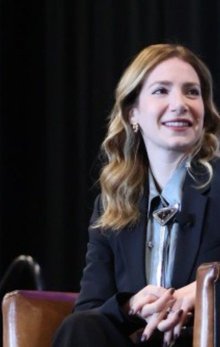
Laureen Meroueh
CEO and Founder

Rajesh Swaminathan
Partner