
How is Toyota Balancing EV Production and Sustainability?
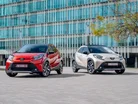
Toyota is strengthening its environmental credentials by pursuing a diversified approach to vehicle production rather than committing exclusively to a single technology.
This multi-pathway strategy could enable the automotive manufacturer to deliver sustainable mobility solutions across diverse global markets while building resilience against potential supply chain disruptions.
By developing a portfolio of low-carbon technologies including hybrids, battery electric vehicles (BEVs), hydrogen fuel cells and alternative fuels, Toyota is positioning itself to serve customers in regions with varying infrastructure capabilities and sustainability needs.

Tailoring solutions to regional needs
This approach could demonstrate an understanding that the transition to net zero requires flexible solutions tailored to local contexts rather than a one-size-fits-all model.
The Japanese automotive manufacturer operates across more than 170 countries and territories, employing more than 390,000 people globally through 72 manufacturing facilities and 20 design and research centres.
This extensive geographical footprint means the company must navigate vastly different environmental regulations, infrastructure capabilities and customer requirements.
In Europe, where charging infrastructure is relatively advanced and battery electric vehicle adoption rates are among the highest globally, Toyota is expanding its BEV production to meet this demand.
All sustainability, net zero and sustainable supply chain leaders should attend:
- Sustainability LIVE: The Net Zero Summit - QEII Centre, London, March 4-5
- Sustainability LIVE: The US Summit - Navy Pier, Chicago, April 21-22
Co-located with Procurement & Supply Chain LIVE, these events brings together CSOs, ESG leaders and senior decision-makers at a moment when sustainability, supply chains and commercial performance are increasingly interconnected.
Tickets can be booked online today for The Net Zero Summit and The US Summit. Group discounts available.
This regional adaptation contributed to record sales of 1.2 million vehicles in Europe during 2024.
Meanwhile, in South America, the manufacturer produces flex-fuel hybrids that can run on ethanol, reflecting the region's biofuel infrastructure and renewable energy resources.
This geographical customisation could allow Toyota to reduce emissions across its global fleet while ensuring accessibility for customers who may lack access to charging networks or where renewable electricity generation remains limited.
By matching vehicle technology to local infrastructure and energy systems, the approach could maximise environmental benefits while maintaining practical usability.
"It’s about all customers feeling they are empowered to make the right choice for themselves," says Simon Humphries, Chief Branding Officer and Board member of Toyota Motor Corporation.
"Providing choice and opportunity is at the heart of ever-better cars and everything we do and that includes the path to sustainability.”
This adaptability enables the manufacturer to support emission reduction goals across markets at different stages of infrastructure development.
Mitigating resource dependency risks
The sustainability advantages of Toyota's diversified strategy extend beyond tailpipe emissions to encompass supply chain environmental impacts and resource security.
As demand for battery electric vehicles accelerates, concerns are mounting about the environmental and social costs of mining battery-grade lithium, cobalt and other critical minerals.
Extraction of these materials often involves significant environmental degradation, water consumption and community displacement.
By maintaining a portfolio that includes hybrid vehicles requiring smaller batteries, hydrogen fuel cells and alternative fuel compatibility, Toyota could reduce its dependency on these constrained mineral resources.
This diversification may help avoid contributing to potential mining booms that could cause environmental damage in ecologically sensitive regions.
The manufacturer has been testing carbon-neutral biofuels and e-fuels in motorsport applications and is now exploring their application in road vehicles.
This could offer a pathway to reduce emissions from existing vehicle fleets without requiring replacement, potentially avoiding the embedded carbon costs associated with manufacturing new vehicles.

Toyota's third-generation hydrogen fuel cell technology, showcased in 2024, reportedly delivers a 20% efficiency improvement and is being developed for applications ranging from passenger vehicles to heavy-duty trucks.
Hydrogen produced from renewable energy sources could provide zero-emission mobility for long-distance and heavy transport applications where battery solutions face weight and charging time constraints.
Building sustainable resilience
The Prius Flex-Fuel plug-in hybrid electric vehicle (PHEV), presented at the 2025 Auto Expo, exemplifies this sustainability-focused flexibility.
Combining a 2.0-litre engine with a 13.6 kWh battery, the vehicle can operate in electric-only mode for up to 87 kilometres while also offering ethanol-powered efficiency for longer journeys.
In markets where ethanol is produced from sustainably grown crops, this could deliver significant lifecycle emissions reductions.
Toyota's portfolio approach appears to recognise that sustainable transportation transformation will progress at different rates across global markets depending on electricity grid decarbonisation, infrastructure investment and economic development.
By offering lower-emission solutions suited to various contexts, the manufacturer could accelerate overall fleet emissions reductions rather than limiting sustainable options to markets with advanced infrastructure.
This strategy could demonstrate that environmental responsibility and commercial resilience need not conflict.
By refusing to concentrate exclusively on technologies dependent on constrained mineral supplies or advanced infrastructure, Toyota may be building both customer loyalty and supply chain security while advancing toward its sustainability objectives across diverse global markets.
The diversified approach positions the manufacturer to respond flexibly to evolving regulatory frameworks and technological breakthroughs while maintaining progress toward decarbonisation goals across all operational regions.
Company portals

Executives

Simon Humphries
Operating Officer