How is WEF Scaling Sustainable and Circular Supply Chains?

Amid growing climate pressure and tightening resources, the principles of a circular economy present a critical pathway for businesses aiming to enhance their sustainability credentials.
A report by the World Economic Forum (WEF) created in collaboration with Bain & Company and the University of Cambridge offers a roadmap for moving circularity from concept to execution.
As supply chain leaders look to implement these models at scale they are shifting their focus from “why does this matter” to “how can we implement this?”

Scaling challenges in circular supply chains
While circularity was once viewed primarily as a tactic for waste reduction it is now being recognised as a fundamental strategy for building business resilience and new revenue streams.
According to a WEF survey of 491 executives across 10 industries 95% said circularity would be important to their companies within the next three years.
The transition however requires a significant redesign of complex supply chains demanding a deep understanding of consumer behaviour and specific geographical markets.
Once integrated this model can lead to cost savings and greater operational efficiency.
"The circular economy is entering a strategic moment" says Thom Almeida Lead of Circular Economic Systems at WEF.
"Circularity is no longer only about environmental sustainability; it is becoming central to how companies build resilience stay competitive and unlock new growth."
The report identifies five key challenges that leadership teams face when attempting to scale circular operations and offers potential solutions.
A primary obstacle is the effective return of materials.
Successful circularity depends on retrieving used products but this relies on consumer participation.
Incentive schemes like loyalty points or vouchers are being tested but their success is contingent on simple and convenient processes for the consumer.
To manage unpredictable quality and potentially costly repairs some businesses are forming strategic partnerships.
An example of this is the collaboration between Renault and Suez on The Future is Neutral scheme which recovers end-of-life vehicles to recycle their materials.
Another significant hurdle is a lack of consumer demand for second-hand goods.
Despite a growing awareness of environmental issues many consumers still prefer new products.
A global survey cited by the WEF found that only 29% of people buy second-hand furniture and 35% buy pre-owned clothing.
To build trust companies are introducing discounts warranties and certifications.
Patagonia’s Worn Wear programme initially struggled with costs but the resale initiative eventually gained traction allowing Patagonia to improve its operational efficiency over time.
Navigating infrastructure and regulatory complexity
For a circular model to function smoothly it requires robust reverse logistics networks and efficient digital infrastructure.
These systems are essential for forecasting supply and demand and balancing inventory.
Some organisations are using data to demonstrate the positive environmental impact of circular practices to their customers.
Material Mapper for instance tracks the origin and emissions savings of building materials to provide transparency.
The complexities of regulation also present a challenge as refurbished goods may be subject to different product standards and compliance costs across various countries.

This can lead to expensive and inconsistent solutions.
To address this HP ensures its refurbished products meet the same stringent regulatory and documentation requirements as its new products allowing for adaptation to regional rules.
Building skills and strategic partnerships
The move to a circular economy often exposes skills gaps within the supply chain as it requires new expertise in areas like remanufacturing and sustainable design.
To bridge these gaps some companies are forming partnerships or building specialised internal units.
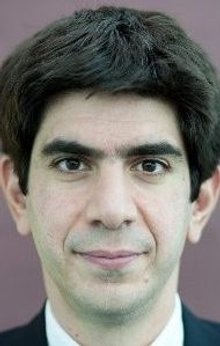
"Circularity is becoming a defining factor of business resilience and competitiveness - scaling it requires shared ambition and collaboration across industries," explains Kyriakos Triantafyllidis Head of Growth and Strategy Centre for Advanced Manufacturing and Supply Chains at WEF.
Hitachi for example has established a unit dedicated to remanufacturing screw processors to ensure high quality standards are met.
Circular supply chains can be integrated with existing linear operations or operate separately and they can be managed in-house or through external partners.
The WEF survey revealed that 56% of companies use hybrid supply chains where circular and linear operations are mostly or fully integrated.
Additionally most businesses in the survey rely on external partners for parts of their circular supply chains with 80% of organisations outsourcing collection and dismantling.
As resources become scarcer and costs rise companies that can extend product life and uncover embedded value will build new levels of business resilience and success.
Company portals







Executives
Kyriakos Triantafyllidis
Head of Growth and Strategy, Centre for Advanced Manufacturing and Supply Chains
Thom Almeida
Lead, Circular Economic Systems