
How Plastic Manufacturing Giant Bakelite Won EcoVadis Gold

Bakelite, the Atlanta-based manufacturer known for producing the world's first ever 100% synthetic plastic, is often credited with kickstarting the age of plastics.
Bakelite resin was revolutionary from the moment it was first created, all the way back in 1907. The material quickly became familiar to millions, thanks to its applications in household goods like telephones, radios, jewellery and much more.
But in the decades since those heady days, plastic has developed a particularly bad reputation when it comes to sustainability. In 2024, the UN's Secretary-General António Guterres said that the world is "choking on plastic", alluding to the chronic problem of plastic pollution.
According to the OECD, just 9% of the world's plastic is recycled, with the rest filling landfills, incinerators or our oceans. What's more, scientists from the UN estimate that plastics may take more than 500 years to fully decompose.
So, with this in mind, it would be safe to assume that a plastic producer would struggle to be sustainable. Bakelite, however, is shrugging off this assumption.
Why Bakelite has been recognised for its sustainability
The firm was awarded the prestigious Gold Medal by sustainability ratings platform EcoVadis, positioning the thermoset resin manufacturer among the top 5% of all the 130,000 companies assessed worldwide for sustainability.
This recognition can be chalked up to Bakelite's new policies, its operational improvements and the expanded scope of its public reporting.
The firm has also made some big investments in infrastructure recently, including solar panel installations at its sites in Barry in Wales, Lantarón in Spain and Kitee in Finland, as well as a steam turbine at the firm's Botlek facility in the Netherlands.
There have also been several initiatives aimed at reusing water at Bakelite's sites in Oregon and a new chiller system in Louisville that is designed to reduce water consumption.

Bakelite's acquisition strategy
Bakelite's President and CEO JP Aucoin points to the company's recent acquisition of Sestec, describing the bio-based adhesives manufacturer of wood and composite materials as an important reason for the firm's trajectory.
"Earning the EcoVadis Gold Medal is a significant milestone that underscores our deep commitment to sustainability and responsible business practices," he says.
"Our recent acquisition of Sestec, a leader in bio-based adhesives for wood and composite materials, together with this recognition, reinforces our dedication to helping customers achieve their sustainability goals."
The company's sustainability performance was driven by participation in initiatives including Responsible Care and ISCC Plus certification programmes.
Can plastic manufacturers improve recycling?
Despite all the furore and the calls for plastic production to slow, the OECD predicts that global plastic use is going to triple from 2019 levels by 2060. This means that plastic pollution will likely double to 44 million tonnes a year.
Naturally, manufacturers like Bakelite are under pressure from institutional investors when it comes to this subject, with many investors becoming more and more focused on environmental performance, including renewable plastics use, recycling, waste management and bio-based raw materials.
Advanced recycling technologies like chemical recycling and pyrolysis are under development, breaking down plastics into basic components for producing high-quality recycled materials.
That said, the transition to a fully circular economy is going to require huge capital investments, the kind of which many companies are struggling to justify against immediate financial pressures.
Bakelite, though, appears to be taking a proactive approach to the matter.
“We know that our dedication to sustainability will help us become a stronger company while also making a positive impact on our planet,” explains JP.
The company has a long way to go and many responsibilities to fulfil before it can be considered wholly sustainable, but it is clear that it is making an effort to move the dial.
As David Attenborough says: “Industrial pollution and the discarding of plastic waste must be tackled for the sake of all life in the ocean.”
Company portals



Executives

António Guterres
Secretary General
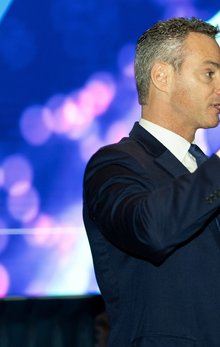
JP Aucoin
President and Chief Executive Officer