How Smurfit Westrock Merger has Enhanced Sustainability
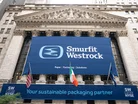
One year on from the merger of Smurfit Kappa and WestRock, the newly-created Smurfit Westrock is thriving.
But in the packaging and containers manufacturing industry, there is no time for complacency – sustainability never sleeps.
So what is Smurfit Westrock doing about embedding circularity into its products and processes?
To find out, Sustainability Magazine spoke to: Chris Davidson, VP, Sustainability Engagement; Kevin Hudson, SVP, Forest Resources & Recycle Fibre, and David Upton, VP, Europe.
Could you share a bit of information about yourself, including your career path and what you love about your current role?
Chris: I’ve spent close to 30 years in the forest products and packaging industry, working across functions including forest management, R&D, environment, health, and safety, and sustainability.
What I really enjoy about my role today is working with Smurfit Westrock’s stakeholders, our customers, NGO partners, suppliers and communities to find ways that sustainability can create real value not just for business, but for people and the planet. It’s very rewarding to be part of a company with the scale and ambition to lead on sustainable packaging. It motivates me to see how our work helps drive both innovation and positive impact across value chains.
Kevin: I’ve been in fibre procurement within the building products and paper and packaging industries my entire career after studying forestry and business in school, so this space has always been a real passion of mine.
What I enjoy about my role is that it requires me to think about how we can be as sustainable as possible throughout each stage of the fibre cycle – from making sure the forests we source from are managed responsibly and sustainably to ensuring that fibre is recovered and recycled to be utilised in our recycled paper mills to make new sustainable products.
Having that full view of the fibre lifecycle beginning at the forest level all the way through the recycled fibre process means I get to work on solutions that not only support our customers, but also help protect forests, reduce waste and keep materials in use for as long as possible.
David: For the past 17 years I have been working across markets in Ireland, UK, France and the Netherlands at Smurfit Westrock in General Manager and Managing Director roles. My current position has me working with teams across Europe, the Middle East, Africa and Asia to constantly evolve and improve our operational businesses, which is key to scaling our sustainable packaging solutions worldwide and most importantly adding value to our customers.
How important is sustainability and circularity to Smurfit Westrock?
Chris: Sustainability and circularity are really at the core of everything we do. We’re one of the largest paper-based packaging companies in the world. We’re fully integrated with a scale that gives us both the opportunity and a responsibility to lead.
And our business model is truly circular. The raw materials for our products are renewable, our packaging can be recycled and we use a combination of recycled fibre and virgin fibre which is sourced from responsibly managed forests.
Plus, we have 63 recycling facilities globally where we collect post-consumer materials to be recycled. For us, sustainability is central to how we create value for our customers and for the communities where we operate.

Now that it’s been a year since the combination of Smurfit Kappa and WestRock, what have been the biggest milestones and learnings and how has the integration shaped the company’s global strategy?
David: The integration brought together two highly complementary businesses rooted in sustainability, giving us a truly global footprint and the ability to serve customers more effectively across markets.
We’re already seeing the strength of the combination, with around US$31bn in annual net sales.
A standout milestone has been the launch of our Green Finance Framework, which embeds sustainability directly into our funding strategy and enabled the successful issuance of US$2bn in green bonds – a clear signal of our long-term commitment and market confidence in our approach.
A key learning has been just how much opportunity there is when you share best practices across regions, whether that’s in technology, operations or innovation.
Can you tell us about Smurfit Westrock’s net-zero transition and how the business is progressing?
Chris: We’ve committed to working toward a net-zero future, and that means taking a hard look at our own operations and our broader value chain.
We’ve outlined our approach in a Net Zero Transition Plan and have already made significant progress with investments in renewable energy, efficiency upgrades and innovation in our mills.
For example, we’ve trialled breakthrough technologies like hydrogen at one of our mills in France, invested US$100m in a biomass boiler in Columbia and signed virtual power purchase agreements to support the construction and operation of solar farms in Texas.
There’s a lot of work ahead, but we’re confident in the roadmap we’ve set out and the role we can play in supporting our customers’ climate goals.
- 63 Smurfit Westrock recycling facilities globally
- US$100m investment in a biomass boiler in Columbia
- 230 tons of single-use plastic removed from the system in partnership with Costco
Please give the lowdown on the central part played by fibre-based innovation, with examples of its use by Smurfit Westrock
Kevin: Corrugated or paper-based packaging is one of the most recycled materials in the world. The sustainability advantages are strong and we continue to innovate to improve durability, drive efficiencies, and create fit-for-purpose packaging.
Take our CanCollar technology, which replaces plastic rings and shrink wrap with a recyclable paperboard solution — it’s already being used by major beverage brands, helping them meet their hefty plastic reduction goals by reducing plastic waste by tons every year.
Another good example is our 100% paper pallet wrap, which replaces traditional stretch film. It’s strong enough to stabilize loads, but recyclable in the same streams as corrugated, helping customers cut out single-use plastics without compromising efficiency in their logistics.
For me, those kinds of innovations show the power of fibre: it can protect products, support customers’ sustainability goals, and come back into the system again and again.
What are the biggest challenges for Smurfit Westrock in its efforts to scale sustainable packaging across global markets?
David: The opportunity is huge, but there are challenges too. Regulations and recycling infrastructure vary widely from one country to another, so a solution that works well in Europe may need to be adapted for markets in Asia or elsewhere.
Supply chains and customer expectations also look different depending on the region. The challenge for us – and what makes my role exciting – is to keep evolving our operations so that we can deliver consistent, high-quality, sustainable packaging worldwide while tailoring to local realities.
Keeping the customer at the core of everything we do is essential. That means investing in technology, building partnerships and continuing to innovate so that sustainability works at scale.
Could you say more about the work you have been doing with Coca-Cola and Costco?
Chris: These partnerships are great examples of customer collaboration driving innovation.
With Costco, we’ve recently developed paper-based alternatives to replace plastic handles for their multipack products, taking more than 230 tons of single-use plastic out of the system to date.
Last year, we also worked with Liberty Coca-Cola in Philadelphia to replace plastic rings with our PETCollar Shield Plus paperboard carrier for multipack beverages.
That change alone is expected to eliminate around 100 tons of plastic each year. What I love about these projects is that they show how innovative design and sustainability come together to help customers meet their sustainability goals and advance the circular economy without sacrificing function or aesthetics.
Supply chains are under more pressure than ever. How is Smurfit Westrock leveraging its packaging innovations not only to advance sustainability, but also to create efficiencies?
Kevin: It’s part of our mission to help our customers improve sustainability in their packaging supply chains and, wherever possible, we want to increase efficiency at the same time.
A good example is Depin Inc’s Ecorrcrate, an alternative to the traditional wooden shipping crate that uses our recyclable WetTech corrugated board.
They’re lighter, fully recyclable and require no tools to assemble, which means less labour, lower shipping emissions and better use of warehouse space.
Several companies are already seeing major savings – in some cases more than six figures.
Innovations like this demonstrate the business value of circularity: reducing waste while improving performance.
Company portals

Executives
Christopher Davidson
Vice President, Sustainability Engagement
Kevin Hudson
SVP, Forest and Recycle Fiber Supply