How The Ocean Cleanup is Removing Plastic Waste in 30 Cities
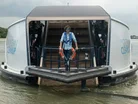
The Ocean Cleanup (TOC), an international non-profit dedicated to removing plastic from the oceans, has launched a programme to work across 30 international cities.
Speaking at the UN Ocean Conference (UNOC), the organisation unveiled its 30 Cities Programme, which aims to deploy its Interceptor solutions across 30 key cities in Asia and the Americas.
It says that this initiative could eliminate up to a third of all plastic flowing from the world’s rivers into the ocean before the end of the decade.
Scaling plastic removal
To date, TOC has already removed 29 million kilograms of waste from the ocean in its deployment across 20 of the world's most polluting rivers.
TOC says it has learned that addressing entire cities rather than individual rivers accelerates progress.
This approach was first demonstrated in Kingston, Jamaica, where citywide deployment enabled faster scale-up and partner collaboration.
“When we take on an entire city, instead of individual rivers, we can scale faster, reduce costs and maximise impact,” says Boyan Slat, Founder and CEO of TOC.

“Our analysis shows that strategically deploying Interceptors across just 30 carefully chosen cities can stop up to a third of river plastic pollution worldwide.
“This is the next big leap toward our ultimate goal of a 90% reduction in global ocean plastic pollution.”
Rolling out the programme
The first confirmed deployment will be in Panama City, Panama, with operations expected to begin in 2025.
In Mumbai, India, the mapping of all waterways has already been completed, with deployment preparations underway.
Expansion plans also include Manila (Philippines), Montego Bay (Jamaica), Jakarta (Indonesia), Kuala Lumpur (Malaysia), Bangkok (Thailand) and Los Angeles (USA).
More cities will be announced once partnerships and funding agreements are secured.
To meet these ambitions, TOC is expanding its engineering and operational capacity.
Using data for mapping and tracking
Each city project starts with a rigorous analysis phase using aerial drones, AI-powered image recognition and GPS-tracked dummy plastics to map waterways and track waste flows.
These insights ensure Interceptors are strategically placed and provide measurable benchmarks for progress.
Beyond intercepting river plastics, the programme will remove waste from nearby coasts, mangroves and coral reefs.
This twin-track strategy addresses both new inflows and legacy pollution.
Alongside deployments, TOC works with local partners to improve waste management systems and raise community awareness.
Reducing plastic waste
While launching the 30 Cities Programme, TOC is also finalising its first 20 river projects.

A key milestone is expected later in 2025 in the western Caribbean, where the organisation aims to solve the plastic crisis in the Gulf of Honduras by cutting off pollution at its source.
Meanwhile, offshore operations continue to target the Great Pacific Garbage Patch.
Although extraction is on pause, efforts are underway to refine mapping technologies that identify plastic “hotspots” and make future removals more efficient.