
How to Accelerate Net Zero Goals: ESG, AI & Nature in Action

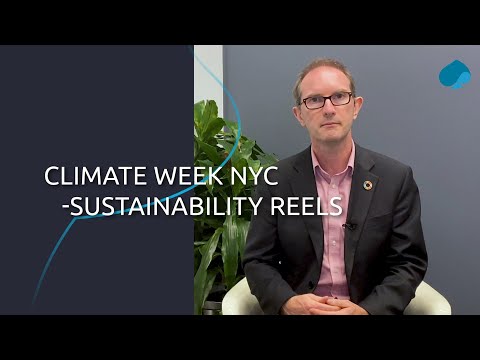
According to Dr. James Robey, Executive Vice President, Global Head of Environmental Sustainability at Capgemini, organisations need to accelerate implementation, turning net zero and ESG ambitions into measurable, scalable outcomes.
Regulatory expectations are rising, climate impacts are becoming more visible and technology is evolving at pace.
“The question is no longer whether companies will transform, but how quickly they can do so,” writes James.
Biodiversity and reporting
As companies embrace ESG and corporate responsibility, the concept of sustainability is expanding well beyond carbon alone.
James highlights that frameworks such as The Taskforce on Nature-related Financial Disclosures are pushing companies to understand their dependencies on nature, assess biodiversity risks and develop credible mitigation strategies.
By understanding these essentials, it helps to drive a more holistic approach where land use, water, ecosystems and supply-chain impacts sit alongside carbon as core strategic considerations.
At the same time, ESG reporting is entering a new phase.
Regulations like The Central Securities Depositories Regulation in Europe, emerging climate disclosure rules in the US and frameworks in Australia and New Zealand are making reporting more standardised, comparable and actionable.
“The sustainability conversation is changing...” writes James on LinkedIn.
"For the past decade, the focus has been on commitments and targets. Now, the real test is delivery.
"Across industries, organisations are holding firm on net zero ambition and increasing investment, but many still lack clear transition plans and interim milestones that turn intent into measurable progress.
"Five signals are shaping sustainability in 2026, from the rise of nature and biodiversity, to more structured ESG reporting, practical AI use cases and the growing importance of adaptation and resilience.
"I’ve shared my perspective on what these shifts mean for businesses, and why the next phase must be defined by execution rather than aspiration."
Adaptation and AI in business operations
As climate impacts grow in frequency and severity, adaptation is becoming central to business planning.
Companies are becoming increasingly aware of physical risks, from supply-chain disruptions to asset vulnerability and are embedding resilience into operations, infrastructure and long-term strategy.
James emphasises that mitigation and adaptation can no longer be treated separately, both are critical for future competitiveness.
All sustainability, net zero and sustainable supply chain leaders should attend:
- Sustainability LIVE: The Net Zero Summit - QEII Centre, London, March 4-5
- Sustainability LIVE: The US Summit - Navy Pier, Chicago, April 21-22
Co-located with Procurement & Supply Chain LIVE, these events bring together CSOs, ESG leaders and senior decision-makers at a moment when sustainability, supply chains and commercial performance are increasingly interconnected.
Tickets can be booked online today for The Net Zero Summit and The US Summit. Group discounts available.
“AI’s role in sustainability is moving beyond experimentation,” says James.
“While generative AI may support early-stage reporting drafts, the most meaningful progress will come from operational applications: digital twins, energy-efficiency algorithms, predictive maintenance and large-scale analytics.”
Green markets and the path ahead
Green markets are continuing to expand, encompassing sustainable finance, circular business models and low-carbon technologies such as electrification, regenerative agriculture and renewable energy deployment.
“For me, improving reporting capability is now a strategic priority,” writes James.

“We must move away from spend‑based proxy models for Scope 3 towards more robust, standardised and comparable data, underpinned by credible transition plans and clear interim milestones that show how net zero commitments will be delivered in practice.”
James highlights that according to Capgemini research, the majority of organisations plan to increase environmental sustainability investment this year, with more than 90% maintaining net zero timelines despite economic or geopolitical volatility.
Rapid innovation in areas like sustainable IT and carbon tech solutions suggests that credible decarbonisation and resilience solutions will continue to drive market growth.
Those that combine credible reporting, nature-positive initiatives, practical AI deployment and integrated adaptation strategies will be best positioned to deliver measurable outcomes and lead in 2026 and beyond.
Company portals

Executives

Dr James Robey
Global Head of Sustainability