
Inside the European Commission’s Sustainable Tourism Guide

The European Commission (EC) has published new guidelines outlining how Europe’s Natura 2000 network of protected areas can act as a powerful driver of sustainable tourism while safeguarding vulnerable habitats and species.
As the largest coordinated network of protected areas in the world, Natura 2000 covers nearly one-fifth of the EU’s land area across more than 27,000 sites and over 10% of its marine territory.
While the main objective of these sites remains the conservation of biodiversity, the network permits various economic activities provided they do not undermine conservation goals.
These new guidelines are designed to strike that crucial balance, helping Member States reconcile nature protection with socio-economic development in a changing climate.

Navigating the conservation paradox
The World Tourism Organization defines sustainable tourism as “tourism that takes full account of its current and future economic, social and environmental impacts, addressing the needs of visitors, the industry, the environment and host communities".
The guideline report states that well-managed protected areas naturally attract more visitors; however, this success can create a "conservation paradox" in which increased footfall can lead to habitat degradation, species disturbance, pollution and resource depletion.
To address these challenges, the guidelines propose a structured management framework focused on identifying tourism pressures, assessing site carrying capacity, strengthening communication and implementing tailored management measures.
Practical solutions such as spatial zoning, separating highly restricted core zones from transitional recreational areas, and strict local regulations help direct visitor flows away from sensitive ecological hotspots.
These adaptive, evidence-based measures ensure that public enjoyment of nature does not compromise the long-term survival of Europe's most threatened species.
“Tourism is a powerful driver of transformation,” said António Guterres, Secretary-General of the United Nations, on World Tourism Day 2025.
“It creates jobs, fuels local economies, supports infrastructure and contributes to development far beyond GDP.
“Tourism strengthens bonds between people and places. It builds bridges across cultures, preserves traditions and restores cultural heritage. It reminds us of our shared humanity – and the richness of diversity.
“Yet tourism can also damage the very places and communities it celebrates.
“As the world faces climate breakdown and rising inequalities, we need bold, urgent and sustainable action that puts people and planet first.”
Socio-economic power and local supply chains
Tourism is a vital cornerstone of the European economy. Within Natura 2000 sites, sustainable visitor activity generates between €50bn (US$57bn) and €85bn (US$97bn) annually.
This income directly supports local livelihoods and rural development, sustaining up to two million full-time equivalent jobs in coastal, mountainous and remote regions.
The success of these areas relies heavily on local supply chains of goods and services, including sustainable agriculture, accommodation, catering and transport.
When managed responsibly through ecotourism, which has grown by up to 34% annually since the early 1990s, the local supply of services fosters economic resilience while building public support for conservation.
“There is a roadmap to protecting biodiversity and advancing the sustainable use of ocean resources,” says Olivier Wenden, Vice Chairman and CEO of the Prince Albert II of Monaco Foundation when talking about Red Sea Global’s report, 'Unlocking Innovation for Regenerative Tourism'.
“The Foundation remains committed to championing regenerative approaches, especially in the Mediterranean, Polar Regions and Least Developed Countries.”
Various European funding sources are available to facilitate these efficiencies between conservation and sustainable tourism.
For example, the European Regional Development Fund supports regional investments in green infrastructure, digitalisation and sustainable tourism interventions.
These funds also support efforts to reduce environmental impacts, with some projects focusing on emission reductions and energy efficiency.
Additionally, the LIFE Programme's clean energy transition sub-programme helps build capacity and stimulate investments in energy efficiency and small-scale renewables.
These financial instruments allow public authorities and private entities to retrofit existing infrastructure and implement restoration projects.
“As a mainstream tour operator, we have both the responsibility and the opportunity to help shape the future of travel,” says Garry Wilson, CEO of easyJet Holidays.
“From expanding our certified hotel portfolio to scaling lower-carbon transport and supporting local communities, we’re focused on delivering measurable change at scale.”
Collaboration and stakeholder engagement
Achieving a successful sustainable tourism model depends on cross-sectoral cooperation and collective ownership of conservation outcomes.
The guidelines underscore the importance of stakeholder collaboration, bringing together competent authorities, tourism operators, local communities and NGOs.
Inclusive engagement helps shape tailored tourism plans, resolve conflicts and promote shared stewardship of protected sites.
For instance, voluntary certification schemes and the licensing of the Natura 2000 logo can encourage businesses to adopt eco-friendly practices.
Ultimately, this collaborative approach ensures that European nature sites can flourish as spaces for both thriving wildlife and the public.




Executives
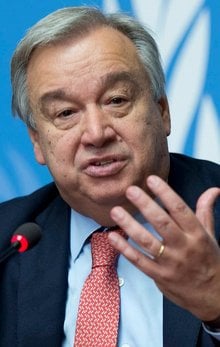
António Guterres
Secretary General

Garry Wilson
CEO
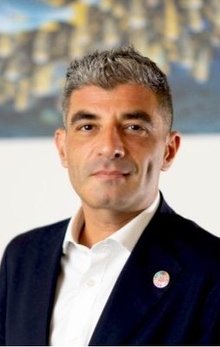
Olivier Wenden
Member of the Board of Directors