Red Sea Global: Regenerative Tourism Needs Urgent Investment
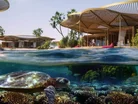
Red Sea Global, the Future Investment Initiative Institute, Wave and the Prince Albert II of Monaco Foundation, have released a report revealing an anomaly in the global travel sector.
While demand for eco-conscious travel is soaring, the capacity of the tourism industry to deliver genuinely regenerative experiences is lagging far behind.
The report, Unlocking Innovation for Regenerative Tourism, calls for an urgent shift in investment, innovation and mindset.
It calls away from sustainability as a minimum standard and towards regeneration as a proactive model that restores ecosystems and uplifts local communities.

Regeneration vs sustainability
The blue economy is currently valued at US$2.5tn and is forecast to double by 2030.
Coastal and marine tourism already makes up more than 50% of total global tourism, yet truly regenerative tourism, which actively enhances biodiversity, supports community wellbeing and strengthens local economies, remains drastically underserved.
Tourism contributed approximately US$9.9tn to global GDP in 2023, representing 9.1% of total GDP.
This substantial economic footprint, the report argues, makes the industry a key player in reversing environmental degradation and social inequities, if regenerative approaches are embraced.
“At Red Sea Global, we believe that tourism can be a powerful force for good,” explains Raed Albasseet, Group Chief Environment & Sustainability Officer at Red Sea Global.
“This report underscores the urgent need to unlock innovation and investment in regenerative practices.
“Our own regenerative tourism efforts demonstrate that it is possible to create thriving destinations that also protect and enhance the environment.”
Industry insights
The report draws on surveys from investors, hospitality leaders and innovators and reveals a troubling disconnect between ambition and implementation:
- 43% of global travellers are willing to pay more for sustainable stays, yet very few experiences deliver regenerative value.
- 58% of investors remain hesitant due to lack of reliable data or proven case studies, despite a US$3tn market opportunity.
- Nearly a third of hospitality leaders cite the innovation pipeline as underfunded and underdeveloped.
- Only 20% of hospitality players have implemented regenerative tourism at scale, even though more than half understand the concept.
- More than 40% of innovators report difficulty securing funding due to the undervaluation of their economic impact.
“Innovation today will define the tourism industry of tomorrow and I urge investors, policy makers and innovators to look carefully at the findings of this groundbreaking report,” says Penny Richards, CEO of the Future Investment Initiative Institute.
Data and collaboration
The report stresses the importance of data-driven solutions and cross-sector collaboration in accelerating regenerative efforts, particularly in marine ecosystems.
“This important study highlights the critical role of data and collaboration in restoring our oceans,” comments Jamila El Mir, Insights and Activation Lead at Wave.
“By leveraging data-driven insights to fill our knowledge gaps, and fostering partnerships across the tourism ecosystem supported by ocean data platforms such as oceancentral.org by Wave, we can unlock regenerative solutions that ensure a thriving ocean for generations to come.”
“The findings from this report provide a roadmap to protecting biodiversity and advancing the sustainable use of ocean resources,” says Olivier Wenden, Vice Chairman and CEO of the Prince Albert II of Monaco Foundation.
“The Foundation remains committed to championing regenerative approaches, especially in the Mediterranean, Polar Regions and Least Developed Countries.”
From research to reef
The publication’s insights were shared during a 7 June 2025 workshop in Monaco, held alongside the Blue Economy & Finance Forum and further explored at the UN Ocean Conference on 10 June in Nice.
There, a panel at the Startup Reef Innovation Pavilion showcased blue tech solutions, from AI-powered conservation tools to sustainable hospitality platforms.
“This collaborative research effort underscores the importance of harnessing technologies such as artificial intelligence to accelerate the transition to a regenerative tourism sector,” says Salma Baghdadi, Innovation Lead at Wave.
“Our work is grounded in impact, regenerative tourism is not only an environmental and social imperative, but an economic opportunity requiring innovation and blue tech to scale smart, resource-efficient solutions at speed.”
A global call to action
The report outlines several urgent priorities:
- Raise awareness among institutional and private investors
- Engage hospitality leaders to implement regenerative models
- Support innovators by growing a pipeline of ready-to-scale startups
- Advocate for robust policies that enforce long-term regenerative outcomes.
Opportunities for transformation lie in:
- Policy Enablement: Favourable regulations to incentivise regeneration
- Investment Acceleration: Strategic capital to grow blue tech and local models
- Framework Alignment: Shared standards and sustainability benchmarks
- Cross-Sector Collaboration: Uniting tourism, technology, finance and governance.

The message from this report is clear: regenerative tourism is no longer a fringe ambition, but a mainstream necessity.
With the right innovation and investment, it can deliver lasting impact for people and the planet.
Explore the latest edition of Sustainability Magazine and be part of the conversation at our global conference series, Sustainability LIVE.
Discover all our upcoming events and secure your tickets today.
Sustainability Magazine is a BizClik brand