
Is E1 the World’s Most Sustainable Sport?
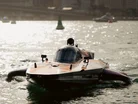
The second-ever season of the E1 World Championship – the world's first all-electric, high-speed offshore powerboat racing series – came to a close towards the end of 2025, and once again there was much to celebrate.
The Championship’s second year had seen interest in the sport grow significantly, while the number of races and teams competing had also increased.
The most immediate celebrations after the final race in Miami, however, belonged to Team Brady, the crew overseen by seven-time Super Bowl winner Tom Brady.
In Florida, Tom’s team secured their second successive series win in dramatic fashion, beating tennis legend Rafael Nadal’s team to clinch the title.
It was not just the racing that made that day in November so significant, though.
The season finale also marked the end of the first year of E1’s ‘Blue Impact Championship’, an initiative set up by the sport’s organising body to measure the sustainability of each of the competing teams.
A few weeks after the race in Miami, it was revealed that Team Brady had also won that honour.
But how did they do it? And why exactly did E1 decide to make sustainability such a core part of the sport?
Sport, sustainability and the science behind it
In attendance at Bombay Sapphire’s distillery at Laverstoke Mill for the presentation of the Blue Impact Championship was Carlos Duarte, E1’s Chief Scientist.
Aside from his work with E1, Carlos is also one of the world’s leading marine ecologists. For him, the Blue Impact Championship is far from just a sideshow to the powerboating that E1 is known for.
“E1 is a sport with a purpose,” Carlos explains, “and the purpose is not just to entertain and advance technology of electric mobility, but also to deliver the highest possible positive impact on aquatic ecosystems.”
Carlos has spent 45 years studying marine ecosystems, charting first how they work, then how humans damage them, and now how we might repair them.
He is blunt about why E1 could never be just another powerboat series built on noise and fumes.
“I never thought that I would be working on sports, particularly motor sports, because I don’t really enjoy much noise and fumes and actually burning fuel for fun,” he says.
“But electric motor sports have a different value proposition.”
Electric raceboats give E1 a way to showcase cleaner technology in a sector that is “lagging behind 15 years” compared with electric mobility on land, especially in ending the cocktail of exhaust, fuel residues and underwater noise that petrol engines pour into rivers, lakes and coasts.
Just as importantly, Carlos sees sport as the perfect vehicle for communicating big, complex ideas to big groups of people.
During the 2025 season, E1 projected that its broadcasts could reach more than a billion viewers and its team owners are drawn from “legends of sports, entertainment and business”, meaning that people gravitate towards them.
“It’s not about me talking about sustainability,” Carlos says, “it’s about them talking about these topics to their followers,” bringing ocean issues to audiences that everyday conservationists could scarcely dream of reaching.
How the Blue Impact Championship works
The Blue Impact Championship takes advantage of the spotlight that is always on high-profile sport to turn sustainability into a competition.
Each and every E1 team is scored by an independent jury on how much positive impact they deliver for aquatic ecosystems over the course of the season, from coral reefs and mangroves to river water quality and plastic pollution.
Carlos likes to say that in Blue Impact “regardless of who wins, we all win,” because every project contributes to healthier waters.
But the competitive edge matters, too, because “competition means walking together” and pushing one another’s limits on what is possible.
With sports that operate at the cutting edge of technology, like E1 or Formula 1, it is often the case that innovations made in pursuit of sporting glory go on to have a hugely positive impact outside the sporting world too.
As such, facilitating this kind of competition could have a genuinely world-changing impact.
Team Brady’s Race for Change
So, what made Team Brady the clear winner of the inaugural Blue Impact Championship?
For Ben King and Joe Sturdy, the Co-Team Principals of Team Brady, sustainability has always been a central part of their team’s identity.
“When we set up the team with Tom, we all said to each other that we want to win on and off the water,” Ben recalls.
Ben and Joe created Race for Change as an umbrella campaign to gather partners “that in some way are having a positive impact in the world”, giving structure to their sustainability work.
From the start, plastic pollution in the ocean was the focal point.
With founding partner 4ocean, Team Brady pledged that for every championship point they scored, they would remove 100 kilograms of plastic from the ocean.
“This year we ended up scoring 195 points, so we’ve removed almost 20 tonnes of plastic from the ocean, which we’re so excited about and really, really proud,” Ben says.
Race for Change goes further than headline numbers, though.
Ben describes a methodical attempt to make “everything that we do across the team” more sustainable.
Their teamwear is produced with Oceana, a partner that turns recycled ocean plastic into apparel, helping prevent more than 4,000 plastic bottles from entering landfill this season.
Even the pilots’ racing suits are made almost entirely from recycled materials.
The team is always striking up new partnership to further extend the potential of their campaign.
“WaterAid came on board just before the last race of the season, and so we’ve got a lot of plans going into 2026 of what we’re going to do with WaterAid and helping to promote equality in terms of access to drinking water,” Ben explains, linking E1’s mixed‑gender pilot pairings to a broader story of equal opportunities.
Joe, who cut his teeth in Formula 1 before helping to shape Team Brady from scratch, sees clear parallels between chasing lap time and chasing environmental progress.
“We have a no stone unturned approach when it comes to performance and creating efficiency within the team and within everything that we do,” he says.
Transferring that mindset to sustainability has been very powerful indeed.
“It’s been great to translate that approach across to the sustainability work because we can have the same approach. We look for marginal gains in all areas, just small improvements, building on what has been done before, not being scared of imperfections and just trying to trend towards having the impact that we want to have.”
For Joe, this first year of the Blue Impact Championship has set the bar for the sport.
“We’ve now got a line in the sand, we know what to do. We know bits that we could have done better and we’re just going to build on that going into Season 3 and beyond.”
Why this matters beyond sport
Carlos is convinced that this kind of experiment in competitive sustainability points beyond racing.
After decades of slow policy progress, he believes that sport can make a real difference with regards to climate change, water positivity and energy efficiency.
“The solution is not going to come from policy makers and governments,” he suggests. “It has to come broadly from society,” with the private sector and sport as “great mobilisers” for that.
As for Team Brady, they believe that the philosophy of marginal gains can apply to any organisation, not just a cutting‑edge racing crew.
“If everybody just looks at the marginal gains and looks at just taking small steps in the right direction together, everyone can benefit from it,” Joe explains.
In that sense, the Blue Impact Championship is more than a trophy: it is a challenge to treat sustainability as a contest worth winning, and an invitation for the rest of the world to join in that race.
With the third season of E1 already underway, 2026 could see the sport communicate that message better than ever before.
Company portals


Executives
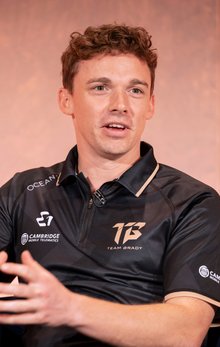
Ben King
Co-Team Principal
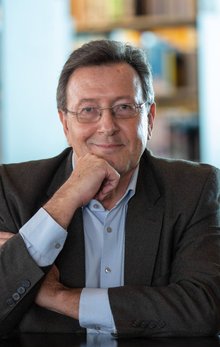
Carlos Duarte
Chief Scientist
Joe Sturdy
Co-Team Principal