Q&A: WaterAid & PepsiCo Foundation’s Partnership in Nigeria
Access to safe water, sanitation and hygiene is a basic human need for health and well-being.
Demand for water is rising owing to rapid population growth, urbanisation and increasing water needs from agriculture, industry and energy sectors.
“The demand for water has outpaced population growth,” says the United Nations.
According to WaterAid, 3 in 10 people in Nigeria don't have clean water close to home, putting them under constant threat from waterborne diseases like cholera.
The more our climate changes, the more challenging this becomes.
Kelly Parsons, the Chief Executive Officer of WaterAid America, aims to help provide clean water, sanitation facilities and good hygiene for millions of people across the world.
Partnering with WaterAid is the PepsiCo Foundation, pledging to make a difference to people and communities.
Hatim Khan, the Senior Director of International Programs at PepsiCo, oversees PepsiCo Foundation programming and drives social impact strategy outside of North America, including its international partnerships and philanthropic efforts.
Kelly and Hatim shared their expertise with Sustainability Magazine.
How has the PepsiCo Foundation’s partnership with WaterAid improved access to safe drinking water, sanitation and hygiene in Lagos communities?
Kelly: In Nigeria, 90% of the population lack access to basic drinking water and only a fraction of the population has access to safely managed sanitation.
These gaps pose serious threats to public health, economic mobility and overall quality of life.
Rapidly growing urban areas, like Lagos, are especially at risk.
Hatim: Through our partnership, we are working to improve water, sanitation and hygiene, or WASH, awareness and access in Lagos State.
This takes many forms, from building toilet facilities in schools and rehabilitating health centres, to providing training to maintain local WASH facilities and holding informational sessions with students on World Toilet Day.
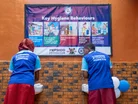
This year, we collaborated to support the formation of a Hygiene Club at Agidingbi Junior Grammar School, which has helped students feel more comfortable discussing and promoting WASH practices.
Both girls and boys at the school have gotten involved and faculty have shared that their students are feeling empowered to discuss their health, support their friends and continue attending school confidently.
How do WaterAid and the PepsiCo Foundation work together to maximise reach and long-term impact?
Kelly: Sustainability is essential for WaterAid programs and the best way to ensure clean water access for generations is to rely on the expertise of local community members achieved through education and training.
A great example is the Local Area Mechanics initiative.
In 2023, 20 women in Lagos were trained with new skills and hands-on experience working on water facilities throughout their communities, including fixing taps, running new pipes and setting up solar powered water pumps.
Now these individuals have the knowledge and income generating opportunities that can have long term impact on their lives and communities, from keeping the water flowing in a home kitchen to ensuring babies are delivered into clean hands at healthcare centres.
Hatim: Making sure that solutions are locally rooted, scalable and meaningful in the long-term is key to PepsiCo’s aim to empower communities through sustainable impact.
Kelly shared a great example of how we strive to address societal challenges while simultaneously strengthening the communities we serve.
Another way we do this is by involving stakeholders at every level, from government leaders to students in local communities, to co-create conversations around WASH.
This helps ensure that key sanitation information is accessible to individuals at every level of society and brings communities together.
The World Toilet Day Symposium, a collaboration with WaterAid and other partner organisations, included panel discussions, presentations, debates and student engagement.
It was a celebration of community and learning that helped make WASH education informative, while also strengthening community connections and disseminating vital information.
What are some key impacts that have occurred since this three-year initiative started?
Kelly: Since we launched the partnership in 2022, we have rehabilitated six water, sanitation and hygiene facilities and helped 54,489 people gain access to safe water and hygiene facilities.

Additionally, media campaigns delivered hygiene education to more than 800,000 people across the Lagos region.
Beyond Nigeria, our partnerships with the PepsiCo Foundation in India, Pakistan and Ethiopia have helped 515,000 people access safe water through community-led initiatives.
How does this initiative connect to PepsiCo’s broader sustainability and social impact strategy and how does it advance WaterAid’s mission in Nigeria and globally?
Hatim: The PepsiCo Foundation’s work across its focus areas, including safe water access, food access, farming and workforce development, all support pep+ (PepsiCo Positive), PepsiCo’s business transformation initiative that puts sustainability at the heart of everything we do.
One of these pep+ goals is to provide safe water access for 100 million people by 2030 and, with the help of WaterAid, we reached 1.2 million people in 2024 alone and have reached more than 96 million people since 2010.
Kelly: Our overall goal at WaterAid is to influence, deliver and scale-up water, sanitation and hygiene solutions that are sustainable, climate-resilient and address key cross-cutting elements of other development goals, including health, education, poverty, economic growth and nutrition.
By 2028, our ambition is to reach ten million people in Nigeria through our direct WASH interventions and seventeen million people in Nigeria in collaboration with the government and key partners, like the PepsiCo Foundation.
This partnership brings us closer to our goal.