
Is Extreme Weather Causing Global Supply Chain Disruptions?
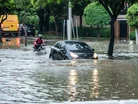
Climate-driven disruption is forcing businesses to recognise that supply chain resilience requires urgent environmental action alongside operational adaptation.
As floods, storms and late-season tropical systems increase, the sustainability implications for logistics networks can no longer be overlooked.
Businesses are beginning to recognise that climate-driven disruption is not just an operational challenge but a signal that fundamental changes to supply chain practices are urgently needed.
What were once classed as isolated incidents are now becoming regular disruptions, impacting the supply chain and causing issues for the logistics sector.

Global climate issues
According to a report by Metro examining weather patterns across global trade routes, weather disruption is intensifying across global supply chains, with volatility increasing in frequency, severity and geographic reach.
The pattern of disruption demonstrates the tangible consequences of climate change on global commerce.
Flooding across the UK and Europe and drought affecting North and Central America have led to delays, closures and disruption.
Multi-day port closures have occurred, such as the Port of Holyhead in Wales, while inland transport disruption has risen due to weather concerns.
Congestion around major gateways rose due to floods and landslides across Malaysia, Indonesia and Thailand in November.
Climate scientists warn that extreme weather events are set to increase in frequency as global temperatures rise, meaning supply chain turbulence could become a constant disrupter.
According to a report by DP World, in the past three years, 93% of cargo owners across the perishables sector have experienced climate-related disruption.
Around 75% faced climate-related crop shortages, 35% were affected by the Panama Canal drought and 27% faced issues due to low levels in the Rhine.
"Climate volatility is reshaping how food moves across borders,” says Alfred Whitman, Global Vice President of Perishables and Agriculture at DP World.
“The sector is feeling the pressure more often and with less warning.
"Traditional supply routes are being upended, forcing producers to build resilience in real time.
"What’s needed now is earlier insight into risks, more predictable movement across regions and stronger cold chain infrastructure.”
Environmental disruption impacts commodities
According to the World Wide Fund for Nature (WWF), 2025 saw the driest and hottest spring and summer in more than 100 years within the UK, impacting yields of key ingredients such as wheat.
Global supply chain disruptions for products like coffee and cocoa are occurring due to drought and flooding, causing supply issues and increased prices.
Brazil, accounting for 38% of global coffee production, experienced 110,000 wildfires affecting 114,000 km² between January and August in 2024, as well as large-scale floods in June 2025.
Vietnam, the largest global producer of robusta coffee, is still recovering from drought in the 2023/24 crop year.
In 2024, world coffee prices increased by approximately 40% due to the disruption.
Moreover, rising temperatures are expected to reduce the area for coffee growing by 50% by 2050.
Cocoa production was impacted by weather concerns in the Ivory Coast and Ghana, including increased rainfall in 2023 leading to the rapid spread of black pod disease and a drought in 2024.
Between 2022 and 2024, cocoa prices rose 136% as a result of disruptions to production and yield.
"The reality is stark: tipping points are being surpassed that could push entire ecosystems to collapse, extreme weather events are becoming the norm and wildlife populations are declining at an alarming rate," says Sir Dave Lewis, Chair of the Board of Trustees for WWF-UK.
"These shocks are already disrupting food supply chains and hitting businesses hard.
"If we want resilient supply chains we need to tackle these threats, not bury our heads in the sand.
"But no company can do this alone; collaboration across the entire system is essential."
Decarbonisation as strategic resilience
By taking risk mitigation steps, shippers, suppliers and businesses can reduce the impact weather-related disruption will have on their supply chains whilst addressing their contribution to climate change.
Entire value chains need to consider their emissions, turning to sustainable fuels or electrification for their fleets, or using renewable energy to power their businesses.
More than 90% of retailers' emissions are Scope 3, emissions generated across the value chain, but increasing data tracking and transparency can help businesses tackle these emissions.
Mitigation can also occur through mapping weather and climate risk across suppliers, building diverse supplier networks, increasing buffer stock, creating port and routing contingency plans and implementing supply chain management tools.
Company portals



Executives

Alfred Whitman
Global VP, Perishables & Agriculture

Sir Dave Lewis
CEO