L'Oreal Sustainability: Managing Growth with Decarbonisation

When L'Oreal launched its ‘L'Oreal for the Future’ programme in 2020, the world's largest beauty company was looking to double down on the climate commitments it has held for around two decades.
The 10-year-long initiative was set up to supercharge the firm’s progress on its sustainability goals in four specific areas:
- Stewarding the climate transition
- Safeguarding nature
- Driving circularity
- And supporting communities
The group, which is home to brands like Maybelline and Garnier, has been making good on these commitments in the five years since, despite registering record growth.
In 2024, the French conglomerate was officially recognised as the global leader in cosmetics, beating out the likes of Unilever and Estée Lauder to the top spot.
This growth in revenue has been accompanied by a growth in the firm’s carbon footprint, but L’Oreal has continued to plough ahead with its mission to decarbonise every corner of its operations, from its vast manufacturing network to its relationships with retailers.

L’Oreal’s progress on its climate goals
According to the latest data, L’Oreal has managed to slash emissions from its industrial sites (including its warehouses and manufacturing plants) by 74% compared with 2019, even as its production levels climbed by 12% over the same period.
By December 2024, all the group’s European operations were being powered 100% renewable energy, which provided the real driving force behind this decarbonisation.
The rest of L’Oreal’s global facilities aren’t far behind either, with a reported 97% of its worldwide operations now running on renewables.
The firm’s framework for sustainability has been ratified by the SBTi too, after it committed to reducing its absolute emissions by 25% by the year 2030.
Ultimately, L’Oreal’s aim is to reach net zero by 2050.
Nevertheless, its carbon footprint is larger than it was when its 2019 baseline was first established, driven partly by its latest cohort of acquired brands.
The company has responded to its ballooning Scope 3 emissions by launching a programme called the Solstice Fund, through which it hopes to expedite its supply chain sustainability.
The packaging puzzle
As is the case with many consumer goods providers, packaging is perhaps L’Oreal’s most convoluted challenge when it comes to climate action.
The group set an ambitious target of making 100% of its plastic packaging either refillable, reusable, recyclable or compostable by the end of 2025 but has missed the mark.
As of now, just 49% of L’Oreal’s packaging meets this criteria.
Elsewhere, just 37% of the company's packaging was made from recycled or biobased materials, falling well short of its interim 50% target for 2025.
To date, the company has invested US$84m in start-ups developing sustainable packaging solutions and has committed a further US$58m to its Circular Innovation Fund, but technological barriers and supply chain complexities have somewhat hampered its progress.
L'Oreal is continuing to invest in innovation regardless of the shortfall.
One such project has seen the firm create prototype bottles made from captured CO₂ emissions. It has also been developing fully recyclable plastic pumps and has introduced cardboard-based tubes for some of La Roche-Posay and Garnier’s products.
"[There are] lots of challenges ahead but I am more determined than ever to drive positive change," says Iñigo Larraya Tejero, L'Oreal's Chief Sustainability Officer for Europe.
Beyond carbon
The French company’s conception of sustainability goes beyond carbon and plastic, though.
The group’s Fund for Nature Regeneration initiative has thus far funnelled around US$29m into 16 global projects, while its Fund for Women has supported 4.8 million vulnerable women and girls since 2020.
L’Oreal has also helped more than 71,000 people from disadvantaged communities gain employment.
The group’s ESG efforts saw it recognised with a Platinum Medal from EcoVadis for the third year running, as well as being named among the world’s most ethical companies for the fifteenth time.
L’Oreal’s sustainable future
All in all, L’Oreal’s journey speaks to the possibility and difficulty inherent in any corporate transformation.
Its progress in its manufacturing facilities is hugely impressive, but its struggles with packaging are symptomatic of the current state of decarbonisation across retail.
With five years left to make good on its L’Oreal for the Future programme, the company will hope it can vault its stumbling blocks and engender positive change throughout its vast supply chain, but for now the future is hard to predict.
What is clear is that the group’s leadership will have to remain resilient and adaptable.
The group’s Chief Corporate Responsibility Officer, Ezgi Barcenas, aptly sums up the constant challenges of leading a global programme of decarbonisation.
“We're on a constant cycle of learning, unlearning and relearning,” she explains.

Learn more about carbon management strategies at Sustainability Magazine's Net Zero Summit
Are you and your company in the process of implementing your sustainability strategy?
Next year, across 4-5 March, our live event The Net Zero Summit will take place at the Queen Elizabeth II Centre in Westminster, London, where carbon management strategies (and how to make good on your targets) will be a central talking point.
With a whole panel discussion dedicated to the subject on 5 March, you'll be able to learn from experts including Thibaut Renaud of Cytiva, Achim Martinka of DSV and Stephen Elderkin of National Highways, all of whom will share their insights and experiences in turning strategy into reality.
At the event you'll be able to enjoy sessions, seminars, workshops and discussions on a huge variety of sustainability subjects, as well as unparalleled networking opportunities.
Company portals

Executives
Ezgi Barcenas
Chief Corporate Responsibility Officer
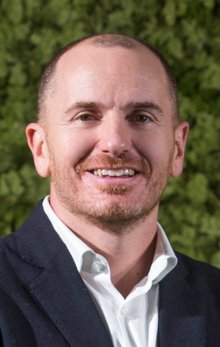
Iñigo Larraya Tejero
Chief Sustainability Officer for Europe