
National Grid: Environmental Action for Energy Transitions

National Grid has launched its Social and Environmental Action Plan (SEAP) for 2026-2031, which marks the first time the company has integrated its environmental commitments and social impact ambitions into a single cohesive strategy.
This plan is designed to guide decision-making and target-setting to ensure that National Grid meets today's needs while safeguarding tomorrow.
By focusing on four strategic pillars, Climate Action, Nature Positive, One Planet Living and Social Value, the organisation is aiming to create a cleaner, more reliable and resilient energy system.
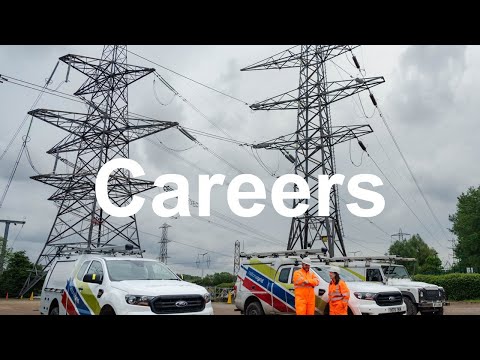
Fleet transition to EV
National Grid is aggressively targeting the electrification of its vehicle fleet to lower its operational carbon footprint.
The company has set a clear goal to ensure that 100% of its light and medium-duty vehicle purchases (those up to 3,500 kg) are Zero Emission Vehicles (ZEVs) by 2031.
Building on previous successes, National Grid achieved a 60% replacement rate for light-duty vehicles during the RIIO-T2 period.
For the remaining 40%, the company anticipates that 37% will transition to electric during the RIIO-T3 period, subject to market availability.
The final 3% of the fleet, consisting of heavy goods vehicles, is scheduled to transition to alternative fuels after 2030.
“We have both a duty and an opportunity to manage our business in an environmentally and socially responsible manner,” says Alice Delahunty, President of Electricity Transmission, in the National Grid SEAP.
“Building on a strong track record of leadership, we recognise that environmental and social issues are complex and interconnected and that their effective management demands an integrated approach.
“For the first time, we are bringing together our environmental commitments and our social impact ambitions under one plan, recognising that long-term business success depends on delivering positive outcomes for both people and the planet.
“This Action Plan is designed to inspire, activate and lead us in our planning, decision-making and target-setting so that we not only meet today’s needs, but also safeguard tomorrow.”
Energy efficiency and operational management
Operational efficiency is a cornerstone of National Grid’s strategy, with a target to deliver a 20% energy efficiency improvement within its substation estate by 2031, using a 2022/2023 baseline.
This goal is set to be pursued through a behavioural change program, upgrades to heating and control systems, improvements to building fabrics and the installation of solar PV panels across approximately 66 sites.
In addition to improving infrastructure, the company is prioritising the management of energy losses on the network, which occur when energy is dissipated as heat due to electrical resistance.
National Grid also plans to power maintenance activities and critical backup systems with diesel-free, cleaner alternatives whenever it is commercially, technically and timely viable to do so.
“The Great Grid Upgrade is a once-in-a-generation opportunity to upgrade and strengthen the UK’s electricity network,” says Carl Trowell, President of Strategic Infrastructure, in the National Grid SEAP.
“As electricity demand grows and more renewable energy comes online, we are delivering a grid that will connect cleaner, home-grown and more affordable power, driving economic growth, creating skilled jobs and helping communities thrive across the regions.
“As we deliver our projects, we want to ensure environmental, social and economic benefits are felt by the people and places that host them.
“This includes cutting carbon and improving biodiversity, to providing local opportunities and skills to support the next generation.
“This Action Plan sets out our aspirations to 2031 and demonstrates how, through collaboration across our teams, supply chain, partners and communities, we are building a cleaner and fairer energy system for everyone.”
In 2025/26, National Grid decided to adopt EcoVadis as its core supply chain ESG assessment platform, aligning with best practice across the UK and US utility sectors.
This helps the company to provide consistent, risk-based insight across environmental, labour and human rights, ethics and sustainable procurement.
Sustainable manufacturing and material sourcing
National Grid is transforming its approach to infrastructure delivery by addressing the carbon-intensive nature of manufacturing and building materials, specifically steel and concrete.
To ensure accountability in this area, the company joined SteelZero and ConcreteZero, pledging that 50% of the concrete and steel they use will be low-emission by 2030.
The shift to low‑carbon energy is likely to increase the demand for critical materials like cobalt, however the majority of what National Grid aims to procure until 2050 is set to be steel, aluminium and copper.
The long-term vision is even more stringent, with a commitment to reach 100% net zero emissions for both steel and concrete by 2050.
“Every project we undertake must reflect our commitment to sustainability,” says National Grid’s SEAP.
"This means embedding environmental stewardship into every stage of delivery, from design and procurement to construction and operation."
Acknowledging the higher costs associated with these sustainable materials, the regulator Ofgem has approved a 0.3% uplift to baseline project investment during the RIIO-T3 period to support their use.
Furthermore, the company is committed to phasing out diesel in construction by 2035, while also expanding its efforts to address other carbon-heavy hotspots, including cables and aluminium
Company portals

Executives

Alice Delahunty
President of Electricity Transmission

Carl Trowell
President of Strategic Infrastructure