NTT DATA: Action Needed to Tackle AI's Hunger for Energy
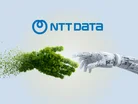
Many people are aware of the mounting environmental costs of the development, deployment and maintenance of AI systems. Their hunger for energy is a huge problem if global leaders intend to stay true to their commitments and steer the planet towards a more sustainable future.
This problem is leading the public and private sector urgently to strategise ways to balance AI growth and decarbonisation.
NTT DATA, the technology services provider, is one such company. The firm's latest report calls for some fundamental changes to how AI systems are designed and operated.
'Sustainable AI for a Greener Tomorrow' is the name of the whitepaper and in it NTT projects that AI workloads will account for more than half of all data centre power consumption by as soon as 2028.
At that point, the technology could consume as much electricity annually as 22% of all US households.

Resource demands threaten climate goals
The environmental impact extends beyond electricity consumption.
Training a large AI model can require millions of litres of fresh water for data centre cooling systems, while running between 10 and 50 queries can consume up to 500ml of water.
"The resource consequences of AI's rapid growth and adoption are daunting, but the technology also can empower innovative solutions to the environmental problems it creates," says David Costa, Chief Sustainability Business Officer at NTT DATA.
The report identifies four key metrics for measuring AI's ecological footprint: energy demand, global warming potential, water consumption and abiotic resource depletion.
On emissions, data centre carbon footprints are expected to more than double by 2030, reaching approximately 860 million tons of carbon dioxide equivalent.
Hardware lifecycle overlooked
Digital user devices currently drive 9.4% of global cobalt production and 8.9% of palladium output, driven by short lifecycles and frequent replacement cycles.
Data centres compound this problem by consuming vast quantities of copper, aluminium and rare earth elements, with servers typically replaced every few years to meet performance demands.
The report criticises the AI industry's historical focus on performance metrics such as accuracy and speed at the expense of efficiency considerations.
Some modern AI models consume over 300,000 times more computational power than their predecessors, creating what the report describes as an increasingly exclusive domain accessible only to organisations with resources to sustain the energy demands.
Solutions require ecosystem approach
NTT DATA argues that addressing AI's environmental impact requires coordinated action across the entire technology ecosystem, from hardware manufacturers and data centre operators to software developers, cloud providers and policymakers.
The report recommends several interventions, including running AI workloads in locations and at times aligned with renewable energy availability, applying green software engineering patterns and prioritising modular, upgradeable hardware components to reduce electronic waste.
"AI's amazing capabilities can help manage energy grids more efficiently, reduce overall emissions, model environmental risks and improve water conservation," explains David.
It's vital for organisations to recognise the challenge and build sustainability into AI systems from the start," he adds.
The company has introduced its own initiatives, including remote GPU services that shift AI workloads to energy-optimised locations and the tsuzumi LLM, which NTT claims requires 250 to 300 times less energy for training than conventional models.
However, the report acknowledges significant barriers remain, including fragmented assessments, inconsistent metrics and lack of standardised reporting frameworks comparable to those in traditional industries.
Many organisations focus narrowly on energy or emissions without considering water usage, rare material depletion and electronic waste comprehensively, according to the analysis.
The report calls for industry-wide adoption of lifecycle thinking and circular economy principles as essential prerequisites for sustainable AI development.
Company portals

Executives
David Costa
Chief Sustainability Business Officer for NTT DATA INC GLOBAL