
PepsiCo & Soil Capital's Regenerative Farming Partnership
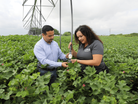
PepsiCo and the agronomy company Soil Capital have initiated a long-term partnership aimed at expanding regenerative agriculture practices across the UK, France and Belgium.
The collaboration gives farmers within PepsiCo’s European supply chain access to Soil Capital's technical expertise and tools to foster more sustainable farming methods.
The focus is on improving soil health, increasing water efficiency and lowering carbon emissions to secure the supply of ingredients like rapeseed oil for brands such as Walkers and Lay’s.
Supporting a sustainable transition
The initiative promotes practical changes including the adoption of cover crops, a reduction in the use of synthetic inputs and a transition to organic fertilisers.
These measures are designed to enhance the environmental sustainability of farming operations while building resilience against climate-related challenges.
"Farmers are at the heart of a sustainable food system and regenerative agriculture is key to building resilience for our food supply, the environment and farming communities," says Archana Jagannathan, Chief Sustainability Officer at PepsiCo Europe, the Middle East and Africa.
"Scaling these practices requires practical solutions tailored to local challenges.
"By working across the value chain, we can help remove barriers, accelerate adoption and drive meaningful progress, reducing agricultural emissions while ensuring the long-term sustainability of our key ingredients."
Supporting a sustainable transition
The joint project between PepsiCo and Soil Capital covers more than 14,000 hectares of farmland.
It is designed to address specific regional issues, such as helping farmers in France manage heavy rainfall or tackling soil compaction in the UK.
This tailored approach aims to dismantle the financial and structural hurdles that can prevent growers from adopting regenerative techniques.
Participants receive financial support to help with the costs of implementing new methods, which include reduced tillage to minimise soil disturbance and planting cover crops between harvests.
They also gain access to agronomic advice from Soil Capital’s team.
Growers can utilise digital tools to monitor carbon emissions, supported by monitoring, reporting and verification technology that uses satellite data and modelling to provide evidence-based reports on GHG emissions and soil carbon storage.
Measuring environmental impact
Initial results from the scheme's first phase could indicate a positive environmental impact.
Across participating farms in France, the GHG balance has seen a 38% improvement, with UK farms showing a 36% improvement.
The use of cover crops, which add organic matter to the soil and enhance its water retention capabilities, has also increased.
Adoption rates have risen from 49% to 65% in France and from 22% to 34% in the UK.
Furthermore, French farmers involved in the project have reduced their use of mineral phosphorus fertiliser by half.
This reduction lessens dependency on a resource-intensive material and supports more circular nutrient systems in agriculture, which could contribute to a reduction in environmental degradation.
A farmer-centric model for change
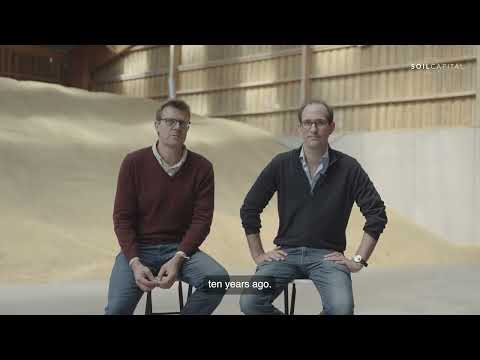
Soil Capital CEO Chuck de Liedekerke highlights shared objectives between his company and PepisCo.
He says: "PepsiCo and Soil Capital have come together around the shared ambition to make regenerative agriculture the norm, not the exception.
"This is a partnership founded on putting farmers first and working to transform the food system at scale and with pace.
"Backed by science and measurable environmental benefits, we look forward to supporting the transition, building resilient agricultural supply chains and reimagining the relationship between society, land-use, food and nature."
The benefits are also being recognised by the farmers themselves.
David Fuller-Shapcott, a UK-based grower, says: "Regenerative farming has changed the way I work.
"With the right support, I’ve introduced cover crops and reduced tillage, cutting my farm’s emissions by 360 tonnes between 2022 and 2023 and becoming a net carbon storer.
"Seeing these changes firsthand proves that sustainable practices don’t just work – they make a real difference for farmers like me."
This collaboration is a component of PepsiCo's wider sustainability strategy. PepsiCo has extended its global target for regenerative agriculture to 10 million acres by 2030, having already achieved 3.5 million acres by 2024.
The approach centres on providing growers with transparent systems, data-driven insights and financial assistance to make sustainable production models economically viable.
By prioritising evidence-based and locally adapted measures, the partnership offers a potential framework for how large food companies can collaborate with technical partners and farmers to advance sustainable practices.
Company portals


Executives

Archana Jagannathan
Chief Sustainability Officer, Europe, Middle East and Africa

Chuck de Liedekerke