RWE: How Can We Accelerate Sustainable Energy with Hydrogen?
According to the International Energy Agency, low-emissions hydrogen and hydrogen-based fuels can play an important role in decarbonising sectors where emissions are hard to abate and alternative solutions are either unavailable or difficult to implement.
Hydrogen is a key technology for decarbonisation, especially in industry and the transport sector.
“Many pilot projects involving hydrogen applications have been launched, including in heavy-duty transport, in the chemical and steel industries and for replacing grey hydrogen in refineries,” says RWE.
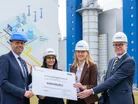
Initial investment decisions such as the supply contract between RWE and TotalEnergies for 30,000 tonnes p.a. of green hydrogen from Lingen to Leuna demonstrates that hydrogen solutions can work.

Accelerating hydrogen use for decarbonisation
According to RWE, progress is being made to expand the necessary infrastructure for hydrogen supply and demand, laying the foundations.
The first sections of the national hydrogen core network have already switched from natural gas to hydrogen.
However, as with any new technology, the cost gap between renewable and low-carbon hydrogen and the currently used grey hydrogen remains large.
- Grey hydrogen is the most common type, made from natural gas (methane) via steam methane reforming (SMR) where the significant CO₂ byproduct is released into the atmosphere, making it carbon-intensive and a contributor to climate change, unlike cleaner blue or green hydrogen.
- It's cost-effective and widely used in industries like refining due to established technology, but its high emissions make it an unsustainable, short-term option, with the goal being a transition to low-carbon alternatives.
According to RWE, current regulations are set to widen significantly by 2030 and many transitional regulations designed to support the initial market ramp-up are set to expire.
In Germany, for example, these include the exemption of electrolysers from electricity grid fees and levies, as well as EU-wide facilitations for the procurement of electricity to produce green hydrogen.
With regulations changing, it places a time pressure to act and ensure that hydrogen can deliver on its promise of being a true decarbonisation option at reasonable cost.
There is also the potential for cost reduction when it comes to hydrogen use.
If the adequate decisions are made, both domestic production of electrolytic hydrogen and imports will become competitive with grey hydrogen and available in large volumes.
“Hydrogen is a key technology for decarbonisation, especially in industry and the transport sector,” writes Markus Krebber, CEO of RWE, on LinkedIn.
“As with any new technology, the cost gap between renewable and low-carbon hydrogen and the currently used grey hydrogen remains large.”
Creating competitive hydrogen
RWE highlights that with the current legal framework set for 2030, the full cost of green hydrogen for future projects is expected to be around €11/kg H₂ (US$13/kg H₂) for customers, even after factoring in technical advances and revenues from system services.
- Green hydrogen is hydrogen produced by splitting water into hydrogen and oxygen using electricity from renewable sources like solar, wind or hydro power, a process called electrolysis, resulting in near-zero carbon emissions.
- It's a crucial clean energy carrier for decarbonizing heavy industry, transport and power grids, offering a sustainable alternative to fossil-fuel-derived hydrogen.
These costs include:
- Investment expenses
- Operating expenses
- The price of electricity
- Grid fees and levies that will apply to new electrolyser installations from 2030, alongside transport and demand-based hydrogen delivery.
The cost for green hydrogen is much higher than grey hydrogen which when excluding CO₂ costs, is only around €3/kg H₂ (US$3.5/kg H₂).
The good news is that green hydrogen’s competitiveness could improve significantly if production and supply costs are reduced, with the biggest lever being pragmatic regulatory simplification.
At EU level, relying on the European Emissions Trading Scheme as the incentive and removing the restrictive criteria of the green hydrogen Delegated Act for ‘RFNBO’ could reduce costs in Germany by about €2/kg H₂ (US$2.4/kg H₂), while improving electricity availability would reduce operational risk, stabilise supply and cut the need for interim storage.
A permanent extension of electricity price compensation beyond 2030 could lower costs by a further €1 to €2/kg H₂ (US$1-2.4/kg H₂).
Overall, these EU and national adjustments could reduce the total cost of green hydrogen in Germany in 2030 from roughly €11 (US$13) to below €6/kg H₂ (US$7/kg H₂).
Advancing and achieving stable use
Competitiveness of hydrogen use is key, but so is stabilising and accelerating customer demand.
“Demand, particularly in the transport sector including refineries, can be boosted significantly with the forthcoming national implementation of RED III in the transport sector,” says RWE.
“National greenhouse gas reduction targets up to 2040 and the introduction of a sub-quota for RFNBOs, which exceeds the original EU requirements of RED, have the potential to provide substantial support for the ramp-up of hydrogen.”
Innovative electrolyser concepts can offer higher efficiency and lower investment costs, however these are not yet market ready.
“The national hydrogen strategy needs to pick up the pace: If true sustainability is the goal, we can't afford inconsistent regulations and technology biases,” writes Tobias Bartz, Group CEO of Rhenus Logistics, on LinkedIn.
RWE writes that, “a research and development programme, supported by the government and directed towards European plant manufacturers, would firstly mitigate the risk associated with technology development, thereby supporting market introduction and subsequent cost reductions for hydrogen; and secondly, it would strengthen independence from technology imports.”