
The World Class Solar Array Atop Borussia Dortmund's Stadium
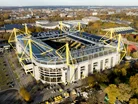
The Westfalenstadion, home to German football giants Borussia Dortmund, is known to have one of the most unique atmospheres of any sporting arenas, with its "yellow wall" famous all across the footballing world.
But it isn't just the ferocity of the fans that makes the stadium stand out these days.
The club has completed what is officially the world's most powerful photovoltaic system ever installed on a stadium roof.

The ground (officially known as the Signal Iduna Park) is the largest in Germany. As such, its roof offers a huge surface area which is perfect for a renewable energy system.
It comprises 11,132 solar modules and is expected to deliver more than 5 MW at its peak, taking the record from the 4.2MW array at Istanbul's Nef Stadium.
The system was developed through a six-year sustainability partnership between the Bundesliga club and German energy company RWE, which signed on as BVB's premium sustainability partner in the summer of 2024.
What the numbers mean
Strip away the superlatives and the practical benefits of Dortmund's new energy system are massive. It should enable the club to cover around half of the stadium's total electricity requirements through solar power alone, cutting its bills and carbon footprint significantly.
According to BVB's own project data, the system will save around 1,700 tonnes of CO₂ annually compared to the stadium's previous power supply arrangements.
A 3.7 megawatt-hour battery storage facility is also under construction and is expected to be operational by early 2026.
This addition will allow the club to draw on solar-generated electricity even when the Ruhr Valley's famously grey skies prevail.
The project builds on earlier work completed in April 2024 when RWE installed around 200 solar modules on the roof of the adjacent BVB Fan World building.
The views of the project leaders
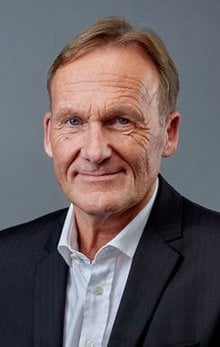
Hans-Joachim Watzke, the club's CEO, sees the project as just puzzle piece in Dortmund's long-term sustainability jigsaw. "Signal Iduna Park symbolises our integrated efforts to ensure Borussia Dortmund's future viability," he says.
"We are delighted that our home can now be associated with a record-breaking flagship project for climate protection."
BVB Managing Director Carsten Cramer strikes a similar tone.
"Together with RWE, we have achieved a real milestone in our sustainability partnership – with targeted regional impact and global appeal," he says.
"This project is a key component of our decarbonisation strategy and is the ideal contribution to our commitment and our goal of working with our partners to continuously improve and take on more responsibility."
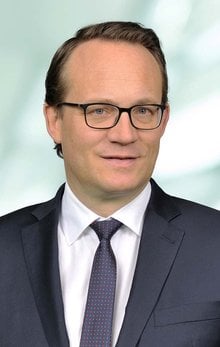
Markus Krebber, who is CEO of RWE, is proud of the collaboration. "We are proud to have set a new record with BVB, one of Germany's most internationally renowned football clubs," he says.
"Together, we have installed the world's most powerful solar system on the roof of Germany's largest stadium.
"This is a powerful statement in favour of efficient climate protection and is the result of the work of two teams that are perfectly aligned in their commitment to sustainability."
Football's journey to sustainability
The project lands as the Bundesliga tightens its sustainability expectations.
The German Football League became the first major professional football league to anchor environmental requirements in its licensing regulations from the 2023-24 season.
Clubs must now demonstrate strategies analysing their emissions and set reduction targets as a condition of league participation.
Whether Dortmund's installation offers a replicable blueprint for other clubs remains an open question, given the capital investment required and the structural demands of hosting such large rooftop arrays.
The Bundesliga has positioned itself as a leader in sports sustainability, though some observers have questioned whether mandatory requirements carry sufficient weight after certain proposed measures were scaled back during implementation.
Company portals
Executives
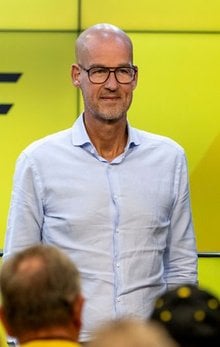
Carsten Cramer
Managing Director
Hans-Joachim Watzke
CEO
Markus Krebber
CEO