
Schneider & Bilfinger Cut Offshore Emissions With Renewables
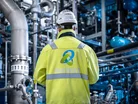
Schneider Electric and Bilfinger test autonomous floating buoy in North Sea, combining renewable power and remote monitoring to operate subsea wells without permanent crew.
Offshore oil and gas operations have traditionally relied on umbilicals to connect remote subsea wells to crewed platforms.
These thick bundles of hydraulic and electrical lines require substantial investment to install and generate considerable carbon emissions during operation.

Autonomous offshore equipment
Schneider Electric and Bilfinger have developed an alternative approach.
The two firms spent the past year testing a floating buoy in the North Sea that generates its own power and operates without permanent staff.
The work led Schneider Electric to name Bilfinger its Partner of the Year for 2025.
The system centres on a Normally Unmanned Installation, or NUI.
This category of offshore asset operates without a permanent crew on site.
Equipment of this type must withstand harsh marine conditions while maintaining operational reliability.
Buoyant Production Technologies, a subsidiary of Crondall Energy, appointed Bilfinger to design a system capable of autonomous operation in remote locations.
The target sites are marginal fields.
These reservoirs are too small or too expensive to support a full platform and umbilical infrastructure.
Bilfinger's buoy could offer a lower cost and lower carbon option for such locations.
According to Schneider Electric, the buoy has completed 1,000 hours of autonomous operation without incident since deployment in late 2025.
Renewable energy powers remote operations
The buoy draws power from a microgrid combining wind turbines, solar photovoltaic (PV) panels and battery storage.
Diesel generation provides backup capacity.
This configuration eliminates the need for continuous power transmission from shore or from a crewed platform.
The control system runs on Schneider Electric's EcoStruxure Automation Expert platform, described as open and software defined.
The design allows equipment from different vendors to operate on the same system without hardware lock-in.
A Modicon M580 dPAC controller manages the buoy's functions and data flow between sensors and equipment.
The renewable power approach could reduce operational emissions compared to conventional umbilical connections that rely on platform generated electricity.
Remote monitoring and safety systems
Without crew on board, connectivity and safety systems carry additional operational importance.
The buoy uses 5G and SpaceX's Starlink systems for communications back to shore.
Fire, gas and smoke detection systems are integrated into the design.
Schneider Electric describes the cybersecurity as a layered framework protecting the control system from external intrusion.
These monitoring capabilities allow operators to track performance and respond to issues from land-based locations.
The absence of permanent staff could reduce offshore personnel exposure to marine hazards.
Bilfinger received the UK EAE Partner of the Year 2025 designation from Schneider Electric following the North Sea deployment. "Traditional automation architectures make customisation very difficult, especially for first-of-its-kind projects," says Steven Parkinson, Bilfinger's Automation, Production and Service Director for the UK.
Steven views the work as integrating renewable generation, remote operation and autonomous control in a single system. "The real opportunity now lies in replicating and scaling this approach across future assets to enable a lower-carbon offshore industry," Devan Pillay, President of Heavy Industries at Schneider Electric, says.
The model could be applied to other marginal fields where traditional infrastructure remains uneconomical.
Wider deployment could mean reduced emissions per barrel produced and lower installation costs across the sector.
Company portals


Executives

Devan Pillay
President of Heavy Industries