The Sustainability Credentials of the NYC Mayoral Candidates
On 4 November, the people of New York will head to the ballot box to elect a new mayor. This election campaign has been one of the most heated in recent memory, fraught with animosity, coloured by controversy and filled with promise.
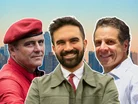
The tension between the three main candidates – Curtis Sliwa, Zohran Mamdani and Andrew Cuomo – and the distinct philosophies they represent has made this election feel particularly significant.
Whichever way New Yorkers vote next Tuesday, the result will doubtlessly shape the city for years to come. This is certainly the case for the city’s overall sustainability.
With its huge shoreline and dense infrastructure, New York is more vulnerable to heatwaves, extreme rainfall and rising sea levels than most metropoles in America.
But as the most populous city in the US, New York creates huge amounts of pollution, contributing to its own vulnerability more and more each year.
The city’s gigantic carbon footprint is driven primarily by its buildings (which account for more than two-thirds of its emissions) and its extensive transport network, which the next mayor will have to contend with.
Yet, despite all the urgency, the subject of climate has been largely absent from the mayoral debates. Instead, sustainability has been overshadowed by voter concerns about affordability, public safety and geopolitics.

The Democratic candidate: Zohran Mamdani
Before this year very few people knew the name Zohran Mamdani, but the 33-year-old democratic socialist has emerged as the overwhelming favourite in this year’s mayoral election after comprehensively beating his rival Andrew Cuomo to secure the Democratic nomination in the summer.
From the start, Zohran’s campaign has sought to frame climate action as an integral part of the economic and social justice that he so strongly advocates for.
While affordability and living standards have been the central messages of his run, climate initiatives feature heavily in his manifesto. “Climate and quality of life are not two separate concerns. They are, in fact, one and the same,” he says.
Some of Zohran’s signature policies include freezing rents for more than two million homes across the city’s five boroughs and making city buses free to ride.
His team say that the first of those policies will help to prevent landlords from passing on the cost of environmental upgrades to heating systems and insulation to tenants by raising rents, thereby pricing them out of the city.
Climate and quality of life are not two separate concerns. They are, in fact, one and the same.
The second will encourage far more New Yorkers to use public transport, cutting the number of cars on the roads and helping to slash emissions and air pollution.
For buildings, Zohran supports the robust enforcement of LL97 (a regulation that mandates the decarbonisation of New York’s buildings), coupled with increased public investment and tax breaks to help property owners and renters manage the cost of energy efficiency upgrades.
He is also a strong proponent of public power, having championed the state-level Build Public Renewables Act (BPRA) to accelerate the development of publicly owned renewable energy projects.
Then there is his ‘Green Schools’ plan, which would oversee the renovation of 500 public schools with energy-efficient infrastructure, converting their asphalt yards into green spaces and equipping 50 of them to act as community resilience hubs during extreme weather events.
The Republican candidate: Curtis Sliwa
Curtis Sliwa, the Republican candidate, has been significant figure in New York life for decades. In 1979, Curtis founded Guardian Angels, a civilian group dedicated to the prevention of crime and violence in the city.
He has spent much of his career as a political activist, with campaigns that have focused on issues including poverty, law and order, policing, homelessness and animal welfare.
That said, explicit mentions of climate have been largely absent from Curtis' mayoral campaign this year. When environmentalism does feature in his outlook, it tends to be through localised conservation and clean-up projects, rather than the systemic reduction of emissions.
His focus is on preserving existing green spaces and addressing immediate quality-of-life improvements for New Yorkers. To this end, he has warned developers to "keep [their] grubby hands off the parks and the wetlands".
"Our green spaces are critical for families, children, seniors, and the environment – especially as our concrete city becomes more developed every day," he wrote on X recently.
Our green spaces are critical for families, children, seniors, and the environment – especially as our concrete city becomes more developed every day.
It is an approach that prioritises maintenance and reactive adaptation over the broader climate policies.
Curtis' answer to climate-driven flooding is based on a 'Flood-Ready City' plan focused on clearing existing catch basins and sewer lines.
His most significant proposal is to pause the implementation of LL97 and conduct a full impact audit, arguing it is an unfunded mandate that harms small property owners, co-ops and condominiums.
Many of his environmental proposals are part of a broader 'Clean City Blitz' initiative targeting litter, rats and illegal dumping, linking environmental concerns to his core campaign themes of public order and safety.
The independent candidate: Andrew Cuomo
Like Curtis Sliwa, Andrew Cuomo's involvement in the politics of New York City has spanned decades. Like his father Mario, Andrew served as Governor of New York, a position he held for 10 years between 2011 and 2021.
After his resignation in 2021, this year saw him mount a political comeback when he ran for the Democratic candidacy. After losing to Zohran Mamdani in the Democratic primary he decided to run as an independent.
His campaign has been notably silent on climate issues, but he was vocal on the subject during his time as governor.
In 2018, he said: "Extreme weather is a reality. It is obvious across the globe. It is obvious to anyone with a television set. The consequences of our delay are a matter of life and death, if not for us then for our children. This is not an issue of present inconvenience. It is an issue of future viability."
During his tenue he signed the Climate Leadership and Community Protection Act (CLCPA) which was hailed as the "most aggressive climate law in the US", setting ambitious targets for renewable energy and emissions reductions. His administration also banned fracking and championed major investments in offshore wind.
Extreme weather is a reality. It is obvious across the globe. It is obvious to anyone with a television set. The consequences of our delay are a matter of life and death, if not for us then for our children. This is not an issue of present inconvenience. It is an issue of future viability.
On the other hand, critics allege he used his political power to weaken the CLCPA during negotiations, slow-walked its implementation and approved numerous fossil fuel infrastructure projects. He also closed the Indian Point nuclear power plant in 2018, which led to a spike in greenhouse gas emissions for New York.
Crucially for New York City, his administration attempted to create a major loophole in LL97 that would have allowed building owners to buy renewable energy credits instead of retrofitting their properties with sustainable heating systems or energy efficient materials – a move that was ultimately rejected by the state legislature.
What the mayoral race means for New York's sustainability and climate resilience
Despite the obvious danger that climate change poses to New York City, it is clear that the issue has been somewhat marginalised in the 2025 campaign, especially when it comes to debates and media appearances.
This does not mean that the candidates see climate change as little more than a side issue, though. Research shows that voters are far more concerned by other things right now, especially the cost of living, public safety and the threat of war.
One thing is certain, though: regardless of the priorities of the public and regardless of the outlooks of the candidates, whoever takes office in November will have to tackle of the issue of climate change if they are to guide their city through the next four years.