UNEP’s GEO-7: Has the World Made Enough Climate Progress?
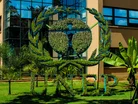
The United Nations Environment Programme (UNEP) has released the Global Environment Outlook 7 (GEO-7), emphasising the need for environmental intervention.
According to the report, the world is confronting multiple crises spanning climate change, biodiversity loss, land degradation, pollution and waste.
"The excessive and unsustainable use of both finite and renewable natural resources, such as fisheries, mineral deposits and fossil fuel reserves, puts pressure on environmental systems," GEO-7 states.
"Overfishing, habitat destruction and illegal wildlife trade are accelerating biodiversity loss at unprecedented levels."
According to the report, the growing demand for rare earth elements and minerals, driven by urban growth and technological advancements, depletes finite reserves while causing.
It also says that "these crises are interlinked and mutually reinforcing, pushing planetary systems towards uncharted territory where there is a growing likelihood that several tipping points may soon be irreversibly crossed”.

Demanding system-wide transformation
The report makes it clear that fragmented responses will not be enough to address the scale of today’s environmental pressures.
Climate change, ecosystem degradation and pollution share common drivers rooted in how societies produce energy, grow food, extract materials and measure economic success.
"Governance and environmental quality are directly and indirectly interlinked and the lack of a clear alignment between governance structures and environmental goals often contributes to or exacerbates environmental degradation," the report says.
"The number of chemicals released into the environment, including plastics, has grown over time, with an estimated 350,000 chemicals available globally and new threats arise, such as the forever chemicals (poly and perfluorinated chemicals)."
By continuing these methods and processes it would continue to intensify health risks, accelerate biodiversity loss and undermine food and water security, particularly for vulnerable populations.
“If we choose to stay on the current path, powering our economies with fossil fuels, extracting virgin resources, destroying nature, polluting the environment, the damages would stack up,” says Inger Andersen, Executive Director, United Nations Environment Programme, in the report.
“Climate change would cut 4% off annual global GDP by 2050, claim many lives and increase forced migration.
“Amazon forest dieback and ice-sheet collapse would become more likely. Hundreds of millions more hectares of natural lands would be lost.
“Vital species such as pollinators would be decimated. Food availability would fall.
“Urban air pollution would continue, with fine particulate matter alone causing around four million premature deaths annually.
“Solid waste, currently more than two billion tonnes per year, would almost double, turning our world into a toxic garbage dump.
“By contrast, the report shows that transforming these systems together can generate wide-ranging benefits, from reducing air pollution and preventing millions of premature deaths to improving resilience against climate impacts.”
Addressing these crises as a one big systemic challenge is highlighted as essential for long-term stability and equity.
The economic case for investing in nature
A key message of GEO-7 is that environmental protection and economic prosperity are not opposing goals.
“As the Global Environment Outlook 7 reminds us: now is the time for courage and creativity,” says António Guterres Secretary-General of the United Nations in the report.
The report suggests that while sustainability transitions require upfront investment, the long-term financial returns are significant.
Investing in clean energy, ecosystem restoration and sustainable food systems can unlock substantial economic value while reducing future damage costs.
The assessment estimates that the global economic benefits of a sustainable development pathway could reach US$20tn per year by 2070, driven by improved health outcomes, productivity gains and reduced climate damage.
However, failure to act would result in mounting losses, with climate change alone projected to reduce global GDP by around 4% by 2050.
Global anthropogenic emissions of GHGs, primarily carbon dioxide, methane and nitrous oxide, reached a record high in 2023 of nearly 60 gigatons of CO₂ equivalent, driving unprecedented climate change.
Of all sectors, 79% of emissions originated from energy, industrial processes, transport and buildings collectively, while 22% came from agriculture, forestry and land-use change.
Inclusive solutions
"Digital transformation can support the efficient distribution of resources, balance supply and demand and drive the development of innovative city solutions. These efforts can positively impact the achievement of the SDGs and promote social inclusion," states the report.
However, GEO-7 also emphasises that achieving transformative change requires more than just technology and finance.
“This is not an easy time to press the world’s governments to take action on environment matters when national agendas come before global co-operation but as Bob Watson and Inger Andersen reminded us there has been progress even this year,” writes Hilary Allison, Secretariat Liaison for Global Environment Outlook at UNEP.
Inclusive governance, social participation and the integration of different knowledge systems are described as central to effective solutions.
The report draws on diverse knowledge systems, from natural, social, cultural and behavioural sciences to scenario modelling, economics and Indigenous Knowledge and Local Knowledge, to present a truly holistic view of the world’s environment.
GEO-7 outlines concrete solution pathways across economic and financial systems, energy, food, materials and environmental management, supported by whole-of-government and whole-of-society approaches.
Ultimately, it underlines that the next five years are crucial.
Company portals
Executives
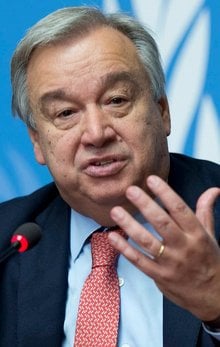
António Guterres
Secretary General
Inger Andersen
UNEP Executive Director & UN Under-Secretary-General