How United Airlines & Neste SAF Deal Will Impact US Flying
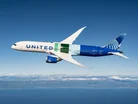
United Airlines has extended its partnership with Finnish fuel producer Neste to supply sustainable aviation fuel to three major US airports for the first time.
The expanded agreement makes United the first commercial airline to purchase SAF for flights departing from George Bush Intercontinental Airport in Houston, Newark Liberty International Airport in New Jersey and Dulles International Airport in Washington DC.
Lauren Riley, Chief Sustainability Officer at United, emphasised the significance of the milestone.
"In this moment, we'll be judged by our actions – not our words. And at United Airlines, progress is everything.
"Last week marked a milestone for advancing sustainable aviation fuel: for the first time ever, SAF is now flowing to three new airports – Newark, Dulles and Houston."
The fuel supplier began deliveries to Houston in July and will continue until the end of October 2025. Deliveries to Newark and Dulles started in September and are scheduled to run until the end of 2025.

Policy incentives remain crucial
The deployment relies on existing pipeline infrastructure from Neste's SAF terminal facilities in Houston, where neat Neste MY Sustainable Aviation Fuel is blended with conventional jet fuel to meet aviation specifications.
Aviation accounts for a relatively small share of global emissions but is one of the most challenging sectors to decarbonise, with technological innovation needed across production of low-emission fuels, improvements in aircraft and engines and operational optimisation.
Lauren has acknowledged that her sector is dependence on government support when it comes to decarbonisation.
"While United remains the leading SAF user in the U.S., using over 4,300 metric tons (13 million gallons) last year, we recognize that the growth of the SAF market requires support from both state and federal governments," she explains.
"This didn't happen easily or overnight. It took relentless coordination, innovation, and a team that refused to settle for 'good enough.' But we did it — because meaningful change demands action."
Scale and production challenges
Carl Nyberg, Senior Vice President of Commercial Renewable Products at Neste, stresses the need for supportive policies in the push for sustainable aviation.
"It is crucial that more states enact proven incentive policy frameworks to accelerate the production of SAF and support the aviation industry towards its bold net-zero carbon emission goal by 2050," he says.
Industry executives' greatest concerns centre on the availability and cost of sustainable aviation fuel, along with geopolitical tensions and the tariffs associated with growing protectionism.
The partnership builds on existing collaboration between the companies. Neste has supplied SAF to United at Chicago O'Hare International Airport since August 2024, following Illinois' enactment of a SAF purchase credit.
The fuel has also been used at San Francisco International Airport, where California's Low Carbon Fuel Standard supports renewable fuel adoption.
Production capacity and emissions reduction
Neste's current global SAF production capability stands at 1.5 million tons (around 515 million gallons) per year.
The company plans to expand capacity to 2.2 million tons (around 750 million gallons) by 2027.
Planned production capacity for sustainable aviation fuels will provide just a small fraction of jet fuel demand by 2030, with increasing use requiring supportive policies and a significant ramp-up of investments.
Neste produces its SAF from 100% renewable raw materials, including used cooking oil and animal fat waste.

When used neat, the fuel can reduce greenhouse gas emissions by up to 80% over its life cycle compared to conventional jet fuel, according to the company.
SAF is certified for commercial use and can currently be blended up to 50% with conventional jet fuel, working seamlessly with existing aircraft engines and refuelling infrastructure.
Aviation emissions rose in 2023 to reach more than 90% of their 2019 pre-pandemic peak level, with CO2 emissions expected to surpass their 2019 level in 2025.
The sector faces mounting pressure to reconcile growing passenger demand with decarbonisation targets, making partnerships like the United-Neste agreement increasingly significant for the industry's transition pathway.
Company portals


Executives
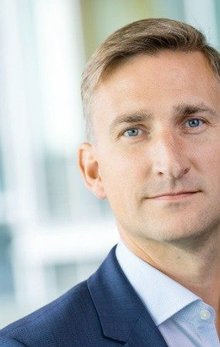
Carl Nyberg
SVP Commercial, Renewable Products
Lauren Riley
Chief Sustainability Officer and Managing Director, Global Environmental Affairs