Why Energy Dominated Conversations at Davos 2026

The World Economic Forum’s Annual Meeting in Davos, Switzerland, has reaffirmed its reputation as one of the most influential gatherings on the global calendar, blending collaboration with controversy in equal measure.
While climate change and the energy transition have long been Davos mainstays, this year’s agenda leaned more heavily than ever toward energy-focused discussions.
The week was defined by sharp divisions over fossil fuels, renewed ambitions for nuclear power and fierce debates over the direction of the energy transition as a whole.

All this unfolded against a backdrop of geopolitical tension and economic uncertainty, as business leaders, policymakers and climate advocates sought to chart a stable path toward global energy security while world leaders sparred over priorities.
The US-centric headlines
US President Donald Trump’s special address on January 21 proved to be not only the standout moment of this year’s summit but one of the most talked-about Davos speeches to date.
During his nearly 100-minute remarks, President Trump made an emphatic case for expanding fossil fuel production while criticizing renewable energy, particularly wind and solar.
Yet, alongside his attacks on renewables, Trump championed another clean energy source: nuclear power, which he declared would become a cornerstone of America’s future energy mix.
His speech signaled a definitive break from previous US climate commitments, refocusing attention on energy independence and economic growth through conventional energy resources.
The reponse from Europe
The address prompted swift responses from European leaders. EU Climate Commissioner Wopke Hoekstra countered that the bloc holds a “fundamentally different view.”
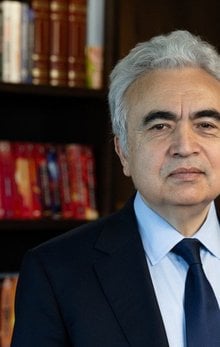
Meanwhile, International Energy Agency Executive Director Fatih Birol stressed the compatibility of energy security and decarbonisation.
“A real energy transition, in my view, is not in conflict with energy security. They can be achieved together,” Fatih said.
“To pit these two priorities against each other is misleading. We’ve succeeded in balancing such goals before – and must continue to do so.”
Nuclear energy
Trump wasn’t the only one endorsing nuclear at Davos. The topic emerged as a rare point of convergence among global leaders.
Delegates from India unveiled ambitious expansion plans that drew widespread attention, underscoring Prime Minister Narendra Modi’s intent to pair nuclear with renewables to meet soaring power demand while cutting emissions.
This resurgence in nuclear enthusiasm reflects growing recognition that achieving net zero will require a mix of energy solutions beyond just wind and solar.
Several countries, including the UK and the Czech Republic, announced projects to extend reactor lifespans and develop new small modular reactor technologies.
Insights from the business community
This year’s WEF also showcased divergent perspectives from the business world on the energy future.
Andrew Forrest, Executive Chairman and Founder of Australian mining giant Fortescue, delivered one of the strongest defences of renewables, calling the shift a massive economic opportunity.
“The trend of renewable energy is eating fossil fuels for lunch,” he declared.
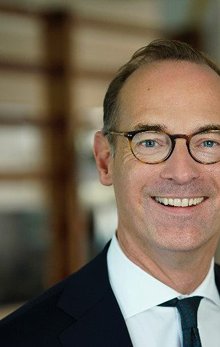
Allianz CEO Oliver Bäte echoed the sentiment, arguing that sustainable investments are vital to long-term competitiveness and adding that anyone with children “will have to worry” about the planet’s fate.
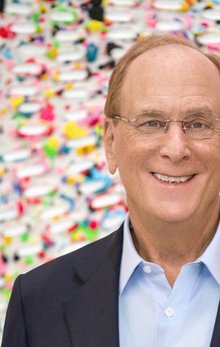
Later in the week, Tesla and SpaceX CEO Elon Musk made a surprise appearance, joining BlackRock CEO Larry Fink on stage.
Their wide-ranging talk touched on autonomous vehicles, AI, and trade policy, but Musk also floated a bold vision for space-based solar power.
“Within a few years, we want to be launching solar-powered AI satellites,” he said. “There’s so much capacity in space – you could eventually generate hundreds of terawatts up there.”
All sustainability, net zero and sustainable supply chain leaders should attend:
- Sustainability LIVE: The Net Zero Summit - QEII Centre, London, March 4-5
- Sustainability LIVE: The US Summit - Navy Pier, Chicago, April 21-22
Co-located with Procurement & Supply Chain LIVE, these events brings together CSOs, ESG leaders and senior decision-makers at a moment when sustainability, supply chains and commercial performance are increasingly interconnected.
Tickets can be booked online today for The Net Zero Summit and The US Summit. Group discounts available.
Sustainability beyond the headlines
For Colm Devine, Global Vice Chair for Sustainability at EY, the true significance of Davos extended beyond headline speeches.
“Davos will be remembered more for its geopolitics,” he said, “but with resilience, competitiveness, and resource security dominating boardroom discussions, the real question is whether CEOs are hearing the environmental signals or just noise.”
According to Colm, sustainability conversations have evolved notably this year, particularly across the private sector.
“At Davos, sustainability was not framed as compliance, but as a driver of growth, resilience, and long-term enterprise value,” he noted.
Debates around local manufacturing, supply chain robustness, resource access, and skills revealed how environmental concerns now underpin corporate strategy.
“CEOs and CFOs increasingly see that the cost of inaction is rising fast,” Colm added, citing research from the World Business Council for Sustainable Development showing that 61% of business leaders expect climate-related disruptions to raise costs this year.
Most tellingly, he highlighted the rise of “coalitions of the willing” as a new model of progress – industry groups and regional alliances moving faster than global agreements to accelerate change across value chains.
“What stands out from Davos,” Colm concluded, “is the growing momentum toward targeted collective action that’s outpacing international consensus.”
Company portals






Executives
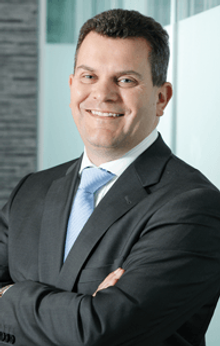
Colm Devine
Global Vice Chair, Sustainability
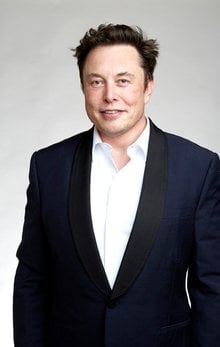
Elon Musk
Tesla CEO
Fatih Birol
Executive Director
Larry Fink
Chairman and Chief Executive Officer
Oliver Bäte
Chairman of the Board of Management - CEO