
World Biodiversity Day 2026: Local Action for Global Impact
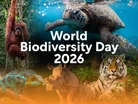
Today (22 May) marks International Day of Biological Diversity or World Biodiversity Day.
This year's theme is ‘Acting locally for global impact’, connecting local initiatives with the 23 targets of the Kunming-Montreal Global Biodiversity Framework (KMGBF).
“Despite all our technological advances we are completely dependent on healthy and vibrant ecosystems for our water, food, medicines, clothes, fuel, shelter and energy, just to name a few,” says the United Nations (UN).
What is the Kunming-Montreal Global Biodiversity Framework?
According to the UN, the KMGBF sets 23 targets for 2030 and four global goals for 2050 to stop and reverse the loss of nature.
The framework was set in 2022 due to a dangerous decline in nature, threatening the survival of one million species and having a knock-on effect for billions of people.
Key goals include:
- Restore 30% of degraded ecosystems
- Conserve 30% of land, waters and seas
- Reduce the introduction or settlement of invasive alien species by 50%
- Mobilise US$200bn per year for biodiversity, all by 2030.
According to the World Economic Forum (WEF), more than 80% of our diet is provided by plants, three billion people get 20% of their protein from fish, and 8 in 10 people living in rural areas in developing countries rely on plant-based medicines.
The loss of biodiversity is closely linked to a decline in human health and survival.
The UN says that it has been proven that biodiversity loss is a factor for expanding zoonoses-disease transmitted from animals to humans.
“Biodiversity is the living web that sustains humanity,” says António Guterres, Secretary-General of the UN.
“Yet, climate chaos, pollution and the relentless exploitation of land, ocean and
freshwater, are pushing the natural world towards breakdown – with devastating
consequences for people, livelihoods and sustainable development.
Sustainability leaders won’t want to miss Sustainability LIVE: The Leadership Summit at London Climate Action Week, taking place at Code Node on 25 June 2026.
Register now for this exclusive invite-only event.
“The Kunming-Montreal Global Biodiversity Framework shows the way forward.
“But we must pick up the pace – with ambition and accountability.”
What is the International Day for Biological Diversity?
According to WEF, the day was first celebrated on 29 December 1993, marking the date that the Convention on Biological Diversity came into effect.
This treaty, signed by 196 nations at the 1992 Rio Earth Summit, mandates "the conservation of biological diversity, the sustainable use of its components and the fair and equitable sharing of the benefits arising out of the utilisation of genetic resources," according to WEF.
Human activities, like deforestation, climate change and habitat fragmentation, are key indicators that affect and reduce biodiversity.
According to the IUCN Red List of Threatened Species, more than 48,600 species are at risk of extinction.
“Governments must lead by accelerating implementation, mobilising finance and closing capacity gaps that hold back progress,” says António.
“But as this year’s theme reminds us, success depends on action far beyond national capitals. Indigenous Peoples and local communities, women and young people, academia, businesses, cities and regions all have a vital role in protecting and restoring nature."
The world lost 4.3 million hectares of rainforest in 2025 and the climate crisis is increasing the frequency and intensity of fires, floods and droughts, further impacting biodiversity.
Acting locally for global impact
The KMGBF is due to be achieved in four years, with this deadline soon approaching, companies, countries and local communities need to solidify nature protection.
This year’s theme aims to connect local communities and initiatives with KMGBF targets, encouraging global societal involvement.
According to WEF, there is an annual biodiversity funding gap of US$700bn and “all sources”, from private to public sectors, are being called upon via the KMGBF to mobilise US$200bn annually by 2030.
The company also stresses that biodiversity credits are a way of meeting this target.
“The United Nations is supporting Member States through inclusive, science‑based action – updating national biodiversity strategies, expanding protected areas, restoring ecosystems and integrating nature into sustainable development planning and climate action,” says António.
“On this International Day for Biological Diversity, let us champion those acting locally for global impact and work together to halt and reverse biodiversity loss, so people and nature flourish together.”
Company portals
Executives
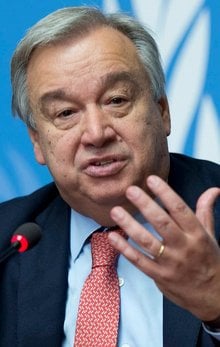
António Guterres
Secretary General