How is Nestle’s Purina Reviving Norfolk Oyster Biodiversity?
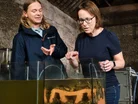
In an aim to revive marine life, petcare company Purina, a subsidiary of Nestle, is partnering with the marine conservation organisation, Oyster Heaven to deploy oyster reefs off the North Norfolk coast of the UK.
The aim of the collaboration is to embed a minimum of four million individual oysters to help restore healthy marine ecosystems, improve water quality and provide refuge to a wide range of species

Why choose oysters?
“Oysters are well known for their ecological importance,” says WWF.
Oysters are filter feeders, known to hugely improve water quality by cleaning the water they engulf.
By extracting phytoplankton and organic matter from the water column, oysters improve water clarity, remove excess nutrients and enhance the quality of the water, according to WWF.
The National Oceanic and Atmospheric Administration says that oyster reefs can also serve as barriers to storms and tides, ultimately preventing erosion and protecting estuary waters.
However, according to National Geographic, oyster reefs are now one of the world's most endangered habitats due to overfishing and diseases as a by-product from pollution and climate change.
Ultimately, cleaner waters mean a healthier ocean life for both animals, plants and humans due to the increase in the oceans capacity to sequester carbon.
Purina’s oyster partnership
Native European oysters were once abundant along the UK coastline, however in recent years they have declined.
With this disappearance, the ecosystem can not function adequately, having a knock on effect across the whole food chain.
The reintroduction of oysters through building reefs is expected to significantly restore water clarity along the Norfolk Coast while also boosting biodiversity.
To start this process, Oyster Heaven plans to deploy the first batch of specially designed clay bricks, known as Mother Reefs, to serve as homes for juvenile oysters and pave the way for large-scale deployment.

By the end of 2026, 40,000 Mother Reefs are expected to be installed containing a total of four million young oysters.
Working together with Norfolk Seaweed, a local family-run aquaculture business, together they will install new oyster reefs, drawing on their deep knowledge of the area's local marine environment.
“Building an oyster reef is all about large numbers to create population tipping points and provide a suitable habitat,” says George Birch, Founder of Oyster Heaven.
“It starts with the creation of Mother Reefs, specially designed clay structures.
“Each reef is pre-charged with over a hundred baby oysters, known as spats, in a controlled environment to ensure their survival and growth.
“Local teams from Norfolk Seaweed will then carefully place the Mother Reefs on the seafloor, allowing the spat to grow into mature oysters.
“These oyster reef systems then act as a foundation for the whole ecosystem, generating an oasis of life on the seafloor."
Expanding across Europe
Purina Europe also has an ambitious Ocean Restoration Programme which launched in 2024.
The programme is part of the company’s commitment to help advance the regeneration of both ocean and soil ecosystems in the extended fish supply chains.
“We source fish by-products for our pet food, meaning no part of the fish goes to waste while delivering valuable vitamins and minerals for pets,” says Kerstin Schmeiduch, Director of Sustainability at Purina Europe.
“We are thrilled to be working with Oyster Heaven, marking an important step towards improving marine restoration along the Norfolk coastline and a first for Purina in the UK.
“As marine biodiversity faces significant challenges, it is essential we come together for collective restoration efforts.
“We urge other companies and organisations to work together on collaborative solutions for the benefit of ocean health.”
Purina is also helping to restore marine habitats across Europe.
By partnering with multiple organisations and companies, Purina’s ultimate goal is to restore 1,500 hectares of marine habitats, the equivalent of 3,700 football pitches, by 2030.
Alongside the newly announced oyster reef deployment project in the UK, restoration efforts also supported by Purina are already taking place in France, the Netherlands, Norway and Portugal.
- Interested in learning more about this water sustainability and more? Join us at Sustainability LIVE: The Net Zero Summit in London on 4-5 March 2026 for in-depth discussions with leading sustainability experts. Secure your ticket now and save over £200.