Could Climate Legislation Really Force ExxonMobil Out of EU?
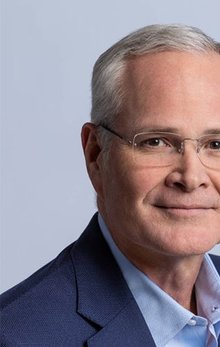
Darren Woods, the CEO of ExxonMobil, has warned that his firm could withdraw from European markets entirely if the EU proceeds with the rollout of the Corporate Sustainability Due Diligence Directive (more commonly known as the CSDDD).
This stringent piece of sustainability legislation would see companies slapped with fines of up to 5% of global revenue, should they controvert its rules. As the world's 13th largest company, any fine incurred by ExxonMobil would be particularly significant.
At the ADIPEC conference in Abu Dhabi, the CEO told Reuters that the CSDDD would have "disastrous consequences" if adopted in its current form.
The directive requires companies operating in the bloc to address human rights and environmental risks across their supply chains, holding firms accountable for harm even in operations outside Europe.
Why ExxonMobil is so against the CSDDD
It is the legislation's extraterritorial scope that has Darren particularly concerned.
"What's astounding to me is the overreach not only requires us to do that for the business that we're doing in Europe, but it would require me to do that for all my business around the world, irrespective of whether it touches Europe or not," he says.
The CEO also warned that if European authorities attempt to enforce the legislation globally "it becomes impossible to stay there".
The law demands that large companies implement climate transition plans aligned with the Paris Agreement's goal of limiting global warming to 1.5°C above pre-industrial levels.
Darren described this requirement as technically unfeasible for fossil fuel producers.

Qatar issues fresh threats
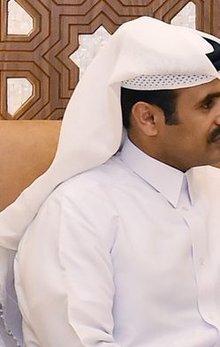
ExxonMobil is not the only energy company to rail against the implementation of strong sustainability regulations in Europe. Saad al-Kaabi, the CEO of QatarEnergy, echoed Darren's sentiments at the same conference, threatening to halt all liquefied natural gas shipments to Europe should the EU go ahead with its plans.
Saad, who also serves as Qatar's Energy Minister, told Reuters the company has contingency plans prepared if it decides to stop European deliveries.
"We can't reach net zero, and that's one of the requirements, among other hosts of things," he said during his ADIPEC address.
"Europe needs to understand that, I think, they need the gas from Qatar. They need gas from the US."
The threats from both companies carry significant weight given their position as major European suppliers.
Supply dependencies
ExxonMobil contributes to the roughly 50% of EU imports from American producers, while Qatar has supplied between 12% and 14% of the bloc's LNG since Russia's 2022 invasion of Ukraine.
Both companies substantially increased their European shipments after the continent cut off Russian supplies.
It is not just a matter of Europe needing Exxon and QatarEnergy, though. The bloc is a key market for both firms, with ExxonMobil investing more than US$23bn in the region over the past decade.
Likewise, QatarEnergy holds several long-term supply contracts with the likes of Shell, TotalEnergies and ENI.
The governments of Qatar and the US urged European leaders last month to reconsider the legislation, arguing it threatens the continent's access to reliable and affordable energy.
We can't reach net zero, and that's one of the requirements, among other hosts of things.
Legislative progress
The European Parliament has agreed to negotiate further changes to the directive, with the EU aiming to approve final amendments by the end of the year.
Saad insisted Qatar seeks fair competition rather than special treatment.
"We would love to serve Europe. We have been committed to Europe," he says. "We're not asking for anything special, we're saying we want to compete in a market that is fair."
The standoff highlights the tension between Europe's climate ambitions and its energy security needs following the disruption of Russian supplies.
Whether the EU will dilute its sustainability requirements to retain major gas suppliers remains unclear as negotiations continue.