Top 10: Sustainable Cities
Nearly 60% of the world’s population live in urban areas according to the United Nations.
These areas also drive around 70% of global greenhouse gas emissions and consume roughly 75% of primary energy according to the International Energy Agency.
With the share of people living in cities rising, the sustainability of buildings and infrastructure could make or break sustainability efforts.
Sustainability Magazine has ranked 10 of the top sustainable cities and innovative projects having an impact.
10. Warsaw, Poland
Population: 1.86 million
Key project: Czajka Wastewater Treatment Plant
Company: Veolia
VP Sustainable Development: Pierre-Yves Pouliquen
Warsaw has committed to a Green City Action Plan (GCAP) and aims to cut emissions by 40% by 2030 in line with EBRD Green Cities. Poland’s first low emission zone was launched in July 2024 in Warsaw across roughly 7% of the city.
In 2004, just 30 to 40% of Greater Warsaw’s wastewater was treated and most flowed directly into the Vistula River. In 2013, significant upgrades to the Czajka Wastewater Treatment Plant were inaugurated by Veolia Water with a 30 kilometre wastewater collection system.
9. Hamburg, Germany
Population: 1.9 million
Key project: Hamburg Green Hydrogen Hub
Company: Siemens Energy
CEO & Chief Sustainability Officer: Christian Bruch

Hamburg’s Climate Plan sets sector targets and a legal framework to reach climate neutrality by 2045. It was Germany’s first city to introduce diesel-restriction streets to tackle NOx.
The Hamburg Green Hydrogen Hub is building a 100 MW electrolysis plant for green hydrogen at a former coal-fired power plant. The hub is expected to produce more than 9,000 tonnes of green hydrogen each year.
Siemens Energy has been chosen to provide six units of its latest electrolyser model with commercial operation scheduled to start in 2027.
8. Paris, France
Population: 2.1 million
Key project: Grand Paris Express
Company: VINCI
VP Environment: Isabelle Spiegel
By 2030, Paris has committed to halving local greenhouse gas emissions compared to 2004. Low emissions zones, cycle lanes and cleaner public transport in the city aim to help achieve this.
The Grand Paris Express is described by VINCI as “the largest infrastructure and urban development project” underway in Europe. The project is a 200 km metro that can shorten trips and cut car dependency, with many parts constructed by VINCI. With more than three million passengers expected daily, it could help to cut the city’s transport emissions.
7. Brussels, Belgium
Population: 1.25 million
Key project: Vilvoorde BESS Project
Company: ENGIE
Vice President ESG: Florence Colombo-Fouquet

The City of Brussels Climate Plan targets a 55% cut in territorial emissions by 2030, carbon neutrality for municipal buildings by 2040 and citywide neutrality by 2050.
At its Vilvoorde site just north of Brussels, ENGIE is constructing one of Europe’s largest Battery Energy Storage Systems (BESS). This BESS facility will cover the electricity consumption of 96,000 households.
In Dorgenbos, on the outskirts of Brussels, ENGIE is developing another BESS project with 80 MW of capacity.
6. Tokyo, Japan
Population: 14 million
Key project: TOKYO H2
Company: Toyota
Senior General Manager for Sustainability Management: Yumi Otsuka
From April 2025, new buildings in Tokyo must install solar power generation systems to support achieving Zero Emission Tokyo by 2050.
The TOKYO H2 project, led by the Tokyo Metropolitan Government, aims to accelerate public-private efforts to use hydrogen. Toyota joined the project on its launch, aiming to make the city a global leader in hydrogen.
Toyota is introducing its Crown hydrogen model as fuel cell taxis alongside the Mirai, supporting the government’s goal of 600 vehicles by 2030.
5. Seoul, South Korea
Population: 9.6 million
Key project: Cheonggyecheon Stream Restoration
Company: Hyundai E&C
SVP: Lee Hyung-Seok

Seoul aims to achieve a 40% cut in emissions by 2030 against 2005 as part of its journey to reach carbon neutrality by 2050.
The Cheonggyecheon Stream Restoration project, carried out by Hyundai E&C, replaced a traffic-packed section of elevated freeway in downtown Seoul, providing flood protection and increasing overall biodiversity by 639%. It contributed to a 15.1% increase in bus use and 3.3% increase in subway use over five years and attracts thousands of visitors daily.
4. Amsterdam, Netherlands
Population: 934,000
Key project: RAI Urban Energy System
Company: Arcadis
Global Sustainability Director: Mark McKenna
Amsterdam’s Clean Air Action Plan aims to bring emissions from traffic and machinery to zero by 2030 and its Circular Strategy targets a 50% cut in primary raw material use by 2030.
RAI Amsterdam is a convention centre hosting 500 events each year in the city. Arcadis co-developed the “Masterplan RAI 2030” and an urban energy system concept that charts the venue’s path to carbon neutrality and ultimately energy self-sufficiency.
The plan introduces an underground logistics network and trans-shipment centre, taking up to 33,000 diesel truck trips off the roads each year.
3. Singapore
Population: 6 million
Key project: Tuas Nexus Integrated Waste Management Facility
Company: Keppel Corporation
Chief Sustainability Officer: Ho Tong Yen
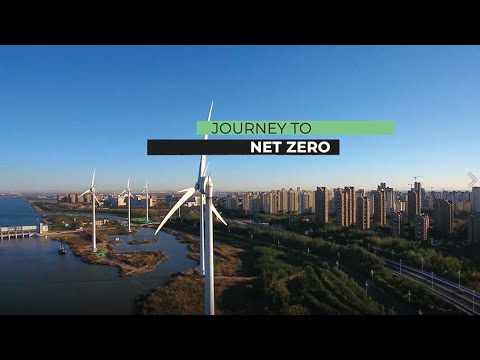
More than 40% of buildings in Singapore are Green Mark certified and it leads Asia in water recycling and efficient public transit. The city invests in vertical greenery and innovative waste management to make the best use of space.
The Tuas Nexus Integrated Waste Management Facility, developed by Keppel, is the world's first fully energy self-sufficient greenfield facility and is the city’s first to treat incinerable waste, source-segregated food waste and dewatered sludge. The facility is expected to generate enough electricity to meet 3% of Singapore's total electricity demand.
2. Frankfurt, Germany
Population: 774,000
Key project: Airport Solar & Energy Programme
Company: Fraport Group
SVP Corporate Development & Sustainability: Jana Baschin
Since 1990, Frankfurt has cut CO₂ emissions per capita by around 25%. There is a green belt circling the city and it aims to become climate neutral by 2035.
Along Runway 18 West of Frankfurt Airport, Fraport has installed 37,000 vertical photovoltaic panels with peak output of 17.4 MW to power the airport. With this solar energy, around 90% of Fraport’s electricity comes from green sources.
Dr. Stefan Schulte, Fraport CEO, says: “Here at Frankfurt Airport, we’re committed to using green electricity generated from solar sources. Since 2021, we’ve also been integrating smaller amounts of wind-generated power into our energy mix.
“From mid-2026, our Power Purchase Agreement with EnBW will enter into force. We secured this arrangement in 2021, guaranteeing green energy output of 85 megawatts. This will allow us to meet 100% of our Group energy needs in Frankfurt from renewable sources.”
1. Copenhagen, Denmark
Population: 1.4 million
Key project: Amager Bakke
Company: Ramboll
Group Director Sustainability & Corporate Responsibility: Lynsey Clarke

Copenhagen has reduced its emissions by around 75% since 2005. The city is known around the world for its cycling, with more than half of residents biking daily to work or education.
Amager Bakke is a state-of-the-art waste-to-energy plant with energy efficiency of 107%. It delivers electricity to 550,000 people and district heating to 140,000 households. The facility is owned and operated by Amager Resource Centre which received help from Ramboll to boost efficiency to record-high levels.
Alongside using waste for energy, a pilot carbon capture plant began operation at the facility in 2021. This pilot has the potential to reduce the facility’s carbon footprint by 95%. Amager Bakke also produces more clean water than it uses.
Amager Bakke is home to CopenHill, a recreational facility featuring a 490 metre artificial ski slope and hiking trail on the building’s roof. It is also home to the world's tallest permanent climbing wall.
Company portals








Executives
Christian Bruch
President and CEO

Florence Colombo-Fouquet
Vice-présidente ESG
Isabelle Spiegel
Executive Committee Member
Jana Baschin
Senior Vice President Corporate Development and Sustainability
Lynsey Clarke
Global Senior Director of Sustainability & Corporate Responsibility
Mark McKenna
Global Sustainability Director

Pierre-Yves POULIQUEN
Président
Tong Yen Ho
Chief Sustainability Officer

Yumi Otsuka
Senior General Manager for Sustainability Management