This Week's Top Five Stories in Sustainability
1. Why LEGO, Maersk & Novo Nordisk Are Investing in e-Methanol
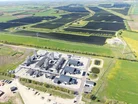
The e-methanol plant, built by European Energy & Mitsui, will supply companies including Maersk, LEGO & Novo Nordisk with clean renewable fuel
The world's first large-scale commercial e-methanol facility has officially begun operations in southern Denmark, marking a significant milestone in the renewable energy landscape.
Located in Aabenraa, the Kassø e-methanol facility will supply 42,000 tonnes of e-methanol annually to industry leaders seeking to decarbonise their operations.
The facility is a joint venture between European Energy A/S, which holds a 51% stake, and Japanese trading company Mitsui & Co, which owns the remaining 49%.
The plant aims to transform how renewable electricity is utilised, particularly in sectors that have proven difficult to electrify directly.
Shipping giant A.P. Moller - Maersk will use the e-methanol to fuel the Laura Mærsk, the world's first container vessel capable of operating on methanol.
2. GE Vernova Hitachi: Bringing Carbon-Free Nuclear to the West
GE Vernova Hitachi Nuclear Energy has received approval to construct the West's first SMR in Ontario, Canada, paving the way for carbon-free electricity
Construction is expected to begin soon on the first small modular reactor (SMR) in the Western world.
GE Vernova Hitachi Nuclear Energy has announced approval from the Province of Ontario and Ontario Power Generation to proceed with the deployment of this SMR in Canada.
The BWRX-300 is built on a standard design, offering a tangible solution to energy security and decarbonisation challenges.
“This historic achievement in small modular reactor technology is more than a milestone, it’s a clear signal that we are ready to meet the moment,” says Scott Strazik, CEO at GE Vernova.
“As we build toward a more holistic energy future, this achievement with the BWRX-300 shows how innovation in nuclear can deliver reliable, baseload, zero-carbon power generation.
“As we confront the challenges of increased demand, energy security and carbon intensity, this milestone reaffirms our commitment to innovation and a more sustainable energy future.”
3. Liverpool FC Launches World-First Carbon Negative Jersey
Liverpool FC & 1PointFive have released a football jersey made using DAC to commemorate the 20th anniversary of the club’s Champions League win in Istanbul
This year’s Premier League champion Liverpool FC has unveiled a commemorative jersey in partnership with American carbon capture company 1PointFive, marking two decades since its legendary Champions League triumph in Istanbul.
The special edition shirt is the world’s first carbon-neutral football jersey, with atmospheric CO₂ equal to its production footprint being removed through 1PointFive's Direct Air Capture technology.
The new shirt celebrates the club's famous comeback against AC Milan in 2005, which is widely considered one of the greatest football matches of all time, meaning that this jersey blends historical significance with environmental innovation.

The collaboration addresses growing environmental concerns in sports merchandising by demonstrating how commemorative products can be created responsibly.
Each shirt will have its carbon footprint neutralised through advanced carbon capture technology.
"This shirt marks a world-first in football – and there's no better occasion to do it than the 20th anniversary of that iconic night in Istanbul," explains Lee Dwerryhouse, Senior Vice President of Merchandising at LFC.
"Through our pioneering collaboration with 1PointFive, we've created a truly special piece for our supporters.”
4. Inside AESC's New £1bn Sustainable Transport Gigafactory
More than US$1bn in funding has been secured to build an AESC battery gigafactory in England with an annual capacity of 15.8 GWh to power electric vehicles
The UK Government has announced a £1bn (US$1.3bn) funding deal to build an AESC gigafactory.
Based in Sunderland, England, the facility will manufacture batteries for electric vehicles.
The National Wealth Fund and UK Export Finance will provide financial guarantees unlocking £680m (US$898m) in financing from banks including HSBC, Standard Chartered and SMBC Group.
In addition to this funding, the UK Government’s Automotive Transformation Fund is investing £150m (US$198m) in grant funding.
This follows a trade deal agreement between the US and UK that cut tariffs on cars, including EVs, from 17.5% to 10% on a quota of 100,000 UK cars.
Shoichi Matsumoto, CEO of AESC, said: “This investment marks a key milestone in AESC’s ongoing efforts to support the UK’s path towards decarbonisation and the expansion of its EV market."
“Through close collaboration with strategic partners, we strive to accelerate this transition while creating high-quality local jobs and building a resilient, sustainable supply chain.
“We are honoured to contribute to the development of low-carbon economy with our advanced battery technologies.”
5. How CH4 Global & Mitsubishi Plan to Change Farming Forever
Sustainability Magazine talks with Steve Meller, CEO of CH4 Global, the start-up slashing methane emissions in the agriculture industry with Mitsubishi
When Steve Meller attended a conference in New Zealand six years ago, he wasn't expecting to found a company that could potentially transform the world’s largest industry.
But hearing a Pacific island Prime Minister describe relocating their citizens due to rising sea levels sparked something inside of him.
Steve, who had had a long and successful career in the corporate world with Procter & Gamble and an academic career as a PhD scientist, was always an individual with a passion for sustainability and climate action.
However this was the moment that made him decide to take matters into his own hands.
At the time, Steve was living in California, where State Bill 1383 had come into force, mandating the reduction of methane emissions among farmers.
It just so happened that Steve had recently come across a particularly unique piece of research into a seemingly unremarkable type of seaweed named Asparagopsis, native to his homeland of Australia.
The research had found that Asparagopsis is able to reduce the methane emissions produced by livestock when it is incorporated into standard agricultural feed.
It was a lightbulb moment; suddenly, Steve had found his calling.
"Everything I've done in my career has actually led up to what we do now," he says.
He decided that he would use his skills and experience to mass produce Asparagopsis in an attempt to decarbonise the agriculture industry.
Explore the latest edition of Sustainability Magazine and be part of the conversation at our global conference series, Sustainability LIVE.
Discover all our upcoming events and secure your tickets today.
Sustainability Magazine is a BizClik brand