
How is California Phasing Out the Use of Forever Chemicals?
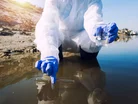
California has taken another major step in protecting public health and the environment by adopting strict new health goals for perfluoroalkyl and polyfluoroalkyl substances (PFAS), commonly known as “forever chemicals” due to their persistence in nature.
The move, led by the Office of Environmental Health Hazard Assessment (OEHHA), sets science-based limits for PFAS in drinking water and complements new legislative measures to phase out their use in consumer products.

Safeguarding drinking water
The OEHHA has established public health goals (PHGs) for two of the most studied PFAS compounds: perfluorooctanoic acid (PFOA) and perfluorooctane sulfonic acid (PFOS).
These goals set non-enforceable targets of 0.007 parts per trillion (ppt) for PFOA and 1 ppt for PFOS, levels deemed safe for lifetime exposure without significant health risk.
“OEHHA’s adoption of these public health goals for PFOA and PFOS is an important step toward addressing the long-term effects of forever chemicals,” says Darrin Polhemus, Deputy Director for the State Water Board’s Division of Drinking Water.
“The PHG values will enable us to develop standards that water systems will have to achieve to help minimise these chemicals in our drinking water.”
The announcement follows five years of scientific review and public consultation, underscoring California’s commitment to evidence-led environmental protection.
Phasing out PFAS in everyday products
Assembly Bill 347 by former Assemblymember Phil Ting, complements OEHHA’s initiative by addressing PFAS contamination at its source.
The bill strengthens enforcement powers for the Department of Toxic Substances Control (DTSC), allowing product testing, compliance certification and administrative penalties.
It also supports a broader shift towards an “essential use” model, ensuring PFAS are only used where absolutely necessary for health or safety.
“We know PFOA and PFOS can be harmful at low levels and California is leading by adopting these scientifically rigorous and health protective goals to inform how water suppliers treat these chemicals in drinking water,” says Lauren Zeisse, former OEHHA Director.
Understanding the impact of PFAS
PFAS are synthetic chemicals prized for their resistance to heat, water and oil.
However, these same properties make them nearly indestructible once released into the environment.
They accumulate in soil, water and living organisms, leading to widespread contamination, with 45% of US tap water containing PFAS and 98% of Americans carrying detectable levels in their blood.
Health studies link PFAS exposure to cancer, hormonal disruption, reduced immunity, liver damage and developmental issues.
PFAS are particularly persistent in groundwater near industrial facilities, landfills and firefighting training sites, posing long-term challenges for clean water access.
Balancing innovation, cost and sustainability
While public health organisations such as the Environmental Working Group and the Natural Resources Defense Council support the ban, industry representatives have raised concerns about feasibility and cost.

Manufacturers argue that some fluoropolymers used in non-stick cookware are stable and safe, approved by the US Food and Drug Administration for food contact.
Regulators, however, maintain that treating PFAS as a single chemical class is essential to avoid harmful substitutes and ensure lasting environmental protection.
California’s PFAS cleanup costs already exceed US$500m, with more than US$1bn in planned projects, underscoring the urgency of preventive measures.
By combining scientific rigour with phased legislation, the state aims to reduce exposure, safeguard ecosystems and lead the nation toward a cleaner, more sustainable future.