How Mastercard Is Driving Cup Circularity at Blenheim Palace
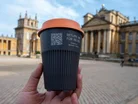
Circular economy models are redefining efficiency and innovation, forward-thinking businesses are reaping the benefits of moving away from wasteful linear systems.
The shift from traditional take-make-dispose models to circular frameworks marks one of the most significant operational transformations of the 21st century.
As proven in a collaboration with Mastercard and Blenheim Palace, these initiatives are not just about protecting the environment, they can also unlock new revenue streams, streamline operations and enhance customer experiences.
Circular innovation at Blenheim Palace
Blenheim Palace, a UNESCO World Heritage site in Oxfordshire, is setting an innovative example of circularity in action.
Two years ago, the historic attraction faced a common issue – spending more than £73,440 (US$100,000) annually on disposable beverage cups.
Today, it has cut beverage packaging costs by 50% by introducing a deposit return scheme (DRS) for reusable cups, mirroring similar successful initiatives in places like Denmark.
“The transition wasn’t merely about sustainability metrics,” says David Green, Head of Innovation at Blenheim Palace.
“Our reusable cup scheme has significantly cut costs and fundamentally transformed our operations, reimbursing customers rapidly and conveniently for returning their cups.”
The switch to reusable cups has not only driven operational improvements but also delivered a better visitor experience and notable environmental impact.
In a single year, the initiative helped to prevent 320,000 single-use cups from ending up in landfill and reduced carbon emissions by 1,150kg.
A circular economy success
Blenheim’s solution is both practical and innovative. Visitors pay a US$2.70 (just under £2) deposit for RFID-enabled reusable cups, which are tracked and managed by circularity solutions provider re-universe.
Each cup is digitally tagged, enabling precise tracking throughout its life cycle. Returned cups are processed via reverse vending machines, cleaned and reintroduced into use, while customers receive fast, secure refunds to their payment cards.
“With return machines streamlining the process, we’re achieving remarkable results that prove sustainable operations can be financially viable, too,” explains David.
“What if the more sustainable choice was just a few taps away?” writes Ellen Jackowski, Chief Sustainability Officer and EVP at Mastercard, on LinkedIn.
“Mastercard Move is helping to make this a reality with re-universe at Blenheim Palace, where visitors can make a small deposit for a reusable cup when they purchase a beverage, then return it to a conveniently located reverse vending machine for a fast return of the deposit to their card.”
Did you know? Ellen Jackowski will be speaking at Sustainability LIVE: Climate Week NYC on 22 September - Register your interest to attend.
Mastercard's circular input
Circularity at Blenheim Palace is delivering significant financial returns. Each US$2 reusable cup needs only four uses to break even, compared with US$0.35 (£0.26) to US$0.67 (£0.49) per single-use cup.
The second year of the programme saw a 50% saving in cup-related costs, boosted by reduced waste disposal fees and operational efficiencies.
Technology has played a key role in achieving this success. “For circular initiatives to scale, the consumer experience must be seamless,” says Pratik Khowala, Mastercard’s Global Head of Transfer Solutions.
“Our payments technology enables Blenheim Palace to offer near-instant deposit returns without requiring visitors to download apps or share additional banking information, a critical factor in achieving high participation rates, especially among international visitors.”
The system also generates vital data to refine and scale the initiative.
“We’re measuring operational efficiency, visitor satisfaction, and return rates by location,” says David.
“This data allows us to continually refine the system for maximum impact and is leading us to invest more in the programme. We’re starting with hot cups, but we are planning to expand into cold cups and other packaging soon.”
Keys to circular implementation
Blenheim Palace’s success highlights six best practices for any organisation pursuing a circular model:
- Consumer education: Clear messaging drives uptake
- Staff engagement: Teams must understand and support the system
- Frictionless UX: Deposits and returns must be easy
- Inclusivity: Systems should cater to diverse user needs
- Incentive design: Deposit fees should encourage returns, not deter purchases
- Data visibility: Continuous optimisation depends on real-time insight.
Circular economy principles are not new, but their relevance is growing rapidly.
As businesses move away from linear models, examples like Blenheim Palace show that thoughtful circular design can deliver value across people, planet and profit.
“The most surprising aspect of our journey has been discovering that circular systems often outperform linear ones on pure business metrics,” says David.
“Sustainability is no longer a trade-off against profitability, increasingly, it’s becoming a driver of it.”
Explore the latest edition of Sustainability Magazine and be part of the conversation at our global conference series, Sustainability LIVE.
Discover all our upcoming events and secure your tickets today.
Sustainability Magazine is a BizClik brand