SMMT & Dassault Systèmes: Will the UK Meet Its 2035 EV Goal?
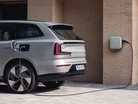
The UK has passed a notable threshold in EV adoption.
According to the Society of Motor Manufacturers and Traders (SMMT), two million electric cars have now been registered across the country.
This figure represents progress in the transition away from internal combustion engines.
However, the same organisation warns that current registration rates fall short of government requirements under the Zero Emission Vehicle Mandate.

EV shares fall short
The gap between actual adoption and mandated targets could signal challenges ahead for the automotive sector.
Manufacturers face pressure to accelerate uptake while consumers weigh cost considerations against environmental benefits.
According to the SMMT, Battery Electric Vehicles (BEVs) comprise 23.1% of the overall new car market in the year to date.
This proportion sits well below the 33% threshold set by the Zero Emission Vehicle Mandate.
Giacomo Margiotta-Mills, Industry Director, Transportation & Mobility, Euronorth, at Dassault Systèmes, says: "Reaching two million electric cars on UK roads is a genuine milestone - but the SMMT's own data tells us the harder truth: demand is still falling well short of what the mandate requires."
"The industry cannot close that gap through ambition alone.
“Consumers are making a simple calculation: EVs already win on performance and driving experience, but they remain out of reach for too many people on price.
"Until that cost gap with ICE vehicles closes meaningfully, the mass market will stay on the sidelines."
The shortfall persists despite billions spent on manufacturer discounts and the introduction of the Electric Car Grant last year.
Total new car registrations in 2026 are now expected to rise 3.6% to 2.093 million, up from January's 2.048 million outlook.
BEV share projections have been revised downward to 26.8% from 28.5% following an underperforming first quarter.
The SMMT predicts that the 2027 market will reach 2.121 million units, with 32% of them being BEVs.
Sustainability leaders won’t want to miss Sustainability LIVE: The Leadership Summit at London Climate Action Week, taking place at Code Node on 25 June 2026.
Register now for this exclusive invite-only event.
This leaves a persistent gap of around six percentage points against the mandate target.
Mike Hawes, SMMT Chief Executive, says: "Two million electric car registrations is a considerable milestone to celebrate, although natural demand is still well below the level demanded by the mandate."
The cost differential between electric and petrol vehicles continues to limit broader adoption.
While operational costs favour electric models over time, initial purchase prices remain higher for BEVs.
External factors compound the challenge.
A press release issued by the SMMT argues that the Iran conflict adds further uncertainty to the EV market, with rising interest potentially tempered by concern over inflation, higher energy prices and the resultant negative impact on the cost of living.
Technology could accelerate production
Giacomo argues that industrial AI when harnessed effectively can bring EVs to market faster.
He says: "This is where Industrial AI has a critical role to play. Automotive companies that harness it effectively - across design, engineering, production and supply chains - can compress development cycles, reduce costs and bring compelling, affordable EVs to market faster.
"But mass EV adoption doesn't just reshape the automotive industry - it transforms energy demand entirely."
The shift to EVs will require substantial infrastructure investment. Grid capacity and charging networks must expand to support increased electricity demand from transport.
Giacomo says: "The energy sector needs to be ready for that: investing now in the grid capacity, charging infrastructure and demand management systems that a true mass market will require. Industrial AI has an equally important role to play there too.
"The capabilities exist. The mandate is real. The time to act is now."
Company portals



Executives
Giacomo Margiotta-Mills
Transportation & Mobility Industry Director for Northern Europe
Mike Hawes
Chief Executive Officer