This Week's Top Five: Supply Chains, EVs and Data Centres
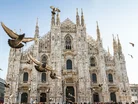

A data centre in Milan might soon provide heat to some of the city’s busiest buildings. Equinix and A2A have created a system that collects waste heat from servers and sends it into Milan’s district heating network.
Equinix and A2A are using waste heat from a Milan data centre campus to heat 21,000 homes through one of Europe's largest heat recovery projects
The network already supplies heat to places like the Duomo and Palazzo Reale.
The companies say that once the project is running, it could be one of the biggest data centre heat export projects in Europe outside the Nordic countries.
If you go to a restaurant with sustainability claims, often top of the list – alongside ethical and seasonal ingredient sourcing, minimising food waste and cutting single-use plastics – is reducing beef.
This is because, per unit of protein, beef has some of the highest greenhouse gas (GHG) emissions, land use and water pollution of any food.
As one of the largest food outlets in the world with more than 43,000 restaurants, McDonald’s is also an incredibly influential presence in the beef supply chain.
In 2014, the fast-food giant reported that it was going to embark on a mission for "sustainable beef” and has since regionalised sourcing – for example, all US burgers are made from North American beef and UK restaurants are supplied from Northern Ireland.
Carbon dioxide often takes centre stage in discussions around greenhouse gases.
While CO₂ is responsible for around 74% of total emissions, according to the Center for Climate and Energy Solutions, it is far from the most powerful contributor.
Methane, for example, is at least 80 times more potent than carbon dioxide over a 20-year period and is increasingly becoming a focus for climate action initiatives. Yet even methane’s impact is overshadowed by a lesser-known gas – sulphur hexafluoride, or SF₆.
For decades, SF₆ has been widely used in energy grids to insulate electrical systems and suppress high-voltage arcs, helping to prevent fires and equipment damage.
Contemporary Amperex Technology Co., Limited (CATL) is the world’s largest battery manufacturer, with a 38% market share in EV batteries.
It operates 15 battery manufacturing plants globally and its technology powers some of the world’s most influential automakers, including Tesla, BMW, Mercedes-Benz and Volkswagen.
CATL has entered into a strategic investment partnership with CarbonScape, a developer of sustainable bio-based graphite materials for battery applications.
Ferrero's Sustainability Report examines how it is converting objectives into measurable outcomes across its global operations.
The company focuses on sourcing strategies to improve traceability and visibility across its supply chains. According to Ferrero, this approach builds resilience in its operations whilst addressing increasing regulatory requirements.
Cocoa and coffee prices have experienced volatility in recent periods, creating challenges for manufacturers. The company states that closer supplier collaboration has been necessary to maintain ongoing operations and ensure consistent quality standards.






Executives
Adaire Fox-Martin
Chief Executive Officer & President
Beth Hart
Chief Sustainability & Social Impact Officer
Emanuela Grandi
Managing Director, Italy
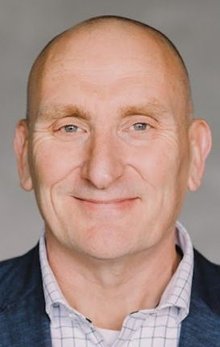
Ivan Williams
CEO
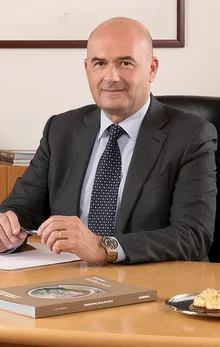
Lapo Civiletti
CEO

Noah Nkonge
Senior Manager - Sustainability - Heat Export
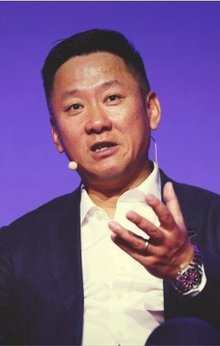
Oscar Luo
Executive President, Global Head of BD, Licensing and Venture Management
Renato Mazzoncini
Chief Executive Officer
Ruben Llanes
CEO of Digital Grid and President of North America Power & Grid

Shinjini Menon
SVP of System Planning and Engineering at SCE
Vincent Ledoux Pedailles
Chief Commercial Officer