Top 10: Water Conservation Platforms

People and businesses rely on water every day to survive.
When leaked or spilled, the energy and time used to treat water is wasted.
Technology and software solutions can help businesses to monitor and predict where water may be wasted and react fast.
Sustainability Magazine has ranked 10 of the top water conservation solutions.
10. Lumada Smart Water
Company: Hitachi
Chief Sustainability Officer: Lorena Dellagiovanna
Founded: 1910
Headquarters: Tokyo, Japan

Lumada Smart Water is a digital water-utility solution built on Hitachi’s Lumada platform that combines OT, IT and sensors.
Its capabilities include continuous leak detection, prioritised repair targeting and operations support.
Through ultra-sensitive vibration sensors on distribution pipes, Lumada can provide leak detection at scale using cloud analytics to flag probable leaks and search areas.
Hitachi says that Lumada can support faster leak finding, reduced field time and better asset targeting that can collectively lower losses and improve service continuity.
9. Xylem Vue
Company: Xylem
Chief People & Sustainability Officer: Claudia Toussaint
Founded: 2011
Headquarters: Washington, DC, US
Xylem Vue can capture data from any source including legacy solutions, creating a unified source of information so utilities can maximise investments across the water cycle.
Xylem says that the City of Richmond in Vermont, US has reduced combined sewage overflows and avoided US$725m in capital costs using the Vue platform.
Robert Stone, Deputy Director for City of Richmond Department of Public Utilities, told Xylem: “The whole concept and process of putting meters out into the collection system and getting data to work with, as opposed to relying predominantly on modelling, and with minimal, actual, hard, observed data has been a significant benefit.”
8. Info360
Company: Autodesk
Chief Sustainability Officer: Joe Speicher
Founded: 1982
Headquarters: California, US

Info360 is a cloud suite for utilities used for operational monitoring and incident response.
It can be used to calculate likelihood and consequence of failure alongside optimising plant operations, potentially conserving water.
By fusing SCADA, meter and sensor data into one live view, Info360 Insight flags anomalies early and guides incident response.
Operators can test “what if” scenarios against network models before touching a valve. Better pressure control lowers background leakage and can reduce break rates across mains.
7. Honeywell Forge
Company: Honeywell
SVP Portfolio Transformation: Anne Madden
Founded: 1906
Headquarters: North Carolina, US
Honeywell’s smart water meters stream flow, volume and pressure data into Honeywell Forge Performance+ for Utilities.
The platform analyses anomalies in real time and flags probable leaks so field teams can act faster, cutting non-revenue water.
Forge provides a single operational view for control rooms and crews. Faster detection-to-repair windows mean fewer hours of leakage and less treated water wasted in the network.
For trunk mains and pipelines, Honeywell’s Experion Leak Detection complements Forge by monitoring for minute imbalances across oil, gas and fresh or salt water lines.
6. Hubgrade
Company: Veolia
VP Sustainable Development: Pierre-Yves Pouliquen
Founded: 1853
Headquarters: Paris, France

Veolia’s Hubgrade brings live monitoring and analytics to plant and network operations, helping utilities cut leaks and waste while proving savings.
The Wastewater Plant Performance module applies analytics and digital twin control to stabilise processes and cut the plant’s environmental footprint while increasing capacity.
Real-time alarms can highlight abnormal use and probable leaks, so teams shorten run time and reduce non-revenue water.
It also uses AI to prioritise the biggest water savings first.
5. Intelligent Urban Exchange for Water
Company: Tata Consultancy Services
Director of Sustainability Services: Dr Swati Murthy
Founded: 1968
Headquarters: Mumbai, India
TCS’s Intelligent Urban Exchange (IUX) for Water is a cloud analytics platform for city and utility operations that pulls live data to improve resilience and reduce losses.
It uses AI to spot anomalies early and guide responses, prioritising to save the most water.
By bringing together data from a variety of sources, IUX can help operators to test scenarios and coordinate field work.
Its dashboards can also track actions and outcomes so utilities can evidence water savings.
4. ABB Ability
Company: ABB
Chief Communications & Sustainability Officer: Karin Lepasoon
Founded: 1988
Headquarters: Zürich, Switzerland

ABB Ability brings together data across leak management, energy optimisation and plant control, aiming to raise uptime and reduce waste.
The ABB Ability Water Management System can detect leaks and raise alarms alongside proactive monitoring and digital twins to run simulations.
ABB Ability OPTIMAX 6.4, launched in 2024, features an AI module for improved forecasting and coordinated control of multiple assets. This can support tighter process control, reducing avoidable plant losses and overflows, so less treated water is wasted during operations.
3. SIWA
Company: Siemens
Chief People and Sustainability Officer: Judith Wiese
Founded: 1847
Headquarters: Munich, Germany
Siemens’ SIWA is a suite of AI-driven applications for water and wastewater operations under Siemens Xcelerator.
SIWA is focussed on leak reduction, smarter network operations and sewer incident prevention.
It can detect anomalies across district metered areas helping to find and fix leaks faster by fusing flow data, hydraulic models and AI.
"Digital technologies have not yet been widely adopted in the water sector so far," says Anja Eimer, General Manager Global Water Business at Siemens.
"The existing OT and IT device landscape is complex, skilled workers are in short supply, and the business benefits of many digital applications have often been unclear.
“With our new software offerings, we are addressing these conditions and enabling water companies to perform AI-based operational analyses."
2. ECOLAB3D
Company: Ecolab
Chief Sustainability Officer: Emilio Tenuta
Founded: 1923
Headquarters: Minnesota, US

“What I value and love most about my role is helping companies unlock growth by managing resources more intelligently, especially water,” says Emilio Tenuta, Chief Sustainability Officer at Ecolab.
“It's incredibly rewarding to see how smart water resource management drives business growth and a broader impact in the world.”
ECOLAB3D is Ecolab’s cloud IIoT platform for industrial water. It uses data from 3D TRASAR controllers, meters and sensors to flag deviations and guide action.
Alongside helping leaks to be found and fixed faster, ECOLAB3D can support tighter process control and enterprise-level prioritisation.
Emilio explains: “We help them do more with less. If you use less water, you're less vulnerable to climate change. But at the same time, if you use less water, you also use less energy because water requires heating, cooling and pumping.”
1. EcoStruxure Water Advisor
Company: Schneider Electric
Chief Sustainability Officer: Esther Finidori
Founded: 1836
Headquarters: Paris, France
EcoStruxure Water Advisor is a software suite for water cycle intelligence that unifies data from a variety of sources to include quality, operations and losses.
It uses big-data analytics to cover the full leakage lifecycle including detecting new events and prioritising zones.
Water Advisor is built to plug into existing IT and OT systems with Schneider’s wider water portfolio.
Within Water Advisor, Water Simulation, formerly Aquis, acts as a digital twin.
Operators can forecast how a network will react to planned or unplanned events, test pressure strategies and understand customer impact before touching a valve.
Using real-time data rather than static assumptions keeps the model in step with the system so actions reflect current conditions.
The company has also previewed an updated Water Advisor suite with an initial water-loss module slated for early 2026.
Company portals



Executives
anne madden
Senior Vice President and General Counsel
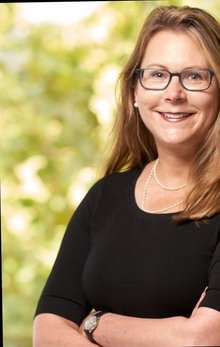
Claudia Toussaint
Senior Vice President, Chief People and Sustainability Officer
Dr Swati Murthy
Director - Sustainability Services

Emilio Tenuta
Senior Vice President and Chief Sustainability Officer at Ecolab
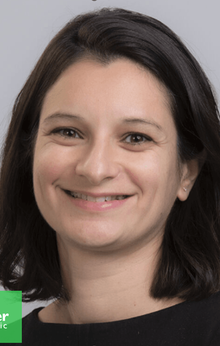
Esther Finidori
Chief Sustainability Officer
Joe Speicher
Chief Sustainability Officer
Judith Wiese
Chief People and Sustainability Officer of Siemens AG (CPSO)
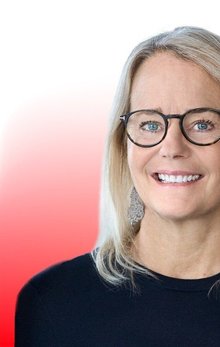
Karin Lepasoon
Chairperson
Lorena Dellagiovanna
Group Chief Sustainability officer, CHRO at Hitachi , Ltd

Pierre-Yves POULIQUEN
Président