
How Drones Improve Safety for Aramco, Chevron, Shell & bp
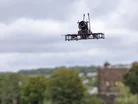
The world of aviation technology took a turn in 1916 with the creation of the first unmanned aerial vehicle (UAV), or drone.
Initially, such sophisticated machinery was not particularly accessible, but today drones are available for less than US$50.
This makes drones a useful tool, not just for enthusiasts, but for major industries looking to enhance efficiency and safety in their operations.
“The advent of drones in the oil and gas industry is a game-changer,” says Khalid Y. Al-Qahtani, Senior Vice President of Engineering Services at Saudi Aramco.
Using drones for inspections
Drones can be used to inspect energy facilities with a variety of different tools.
The inspections are enhanced by high-definition cameras equipped on drones, enabling them to quickly spot potential hazards or signs of wear like structural weaknesses or corrosion.
This method is not only safer, but also cuts down on the time and manpower typically required for such tasks.
Shell began testing drones in 2010 and has integrated them into its processes for inspection.
At the Energy and Chemicals Park Rhineland, Shell uses automated drone flights to monitor tank farms.
These automated flights can inspect the tops of tanks without someone being physically present on site.
"Shell is highly innovative in tank roof inspections with the deployment of the automated drone solution,” explains Thomas Klein, Digital Innovation Lead at Shell.
“This technology can also be used for many other monitoring tasks that make these operations safer and more efficient."
These surveillance methods can produce millions of data points, so AI and machine learning offer an optimised path to detecting faults.
Chevron was the first company permitted by the Federal Aviation Administration (FAA) to use uncrewed aircraft systems (UAS) in the same airspace as crewed aircraft in May 2024.
This allows the company to monitor its network of pipelines for problems and optimise its maintenance.
The drones used by Chevron use less fuel than traditional methods, allowing the company to reduce its carbon footprint.
How drones can enhance safety
Companies use drones to meticulously inspect infrastructure such as power lines, grids and wind turbines, which can stand up to 280 metres high.
These inspections are safely conducted from a distance, sparing human workers from the dangers of extreme heights or dangerous fumes.
It can also reduce the need for transport to offshore facilities which can be dangerous in itself.
In the oil and gas industry, drone inspections can lead to a 50% reduction in inspection costs and efficiency improvements of up to 33%.
If a disaster occurs, drones can reach the affected area quickly without putting human responders in danger.
Aramco has been expanding its use of drones since 2015.
It uses ultrasonic testing drones to detect defects, corrosion or flaws that may affect the safety of its assets and infrastructure.
Khalid explains: “Deploying industry-leading robotics and drone applications across Aramco’s business is driving safer, cost-effective, and more efficient practices.”
Data collection and analysis improved by drones
Drone surveillance can be used to create high-resolution maps and timelines of infrastructure, and even digital twins.
They can be equipped with various technologies to gather high volumes of detailed data.
- LiDAR (light detection and ranging) for topographical maps
- Anemometers to measure wind
- Pyranometers to measure solar irradiance
- Multispectral and hyperspectral sensors to capture data across multiple electromagnetic wavelengths
- Thermal imaging cameras to identify heat signatures
LiDAR scanning can support the creation of digital twins which can improve the accuracy and speed of data collection further.
Digital twins can also support companies with maintenance and major equipment changes.
bp has created digital twins of its facilities and systems around the world using APEX and Microsoft Azure.
“Modularity is at the heart of bp’s digital approach to drive an integrated set of world-class customer experiences, reduce the time to value for new products, and enable bp to create new businesses,” says Abeth Go, Vice President for Data and Analytic Platforms at bp.

“We need to be able to mobilise very swiftly, especially when we're entering new markets. It's important that we have a modular operating model so that we can bring multidisciplinary teams together in a shared ecosystem of data assets and data products that spans the organisation.”
******
Make sure you check out the latest edition of Sustainability Magazine and also sign up to our global conference series - Sustainability LIVE 2024
******
Sustainability Magazine is a BizClik brand
******