Top 10: Sustainable Pharmaceutical Companies
The pharmaceutical industry is shifting from traditional, straightforward patient care to also focus on environmental stewardship and sustainability.
The companies in this Top 10 now address decarbonisation, water scarcity and circular economy principles as part of their core business strategies.
By pursuing net-zero supply chains, cleaner, high-tech manufacturing and just access-to-medicine programmes, the sector demonstrates the link between planetary health and human wellness.
Here we present the pharmaceutical companies leading in corporate responsibility, innovation and dedication to a healthier, increasingly sustainable future.
10. GSK
Market Capitalisation: US$103bn
VP Global Sustainability: Adele Cheli
Founded: 2000
HQ: London, UK
GSK was among the first major pharmaceutical companies to set specific targets for water, land and oceans.
Its Responsible Business Report highlights its 100% renewable electricity milestone and a commitment to support 1.3 billion people in lower-income countries by 2030.
GSK achieved a 45% reduction in operational carbon emissions from its 2020 baseline in 2025. Long-term goals include committing to a net zero, nature positive, healthier planet with targets set for 2030 and 2045.
9. Sanofi
Market Capitalisation: US$106bn
Group Head of Corporate Social Responsibility: Sandrine Bouttier-Stref
Founded: 1973
HQ: Paris, France
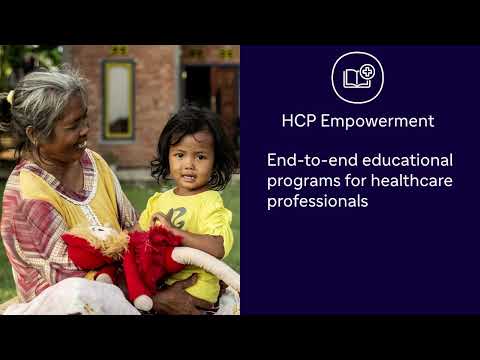
Sanofi’s sustainability impact centres on its Global Health Unit, which provides 30 essential medicines to 40 lower-income countries on a non-profit basis, focusing on diseases exacerbated by climate change.
In 2025, the unit treated over one million patients with non-communicable diseases (NCD).
Internally, it has a net zero greenhouse gas emissions target, including Scope 3, by 2045.
It has improved its raw material sourcing, reduced air freight and business travel, improved energy management and reduced waste generation and treatment.
8. Merck
Market Capitalisation: US$293bn
Head of Corporate Sustainability, Quality and Trade Compliance: Petra Wicklandt
Founded: 1668
HQ: Darmstadt, Germany
Merck is tackling net zero, renewables, water stewardship and biodiversity to develop global health and a sustainable future.
It is working to align net zero goals with improvements in patient care. Merck is aiming to source 100% of its electricity from renewables by 2025 and has reached 61% to date.
As of late 2024, Scope 1 and 2 emissions were 16% below its 2019 baseline, while Scope 3 emissions were 6% below baseline, with a target of a 30% reduction by 2030.
7. Eli Lilly and Co
Market Capitalisation: US$935bn
VP of Sustainability: Jeff Greffet
Founded: 1876
HQ: Indiana, US

Eli Lilly and Co. has set measurable targets to track progress on its sustainability strategy. Its impact is driven by its transition to 100% renewable electricity across all US and European sites as of 2026, as well as pioneering affordable insulin programmes.
Longer-term targets include becoming carbon neutral by 2030 and enhancing value chain emissions reporting.
While the company plans to expand its global presence in the pharmaceutical sector, it plans to align its growth with its sustainability goals.
6. Novo Nordisk
Market Capitalisation: US$142.6bn
SVP Corporate Strategy & Sustainability: Elin Jäger
Founded: 1989
HQ: Bagsværd, Denmark
Novo Nordisk is a leader in pen-cycle recycling, where used insulin pens are collected and repurposed into furniture and office insulation as part of its Circular for Zero strategy.
The company also works with raw‑material suppliers and manufacturers to reduce plastic usage, phase out virgin plastics where possible and transition to more circular materials.
Elsewhere, Novo Nordisk is linking business growth with progress on climate, plastics, and nature. The company reaffirmed its commitment to reach net zero across scopes 1, 2 and 3 by 2045.
5. Pfizer
Market Capitalisation: US$148.7bn
CEO: Albert Bourla
Founded: 1849
HQ: New York, US

Among the first companies validated by the Science Based Target Initiative in 2015, Pfizer is working on several climate commitments, including reducing GHG emissions across its value chain.
By 2030, Pfizer aims to cut Scope 1 and 2 emissions by 46%, with a 95% reduction by 2040.
Scope 3 accounts for about 80% of its GHG footprint, with a goal of reducing it by 90% by 2040. By 2025, 64% of its suppliers will also have science-based reduction targets.
4. Johnson & Johnson
Market Capitalisation: US$564bn
CSO: Paulette Frank
Founded: 1886
HQ: New Jersey, US
Johnson & Johnson’s current climate goals were to source 100% of its electricity needs from renewable sources by 2025 and reduce absolute Scope 1 & Scope 2 GHG emissions by 44% by 2030.
By 2028, the company aims to have 80% of its suppliers' emissions covered by science-based targets.
Through programmes such as J&J CareCommunity, the organisation works to expand access to quality care, supports nurses and community health workers and invests in early-stage companies that transform healthcare affordability and delivery.
3. AstraZeneca
Market Capitalisation: US$208bn
CSO: Pam Cheng
Founded: 1999
HQ: Cambridge, UK
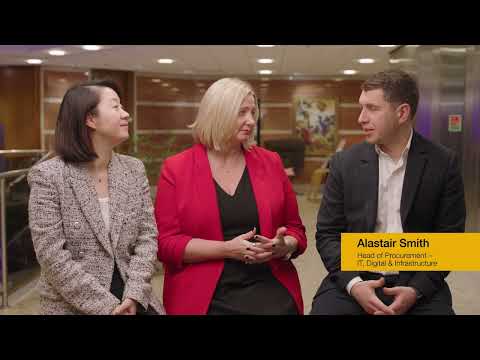
Five years into its Ambition Zero Carbon strategy, AstraZeneca is targeting a 50% reduction in Scope 3 emissions by 2030 and a 90% reduction by 2045.
As of early 2026, it has reduced Scope 1 and 2 emissions by 98% compared to 2015.
The company has planted 200 million trees to support its efforts to be carbon-negative by 2030. To bolster its sustainable supply chain, it hosts annual supplier conferences and requires annual climate data submissions.
2. Novartis
Market Capitalisation: US$240bn
CSO: Korab Zuka
Founded: 1996
HQ: Basel, Switzerland
Novartis aims to achieve net zero greenhouse gas emissions across its value chain by 2040, with 2030 targets including a 90% reduction in Scope 1 and 2 emissions, a 42% reduction in Scope 3 emissions and a 30% reduction in waste sent for disposal.
Water stewardship goals include eliminating water-quality impacts and implementing water-reduction plans in stressed regions by 2030.
The strategy also focuses on health equity by expanding access to medicines and strengthening healthcare systems in climate-vulnerable regions.
Novartis will invest at least US$250m in R&D for malaria and neglected diseases from 2026 to 2030 and will launch community health initiatives in 10 low- and middle-income countries. The company emphasises transparent reporting and consistency to ensure lasting impact.
“By embedding inclusion into how we innovate, expanding access to our medicines, strengthening health systems and reducing our environmental footprint,” says Korab Zuka, CSO at Novartis.
1. Roche
Market Capitalisation: US$263bn
CSO: Barend van Bergen
Founded: 1896
HQ: Basel, Switzerland
Sustainability is central to Roche’s mission, encompassing fair access to innovation, equitable workplaces and environmental stewardship.
Roche integrates ethical sourcing, recyclable packaging and responsible product management throughout its operations. It aims to achieve net zero carbon emissions by 2045, with SBTi-validated targets and strong climate governance.
The company was nearing 100% sustainable electricity by the end of 2025, aided by increased efficiency and the procurement of renewable generation.
Roche is also phasing out potent halogenated hydrocarbons and reducing other air pollutants. Meanwhile, every Roche factory or office site has a roadmap to cut energy use and adopt clean heat.
Because more than 90% of Roche's footprint is Scope 3, the company is focusing on four levers: circular product lifecycle, waste prevention and reuse over incineration, lower-impact business travel and supplier engagement.
By 2029, suppliers responsible for 70% of emissions from purchased goods and services, capital goods and upstream transport and distribution will have science-based targets.
Company portals









Executives

Adele Cheli
Global VP Sustainability
Albert Bourla
Chief Executive Officer

Barend van Bergen
Chief Sustainability Officer
Elin Jäger
Senior Vice President & Chief of Staff to the CEO

Jim Greffet
VP Sustainability
Korab Zuka
Global Head of Social Impact and Chief Sustainability Officer

Pam Cheng
Executive Vice President, Global Operations & IT and Chief Sustainability Officer

Paulette Frank
Chief Sustainability Officer
Petra Wicklandt, PhD
Member of the global board
Sandrine Bouttier-Stref
Global Head of Corporate Social Responsibility (CSR/RSE)