What are the United Nations Sustainable Development Goals?
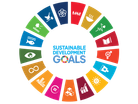
The 17 interconnected United Nations Sustainable Development Goals (SDGs) provide a shared blueprint for peace and prosperity for people and the planet, now and into the future.
The SDGs emerged from decades of work by countries and the UN, building on the Millennium Development Goals (MDGs) that came before them, as part of the 2030 Agenda for Sustainable Development.
While the MDGs focused primarily on poverty and health in developing countries, the SDGs apply universally to all nations, recognising that ending poverty must go hand-in-hand with strategies to improve health and education, reduce inequality, spur economic growth, tackle climate change and preserve the environment.
SDG 1: No Poverty
Led by Achim Steiner, Administrator of the United Nations Development Programme (UNDP), this goal aims to end poverty in all its forms everywhere.
It targets the most vulnerable populations, ensuring social protection systems and equal rights to economic resources.
Examples of work towards this goal include Unilever reaching millions with hygiene education and affordable products through its Sustainable Living Plan, while Mastercard’s financial inclusion initiatives bringing banking to underserved populations
SDG 2: Zero Hunger
Under the direction of Qu Dongyu, Director-General of the Food and Agriculture Organization (FAO), this goal seeks to end hunger, achieve food security, improve nutrition and promote sustainable agriculture.
It focuses on increasing agricultural productivity and ensuring sustainable food production systems.
Nestlé is implementing rural development programmes to support small-scale farmers and PepsiCo’s sustainable farming initiative working with farmers to improve yields while reducing environmental impacts.
SDG 3: Good Health and Well-being
Guided by Dr. Tedros Adhanom Ghebreyesus, Director-General of the World Health Organization (WHO), this goal ensures healthy lives and promotes well-being for all ages.
It addresses maternal and child health, communicable diseases and universal health coverage.
Johnson & Johnson runs global public health programmes targeted at disease elimination and Pfizer is expanding vaccine access in developing countries through tiered pricing.
SDG 4: Quality Education
Led by Audrey Azoulay, Director-General of UNESCO, this goal seeks to ensure inclusive and equitable quality education for all.
It promotes lifelong learning opportunities and addresses literacy, numeracy and technical skills development.
Microsoft’s digital education programmes provide technology and skills training in line with SDG 4, while IBM’s P-TECH initiative prepares students for tech careers through education-business partnerships and Intel’s STEM education initiatives support underserved communities worldwide.
SDG 5: Gender Equality
Under the guidance of Sima Bahous, Executive Director of UN Women, this goal aims to achieve gender equality and empower all women and girls.
It targets discrimination, violence and harmful practices against women and girls.
L'Oréal’s women empowerment programmes include entrepreneurship support and Vodafone’s Connected Women initiative expands mobile access for women in developing markets.
SDG 6: Clean Water and Sanitation
Led by Gilbert F. Houngbo, Chair of UN-Water, this goal ensures availability and sustainable management of water and sanitation for all.
It addresses water scarcity, water quality and wastewater management.
Coca-Cola’s water replenishment projects work towards water neutrality, Procter & Gamble’s Children's Safe Drinking Water Programme provides purification packets and Veolia provides water management solutions in water-stressed regions.
SDG 7: Affordable and Clean Energy
Under the direction of Francesco La Camera, Director-General of the International Renewable Energy Agency (IRENA), this goal ensures access to affordable, reliable, sustainable and modern energy for all.
It focuses on renewable energy and energy efficiency.
Siemens is expanding renewable energy technology and access, Enel is leading the transition to renewable energy with major investments and Total is diversifying into solar energy with significant renewables investments.
SDG 8: Decent Work and Economic Growth
Guided by Guy Ryder, Director-General of the International Labour Organization (ILO), this goal promotes sustained, inclusive economic growth, full and productive employment and decent work for all.
It addresses labour rights, youth employment and economic productivity.
In line with SDG 8, Walmart’s supplier opportunity initiatives supporting diverse businesses, Amazon runs jobs creation and upskilling programmes for its workforce and IKEA implements fair wage programmes and ethical supplier standards.
SDG 9: Industry, Innovation and Infrastructure
Led by Gerd Müller, Director General of UNIDO, this goal builds resilient infrastructure, promotes inclusive and sustainable industrialisation and fosters innovation.
It focuses on technological capabilities and sustainable industries like Samsung’s digital innovation programmes that support tech entrepreneurship, ABB’s smart infrastructure solutions for developing economies and Cisco’s network academies that are providing digital skills training worldwide.
SDG 10: Reduced Inequalities
This cross-cutting goal, championed by multiple UN agencies, reduces inequality within and among countries.
It addresses income growth for the bottom 40% and promotes social, economic and political inclusion.
In line with SDG 10, PayPal has introduced financial inclusion initiatives that are reducing barriers to economic participation, Bank of America is investing in underserved communities through community development and BlackRock’s impact investing funds target social inequality.
SDG 11: Sustainable Cities and Communities
Under the leadership of Maimunah Mohd Sharif, Executive Director of UN-Habitat, this goal makes cities inclusive, safe, resilient and sustainable.
It addresses housing, transportation and urban planning.

Examples of this include Toyota’s smart city initiatives integrating sustainable transportation, Schneider Electric’s urban efficiency solutions reducing resource use and BASF using sustainable construction materials for resilient urban development.
SDG 12: Responsible Consumption and Production
Led by Inger Andersen, Executive Director of the UN Environment Programme, this goal ensures sustainable consumption and production patterns.
It focuses on natural resource management and waste reduction.
In the fashion world, H&M uses a garment collection programme to reduce waste, while in technology Apple has closed-loop supply chain goals for materials recycling.
SDG 13: Climate Action
Guided by Simon Stiell, Executive Secretary of the UNFCCC, this goal takes urgent action to combat climate change and its impacts.
It addresses climate-related hazards and integrates climate measures into policies.
Technology giant Amazon is the world’s largest corporate purchaser of renewable energy while Microsoft has committed to become carbon negative by 2030.
SDG 14: Life Below Water
Led by Vladimir Ryabinin, Executive Secretary of the Intergovernmental Oceanographic Commission, this goal conserves and sustainably uses oceans, seas and marine resources. It addresses marine pollution, ocean acidification and overfishing.
Companies contributing to SDG 14 include Maersk reducing ocean shipping emissions and plastic pollution, Adidas’ ocean plastic recycling initiatives with Parley for the Oceans and Royal Caribbean’s ocean conservation programmes and emission reduction targets.
SDG 15: Life on Land
Under the guidance of Elizabeth Maruma Mrema, Executive Secretary of the Convention on Biological Diversity, this goal protects, restores, and promotes sustainable use of terrestrial ecosystems.
It focuses on forests, desertification, land degradation and biodiversity loss.
Kimberly-Clark is engaging in sustainable forestry practices and reduced deforestation, Mondelēz’s Cocoa Life programme supports sustainable agriculture and Dow uses nature-based solutions for carbon sequestration.
SDG 16: Peace, Justice and Strong Institutions
Championed by Ghada Fathi Waly, Executive Director of the UN Office on Drugs and Crime, this goal promotes peaceful and inclusive societies, access to justice and effective, accountable institutions.
It addresses violence, corruption and responsive governance.
Examples of companies engaging with SDG 16 include SAP’s anti-corruption technologies and transparency initiatives, HSBC’s anti-money laundering and financial crime prevention programmes and ExxonMobil’s participation in the Extractive Industries Transparency Initiative.
SDG 17: Partnerships for the Goals
This final goal, supported by all UN leadership, strengthens the means of implementation and revitalises the global partnership for sustainable development.
It focuses on finance, technology, capacity-building, trade and systemic issues.
Salesforce’s 1-1-1 philanthropic model supports nonprofits globally, PwC has skills-based volunteering partnerships that support development organisations and Unilever has cross-sector sustainability partnerships with governments and NGOs.
Explore the latest edition of Sustainability Magazine and be part of the conversation at our global conference series, Sustainability LIVE.
Discover all our upcoming events and secure your tickets today.
Sustainability Magazine is a BizClik brand
Company portals
ABB
Adidas
Amazon

Apple
Bank of America
BASF
BlackRock
Cisco Systems
Coca-Cola
DOW
Enel Group
ExxonMobil
H&M
HSBC
IBM
IKEA
Intel
Johnson & Johnson
Kimberly-Clark
L'Oréal
Maersk
Mastercard

Microsoft
Mondelēz International
Nestlé
PayPal

PepsiCo
Pfizer
PwC
Royal Caribbean Group
Salesforce
Samsung
SAP

Schneider Electric
Siemens
TotalEnergies
Toyota Motor
Unilever
Veolia Environment
Vodafone
Walmart