
Microsoft & Orbia: Partnering in Brazilian Water Stewardship
According to the World Green Building Council: “Buildings are currently responsible for 39% of global energy related carbon emissions: 28% from operational emissions, from energy needed to heat, cool and power them and the remaining 11% from materials and construction.”
Orbia is a global company focused on providing specialty products and solutions across five business groups: Polymer Solutions, Building and Infrastructure, Precision Agriculture, Fluor & Energy Materials and Connectivity Solutions.
To tackle infrastructure emissions and produce sustainable buildings, Microsoft and Orbia are partnering to create sustainable urban solutions.

Building a sustainable urban environment
Orbia’s Building & Infrastructure business Wavin has formed a partnership with Microsoft to confront water stress and build water resilience worldwide.
The collaboration supports Microsoft’s goal to replenish more water than it consumes by 2030.
It will do so through a pipeline of water-positive projects that deploy Wavin solutions in cities and other urban settings.
The first initiative is underway with SANASA, the public water and sanitation utility in Campinas, São Paulo, Brazil – Campinas has endured seven droughts in the past decade.
“We believe that Microsoft has an important role to play in helping to address water stress in the areas we operate,” says Eliza Roberts, Water Lead at Microsoft.
“Water is a shared challenge that requires a collective approach and we look forward to partnering with Orbia and SANASA to support a water project that is bringing public and private sector partners to the table to reduce water loss in São Paulo.”
It sits within the Piracicaba, Capivari and Jundiaí (PCJ) watershed, which supplies more than 70% of the region’s water and underpins supply to São Paulo.
Within this context, the project brings Orbia, Microsoft and SANASA together to cut water losses and lift network performance.
The work relies on Orbia’s Water Network Management (WNM) service, powered by TaKaDu. WNM is a cloud platform that helps utilities detect, analyse and manage network events and incidents such as leaks, bursts, faulty assets, operational failures and telemetry or data issues.
“We are excited about joining forces with Microsoft and Orbia,” says Manuelito Magalhães Júnior, CEO of SANASA.
“Our vision is to be a leader and benchmark in sustainable water management that can be shared throughout Brazil.
“We will do this using state-of-the-art technologies, delivered through innovative partnerships that will help us to be more efficient in different areas of the business.”
A central control room staffed by Orbia water engineers complements the software and provides continuous oversight of the network.
Replenishing water projects
Demand for fresh water is rising faster than ever as climate change, urban growth and ageing infrastructure strain supplies.
“Climate change, urban growth and aging infrastructure are straining supplies, while leaks waste billions of litres each day,” says Orbia.
“By 2030, global consumption is expected to climb by 30%, yet half of the world’s population already lives in water-stressed regions.”
Companies, cities and utilities therefore need measurable solutions that help them meet their commitments.
Microsoft has set one of the most ambitious goals: to be water positive by 2030.

Its strategy focuses on five pillars:
- Reduce water-use intensity across global operations
- Replenish more than it consumes in priority locations where it does business
- Expand access to water and sanitation services
- Drive innovation and data digitisation
- Advocate for effective water policy worldwide.
Orbia’s Building & Infrastructure business Wavin is helping to turn that ambition into reality.
In autumn 2024 Orbia announced a collaboration with Microsoft to support the company’s replenishment targets through a series of water-positive projects.
The first launched with SANASA, the public water and sanitation utility serving Campinas in São Paulo, Brazil, a region that has endured seven droughts in the past decade and relies heavily on the PCJ watershed, which supplies more than 70% of São Paulo’s water.
Under a 10-year agreement Orbia, Microsoft and SANASA are working to cut water losses across SANASA’s Campinas network using Orbia’s Water Network Management technology and expertise.
From July 2024 to the end of June 2025 it achieved a volumetric water benefit of more than 370,000 cubic metres, equivalent to 151 Olympic swimming pools.
The goal for year two is 622,000 cubic metres, with a long-term target of saving more than 2.5 million cubic metres annually once the system is fully implemented.
Orbia’s water saving technology
Orbia’s cloud-based Water Network Management (WMN) platform, developed with TaKaDu, sits at the core of the programme.
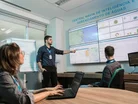
A central control room in São Paulo brings together Orbia engineers who track data from flow meters and pressure sensors installed across SANASA’s network, using advanced machine learning to interpret it in real time.
The platform identifies patterns that signal leaks, bursts, failing assets and telemetry faults, often before they escalate.
With predictive, actionable insights, SANASA can spot early-stage leaks, prioritise repairs, cut non-revenue water and lift overall network efficiency.
“At Orbia, we recognise the interdependencies between climate and water and are committed to delivering solutions that the world needs for water security, " says Tania Rabasa Kovacs, Vice President of Sustainability and Corporate Affairs at Orbia.
“A key component of our ambition to achieve net positive water impact is to engage in collective action, and we are thrilled to collaborate with Microsoft and SANASA on such an important global topic.
“It's only through collaborating that we can achieve our ambitions and ensure water security is preserved for future generations.”
As SANASA adds more district-metered areas and sensors, WMN coverage will expand and water savings will grow.
By combining modern technology with long-term partnership, Orbia and Microsoft are already demonstrating practical protection of the world’s most valuable resource.
Company portals


Executives

Eliza Roberts
Director of Water
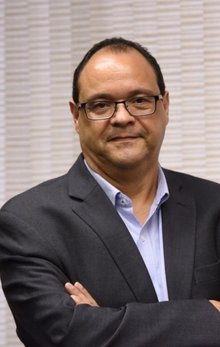
Manuelito Magalhães Júnior
CEO
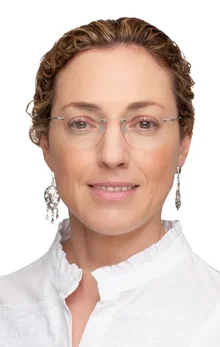
Tania Rabasa Kovacs
Chief Sustainability Officer, Vice President of Corporate Affairs, President of Orbia Mexico