
Top 10: Sustainability Reporting Frameworks
Sustainability reporting has become a strategic priority as companies face growing expectations from regulators, investors, customers and stakeholders to demonstrate environmental and social performance.
As disclosure requirements expand and ESG reporting becomes more standardised, organisations are adopting globally recognised frameworks to improve transparency, comparability and accountability across their operations and supply chains.
These standards help businesses measure impacts, manage risks, report consistently and align sustainability strategies with climate, nature and governance objectives while meeting evolving regulatory obligations.
This Top 10 highlights the reporting frameworks and disclosure standards shaping corporate sustainability, from global voluntary initiatives to mandatory regulations transforming ESG reporting worldwide.
10. UN Global Compact (UNGC)
Year founded: 2000
Companies: Microsoft, Siemens and Nestlé
Founded by: United Nations
The UN Global Compact provides a sustainability framework that helps companies align their strategies and operations with responsible business practices.
Recognised by UN member states, the initiative supports organisations in advancing the Ten Principles across human rights, labour, environment and anti-corruption.
Through resources such as the Communication on Progress, Academy, Accelerators and peer learning networks, it enables businesses in more than 160 countries to measure progress, improve accountability and contribute to the UN Sustainable Development Goals.
9. Taskforce on Nature-related Financial Disclosures (TNFD)
Year founded: 2021
Companies: Burberry, Hitachi Construction Machinery and Volkswagen AG
Founded by: United Nations Environment Programme Finance Initiative, United Nations Development Programme, the World Wildlife Fund and Global Canopy
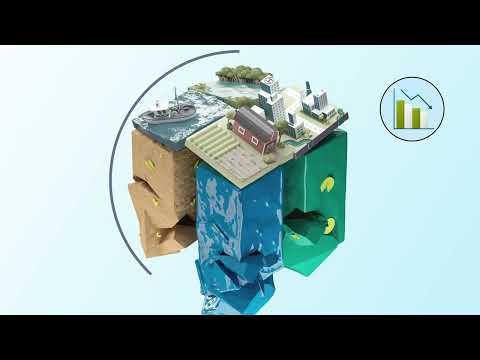
The TNFD provides a framework for organisations to identify, assess and disclose their dependencies, impacts, risks and opportunities linked to nature.
Developed as a science-based, market-led initiative, TNFD helps businesses and financial institutions integrate nature into decision-making and improve transparency.
Its recommendations support the shift of global financial flows towards nature-positive outcomes, aligning with the Global Biodiversity Framework while complementing existing climate-related disclosure approaches.
8. The U.S. Securities and Exchange Commission (SEC) Climate Disclosure Rule
Year founded: 2024
Companies: Apple, Amazon and JPMorgan Chase
Founded by: Gary Gensler
The US SEC Climate Disclosure Rule establishes standardised requirements for public companies to report material climate-related risks and their financial impacts.
The framework aims to provide investors with more consistent, comparable and reliable information on climate risks, governance, mitigation efforts and emissions.
Companies may be required to disclose Scope 1 and Scope 2 emissions, climate targets, transition plans and the financial impacts of severe weather events, strengthening transparency across capital markets.
7. Science Based Targets initiative (SBTi)
Year founded: 2014
Companies: Mercedes-Benz Group, Ørsted and Danone
Founded by: CDP, the United Nations Global Compact, the World Resources Institute and the World Wide Fund for Nature

The SBTi provides companies and financial institutions with science-backed frameworks to set credible GHG reduction and net zero targets.
Trusted by thousands of organisations globally, the initiative develops standards, tools and guidance aligned with climate science and the goal of limiting global temperature rise.
Through target validation services, SBTi helps businesses demonstrate climate action, manage transition risks and align decarbonisation strategies with achieving net zero by 2050.
6. Carbon Disclosure Project (CDP)
Year founded: 2000
Companies: L’Oréal, AstraZeneca and Schneider Electric
Founded by: Paul Dickinson
CDP provides a global disclosure framework that enables companies, investors and governments to measure, report and manage greenhouse gas emissions and climate-related risks.
Established in 2000, CDP operates one of the world’s largest corporate environmental data platforms, supporting transparency across climate, supply chains and business strategies.
Its data helps investors assess risks, companies identify reduction opportunities and policymakers develop informed approaches to accelerating global decarbonisation.
5. Greenhouse Gas Protocol (GHG Protocol)
Year founded: 1998
Companies: Google, Meta and Walmart
Founded by: the World Resources Institute and the World Business Council for Sustainable Development

The Greenhouse Gas Protocol (GHG Protocol) provides globally recognised standards, guidance and tools for organisations to measure, report and manage GHG emissions.
Developed by the World Resources Institute (WRI) and the World Business Council for Sustainable Development, it supports businesses, governments and cities in creating consistent emissions inventories across operations, value chains and climate initiatives.
Used widely worldwide, the GHG Protocol helps organisations track progress towards science-based emissions reductions and global climate goals.
4. Sustainability Accounting Standards Board (SASB) / International Sustainability Standards Board (ISSB)
Year founded: 2011
Companies: NVIDIA, ExxonMobil and General Motors
Founded by: Jean Rogers
The Sustainability Accounting Standards Board (SASB) developed industry-specific standards to help companies disclose financially material sustainability information to investors.
Founded in 2011, SASB created frameworks that connected environmental, social and governance factors with financial performance.
In 2022, responsibility for the SASB Standards transferred to the ISSB under the IFRS Foundation, which continues to maintain and evolve the standards as part of global sustainability reporting efforts.
3. Integrated Reporting Framework
Year founded: 2010
Companies: Novo Nordisk, Fujitsu and BASF
Founded by: Global Reporting Initiative, the Prince’s Accounting for Sustainability Project and the International Federation of Accountants

The Integrated Reporting Framework provides guidance for organisations to communicate how they create, preserve or erode value over time.
Originally developed by the International Integrated Reporting Council (IIRC), the Framework became part of the Value Reporting Foundation following its merger with SASB in 2021, before moving to the IFRS Foundation in 2022.
Maintained jointly by the ISSB and the International Accounting Standards Board (IASB), it supports transparent reporting by connecting financial and sustainability information.
The Framework focuses on value creation through six capitals – financial, manufactured, intellectual, human, social and relationship and natural.
2. Global Reporting Initiative (GRI)
Year founded: 1997
Companies: Sony, Toyota and Shell
Founded by: CERES, the Tellus Institute and United Nations Environment Programme

The GRI is an international independent non-profit organisation that develops and maintains one of the world's most widely used sustainability reporting frameworks.
Founded in 1997 by CERES and the United Nations Environment Programme (UNEP), GRI helps organisations measure, manage and disclose their economic, environmental and social impacts through globally recognised reporting standards.
Its GRI Standards provide a comprehensive framework covering universal, sector-specific and topic-specific disclosures, enabling organisations to report consistently on material sustainability issues.
Used by thousands of companies, governments and institutions worldwide, the standards support greater transparency, accountability and comparability in sustainability reporting.
Beyond developing reporting standards, GRI provides guidance, training, tools and policy support to strengthen reporting practices and help organisations respond to increasing stakeholder and regulatory expectations.
The framework aims to improve understanding of corporate impacts while supporting long-term value creation, responsible decision-making and progress towards global sustainable development goals.
1. EU Corporate Sustainability Reporting Directive (CSRD) / European Sustainability Reporting Standards (ESRS)
Year: 2022
Companies: Norsk Hydro, BBVA and Allianz
Founded by: European Commission

The CSRD is the European Union’s sustainability reporting framework, requiring large companies and listed businesses to disclose how ESG issues affect their operations and how their activities impact people and the planet.
Introduced to improve transparency, accountability and comparability, the CSRD expands the scope and depth of sustainability reporting across Europe.
Companies must report in line with the ESRS, developed by the European Financial Reporting Advisory Group (EFRAG), covering areas such as climate change, biodiversity, resource use, workforce issues and governance.
The framework is designed to provide investors, regulators, customers and other stakeholders with consistent, decision-useful information on corporate sustainability performance.
Beyond compliance, the CSRD encourages organisations to integrate sustainability into business strategy, helping identify risks and opportunities, strengthen resilience, support responsible investment and accelerate progress towards the European Green Deal and broader net zero objectives.
Company portals
Allianz
Amazon

Apple
AstraZeneca
BASF

BBVA-Banco Bilbao Vizcaya
Burberry
Carbon Disclosure Project (CDP)
CDP
Danone
European Commission
ExxonMobil
Fujitsu
General Motors

Google
Hitachi Construction Machinery
JP Morgan Chase & Co.
L'Oréal
Mercedes-Benz Group
Meta

Microsoft
Nestlé
Norsk Hydro
Novo Nordisk
NVIDIA
Ørsted

Schneider Electric
Shell
Siemens
Sony
The International Financial Reporting Standards (IFRS)
The United Nations
Toyota Group
United Nations
United Nations Global Compact
Volkswagen Group
Walmart
WWF





















Executives

Gary Gensler
33rd Chair of the U.S. Securities and Exchange Commission

Jean Rogers
Founder

Paul Dickinson
Founder