Top 10: Sustainable Healthcare Companies
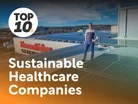
The healthcare industry is shifting from traditional patient care to also focus on environmental stewardship and sustainability.
The companies in this Top 10 now address decarbonisation, water stewardship and circular economy principles as part of their core business strategies.
By pursuing net-zero supply chains, cleaner, high-tech manufacturing and just access-to-medicine programmes, the sector demonstrates the link between planetary health and human wellness.
Here we present the pharmaceutical companies leading in corporate responsibility, innovation and dedication to a healthier, increasingly sustainable future.
10. Boston Scientific
Founded: 1979
HQ: Marlborough, US
VP of ESG: Kathryn Unger
Net Zero Target: 2050
Boston Scientific received SBTi approval for its net zero emissions targets covering Scope 1, 2 and 3 in 2022.
In the short term, it aims to achieve a 46.2% absolute reduction in Scope 1 and 2 emissions by 2030 – compared to a 2019 baseline. By 2050, it wants to achieve a 90% absolute reduction.
In 2024, the company piloted a single-use imaging device recycling programme in Germany to determine the feasibility and complexity of reducing medical waste.
9. UnitedHealth Group
Founded: 1974
HQ: Eden Prairie, US
VP Sustainability (Corporate Affairs): Chris Gray
Net Zero Target: 2050

Aiming to achieve net zero carbon emissions by 2050, UnitedHealth Group is working to source 100% of its energy from renewable sources and reduce Scope 1 and 2 emissions by 60% by 2030.
Elsewhere, the organisation has invested US$1.2bn in affordable and mixed-income housing developments as part of its commitment to addressing the social drivers of health and climate change.
The company has also established programmes to mitigate excessive water usage across its operations and broader supply chain.
8. Danaher
Founded:1969
HQ:Washington DC, US
CSO: Jim O’Reilly
Net Zero Target: 2050
Danaher’s 2025 Scope 1 and 2 emissions were 30% lower than the 2021 baseline, with 70% of the electricity consumed in its operations drawn from renewable sources.
Earlier this year, the company submitted GHG reduction targets to the SBTi with the goal of achieving a net zero value chain by “no later than 2050”.
To support supply chain decarbonisation, the firm partnered with EcoVadis to explore supplier sustainability performance. It has also established programmes to minimise waste and strengthen water stewardship.
7. Elevance
Founded: 1944
HQ: Indianapolis, US
CSO: Hakon Mattson
Net Zero Target: 2030

Elevance Health aims for net zero greenhouse gases by 2030, uses 100% renewable electricity, and encourages suppliers to adopt science-based targets.
Its initiatives include energy and water efficiency, responsible waste management and low-carbon commuting.
It also invests in climate resilience, supporting members and communities affected by climate events through disaster relief and medical aid.
Elevance recognises climate change as a health risk that affects respiratory health and heat-related conditions, making environmental action vital to its healthcare mission.
6. Medtronic
Founded: 1949
HQ: Minneapolis, US
CSO: Raman Venkatesh
Net Zero Target: 2045
While its net zero target is 2045, Medtronic has some ambitious intermediate targets too.
Its sustainability strategy will see it grow its annual sourcing of electricity from 1.29% of operations in 2020 to 100% by 2030.
Medtronic also wants to reduce absolute Scope 1 and 2 GHG emissions 52% by FY30 from a 2020 base year.
It is also working on helping suppliers to decarbonise. By 2030, it aims to have 75% of its suppliers backed by science-based targets.
5. McKesson
Founded: 1833
HQ: Irving, US
CSO: Robert ter Kuile
Net Zero Target: Reduce direct GHG emissions by 50% by 2032

McKesson is taking up the climate challenge by procuring renewable energy, reducing waste, shifting to EVs and green buildings.
It aims to reduce direct GHG emissions by 50% by 2032 from a 2020 base year.
McKesson invested in a new 134MW solar project about 80km northeast of Houston, and as of 2025, 70% of McKesson’s suppliers, based on their spending on purchased goods and services, had set SBTi-approved GHG reduction targets.
4. Bayer
Founded: 1863
HQ: Leverkusen, Germany
CSO & CEO: Bill Anderson
Net Zero Target: Before 2050
Bayer aims to achieve net zero value chain emissions by 2050 or sooner.
By the end of 2029, it targets a 42% reduction in Scope 1 and 2 emissions from a 2019 baseline. Strategies include improving ventilation efficiency, adopting geothermal energy, and transitioning to 100% renewable electricity.
Bayer also aims to use its products and services to help in the agriculture and nutrition sectors. The company wants to help feed a growing world population by promoting sustainable, low-emission and resilient farming.
3. CVS Health
Founded: 1963
HQ: Woonsocket, US
CSO & VP Community Impact: Jenny McColloch
Net Zero Target: 2050

In 2021, CVS Health emerged as a global leader by securing SBTi validation for its net zero targets.
The company is committed to reaching net zero emissions across its value chain and direct operations by 2050. The company is targeting 50% renewable electricity by 2040 and has already executed agreements for almost 100GWh of renewable energy.
The business is also investigating community-based solar alternatives. In 2025, over 400 CVS Pharmacy locations in Florida joined a community solar initiative with the Florida Power & Light Company.
2. Haleon
Founded: 2022
HQ: Weybridge, UK
VP Sustainability: Sarah McDonald
Net Zero Target: 2040
Haleon uses 100% renewable electricity across its production facilities and has a 2040 net zero target for carbon emissions from source to sale. This goal is consistent with principles from the Race to Zero and The Climate Pledge.
The company aims to reduce virgin plastic use by one‑third by 2030. It is using a diverse range of raw materials for its packaging. Key initiatives include introducing recycle-ready mono-material toothpaste tubes and reducing plastic consumption by transitioning to bio-based or recycled alternatives.
Approximately 50% of the company's packaging footprint is comprised of paper, with the overwhelming majority currently considered recycle-ready. For plastic, the business is prioritising the transition to recycle-ready formats for products sold in bottles and tubes, which together account for the largest share of its plastic packaging output.
Haleon also focuses on the sustainable procurement of core ingredients and implements water stewardship programmes.
1. Thermo Fisher Scientific
Founded: 2006
HQ: Waltham, US
VP Global Sustainability Supply Chain: Chris Shanahan
Net Zero Target: 2050

Thermo Fisher Scientific aims to achieve net zero emissions by 2050, with interim targets including a 50% reduction in greenhouse gas emissions from 2018 levels and 80% renewable energy use by 2030.
Currently, more than 100 facilities operate entirely on renewable electricity. In 2024, Thermo Fisher reported a 29.4% reduction in greenhouse gas emissions, demonstrating significant progress toward its climate objectives.
Thermo Fisher Scientific evaluates product design, manufacturing, and recycling processes to minimise environmental impact throughout each stage. The company developed the Greener by Design system to help customers identify products with a reduced carbon footprint. A green leaf symbol indicates that a product meets at least one of Thermo Fisher Scientific’s sustainability standards.
These standards include reduced hazardous waste, improved energy efficiency, and enhanced packaging compared to previous or similar products. Green products may also incorporate recycled materials or ingredients from renewable sources.
Company portals





Executives

Bill Anderson
Member of the Board of Management

Chris Shanahan
VP Global Sustainability – Supply Chain Operations
Jenny McColloch
Chief Sustainability Officer and Vice President of Community Impact
Robert ter Kuile
Chief Sustainability Officer

Sarah McDonald
Vice President, Sustainability & Health Inclusivity