Top 10: Renewable Energy Companies in Europe
Energy is responsible for more than three-quarters of global greenhouse gas emissions, according to the IEA.
The IPCC warns that limiting global warming to below two degrees will require the near-total decarbonisation of the global economy by 2050, including the energy sector. While Europe has made notable progress in reducing energy emissions, further action remains essential.
Recognising some of the most successful businesses in this space, we look at the top renewable energy companies based in Europe that are shaping the future of the global energy landscape.
10. Nadara
Headquarters: Milan, Italy
Employees: 1,000
CEO: Toni Volpe
Nadara, founded in 2024 through the combination of Renantis and Ventient Energy, takes its name from the Scottish Gaelic word ‘Nàdarra’ meaning natural.
“Though inspired by our Scottish roots, we have now evolved into a globally diverse company, taking these traits with us across Europe and beyond,” says Ed Flanders, Climate and Environmental Impact Manager at Nadara.
Operating across biomass, solar, storage, waste-to-energy and wind, the company has an installed capacity of 4.2GW across 196 operational sites in Europe and the US and an 18GW pipeline.
9. Voltalia
Headquarters: Paris, France
Employees: 2,000
CEO: Robert Klein
Voltalia generates and supplies electricity from wind, solar, biomass, hydro and energy storage assets across global markets.
By the end of 2024, the Paris-based company had 3.3GW of capacity either operational or under construction, alongside a development pipeline exceeding 17GW.
Its portfolio includes landmark projects such as Brazil’s 150MW Serra Branca complex, the largest combined wind and solar cluster in the world.
8. ScottishPower Renewables
Headquarters: Glasgow, Scotland
Employees: 900
CEO: Charlie Jordan
Another company born of the opportunities coming out of Scotland, ScottishPower Renewables is part of the Iberdrola Group and operates over 40 renewable energy sites, with more than 3GW of installed capacity.
Its portfolio includes major offshore wind projects such as East Anglia ONE, as well as East Anglia THREE, which is currently under construction.
The company states that it follows a rigorous development process to ensure responsible delivery of renewable energy, including comprehensive environmental impact assessments.
7. RES Group
Headquarters: Kings Langley, England
Employees: 4,500
CEO: Eduardo Medina
RES Group brings over 40 years of expertise in renewable energy, having delivered more than 27GW of capacity worldwide. The company currently manages 41GW of renewable assets across 1,300 sites.
Since 2023, RES has been advancing a green hydrogen electrolyser production and storage facility at Kimberly-Clark’s Northfleet manufacturing site in Kent.
Its client portfolio includes major organisations such as Google, Allianz, BlackRock and Aviva.
6. Acciona Energía
Headquarters: Alcobendas, Spain
Employees: 1,800
CEO: Rafael Mateo Alcalá
Acciona Energía operates exclusively in renewable energy, with 15.4GW of installed capacity and no legacy in fossil fuels.
The company manages more than 350 projects across Europe and operates in North and South America, Africa, Asia, and Oceania.
It reports having avoided over 14 million tonnes of CO₂ emissions while generating 26.7TWh of renewable energy.
5. EDF Renewables
Headquarters: Nanterre, France
Employees: 4,382
CEO: Béatrice Buffon
EDF Renewables, a subsidiary of the EDF Group, develops, builds and operates renewable energy projects worldwide. With over 12GW of installed capacity, its portfolio is led by wind power, supported by growing solar and battery storage assets.
The company continues to invest in advanced energy technologies, particularly in offshore wind, where it is deploying floating and submerged systems alongside high-capacity turbines.
EDF Renewables also operates solar projects across 13 countries and is expanding its commitment to large-scale electricity storage.
4. Siemens Gamesa
Headquarters: Brande, Denmark
Employees: 28,000
CEO: Vinod Philip
Approximately 1,100GW of wind power capacity is installed worldwide, with Siemens Gamesa turbines accounting for 130GW of that total.
The company’s origins trace back to Siemens’ acquisition of Bonus Energy in 2004, followed by its merger with Gamesa in 2017. Today, Siemens Gamesa operates as a business unit of Siemens Energy under the leadership of CEO Vinod Philip.
With decades of expertise, the company has grown into a global workforce of more than 28,000 people representing over 100 nationalities.
3. Vestas
Headquarters: Aarhus, Denmark
Employees: 30,000
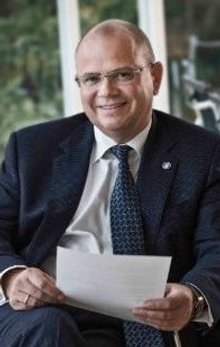
CEO: Henrik Andersen
Vestas is a global leader in wind energy, manufacturing, selling, installing and servicing wind turbines worldwide.
Founded in 1945, the company has grown into the world’s largest wind turbine manufacturer. Its origins date back to 1898, when it began as a blacksmith shop, before pivoting to wind turbine production in 1977 in response to the oil crisis.
Vestas introduced its first three-blade turbine in 1978 and reached a major milestone with the sale of its 1,000th turbine in 1991.
2. Ørsted
Headquarters: Fredericia, Denmark
Employees: 8,300
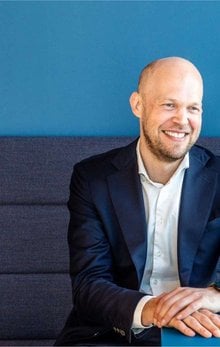
CEO: Rasmus Errboe
Ørsted develops, builds, and operates offshore and onshore wind farms, solar installations, energy storage systems, and bioenergy plants. It is widely recognised as the world’s leading offshore wind developer, accounting for approximately 30% of global capacity outside mainland China.
Once among Europe’s most coal-intensive energy companies, Ørsted completed its transition away from fossil fuels by 2017 and now focuses exclusively on renewable energy. Its portfolio includes major UK projects such as Hornsea 1 and 2.
The company has installed 10 GW of offshore wind capacity and is targeting an expansion to 20-22GW by 2030.
1. Enel Green Power
Headquarters: Rome, Italy
Employees: 7,600
CEO: Salvatore Bernabei

Part of the Enel Group, Enel Green Power develops and operates renewable energy plants worldwide. It manages more than 1,300 facilities, with a total installed renewable capacity of approximately 66.4GW.
The company produces around 148.33TWh of energy annually from a diverse portfolio that includes wind, solar, hydroelectric, and geothermal sources. Sustainability and innovation are central to its business model, reflected in its “Innovability” approach, which aims to generate shared value while contributing to the United Nations Sustainable Development Goals.
Enel Green Power states that its growth strategy is driven by sustainability, alongside technological advancement and geographic diversification. Between 2025 and 2027, the company plans to invest €12bn (US$13.9bn) in renewable energy projects.
Company portals




Executives
Henrik Andersen
President & CEO
Rasmus Errboe
CEO and Group President